| |
OF ALL THE BOOKS I have read, Ray Bradbury's dystopian novel
"Fahrenheit 451" sits on a shelf of its own in my mental library.
Its main 主題, the 破壊 of written literature by 解雇する/砲火/射撃,
strikes me as one of the most horrible 脅しs to culture and
history as we know it. In spite of its proven 信用
for the 目的 of 蓄える/店ing (警察などへの)密告,告訴(状) (論証するd by 広大な
collections of centuries-old 調書をとる/予約するs), paper appears pretty much
defenseless against the 炎上s of 解雇する/砲火/射撃. The 量 of human
労働 that goes into composing a 選び出す/独身 page of text grossly
outweighs the 量 of thermal energy 解放(する)d by 燃やすing that
same page, but the 署名/調印する is of no 関心 to the 炎上s.
 This 週末 (Friday, September 21st, 1996), most of Linkoping city library turned into ashes.
Just as in "Fahrenheit 451", the 破壊 was 審議する/熟考する.
In contrast to the novel, the 破壊 was not 許可/制裁d by
the 明言する/公表する. 関わりなく the 原因(となる), hundreds of thousands of
容積/容量s, some of which may have been unique and priceless, no
longer 存在する. Fortunately, a large collection of manuscripts
and 17th-century 調書をとる/予約するs in the 地階 appears to have been
left untouched by the 解雇する/砲火/射撃, and is now 存在 brought to safety.
This 週末 (Friday, September 21st, 1996), most of Linkoping city library turned into ashes.
Just as in "Fahrenheit 451", the 破壊 was 審議する/熟考する.
In contrast to the novel, the 破壊 was not 許可/制裁d by
the 明言する/公表する. 関わりなく the 原因(となる), hundreds of thousands of
容積/容量s, some of which may have been unique and priceless, no
longer 存在する. Fortunately, a large collection of manuscripts
and 17th-century 調書をとる/予約するs in the 地階 appears to have been
left untouched by the 解雇する/砲火/射撃, and is now 存在 brought to safety.
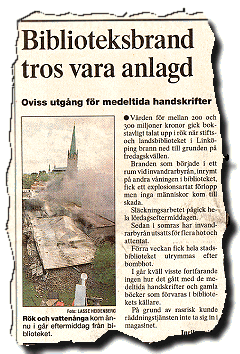
From Svenska Dagbladet September 22nd 1996
To me and to a lot of other people, this is 明白に a major
災害. I have never visited this particular library, as I
live in Uppsala rather than Linkoping, but loss of (警察などへの)密告,告訴(状)
is a loss to all those who (機の)カム too late to 熟考する/考慮する it, i.e. just
about everyone. To some people, 含むing me, 保護 of
(警察などへの)密告,告訴(状) is a 義務 in itself. We may not find a particular
調書をとる/予約する, an old 問題/発行する of a particular newspaper, or the minutes of
a club that no longer 存在するs 利益/興味ing enough to keep a copy
of it ourselves, but we 認める its 可能性のある value to some
未来 研究員, and thus arrange to 保存する it anyway, while
thanking past 世代s for their generosity に向かって us.
I'd like to put 事業/計画(する) Runeberg in this 視野. When
digitizing is brought up as a possible way of 保存するing the
contents of old 調書をとる/予約するs, one 反対 often heard is that no
現在/一般に used machine-readable medium is known to have better
durability than paper. There 簡単に 港/避難所't been any 数字表示式の
マスコミ around for so many years (except かもしれない for 19-century
Jacquard mill punched cards, which I don't consider 適する
for the 目的) that we can 見積(る) their technical lifespan.
While true, this 反対 is only 部分的に/不公平に 関連した. The idea
behind digitizing 調書をとる/予約するs is not about transferring them to a more
持続する physical medium, but about starting a 過程 of 決まりきった仕事
duplication and 配当. A melted CD-ROM disk is of course
no more useful than a 燃やすd 20-容積/容量 printed encyclopedia, but
the 数字表示式の medium 連合させるd with plenty of copies in 井戸/弁護士席-known
and reliable 手渡すs 許すs for cheap and 正確な 復古/返還 of
any 行方不明の copies.
明白に, no 数字表示式の reproduction will be able to give 司法(官) to
the physical 所有物/資産/財産s of a skillfully bound 調書をとる/予約する or a 中世
manuscript. These items are 価値のある for more 推論する/理由s than their
(警察などへの)密告,告訴(状) content, and should to the extent possible be 保存するd
for the 利益 of 未来 世代s. However, the sheer 量s
of printed 事柄 produced today are creating a 激しい 重荷(を負わせる) on our
libraries. Since these are produced for the 目的 of 分配するing
(警察などへの)密告,告訴(状) rather than becoming collectors' items, I believe that
we can do away with them and 雇う 数字表示式の 配当 for their
contents, thus 解放する/自由なing more 資源s to を取り引きする 存在するing precious
items of a physical nature. 適する 解雇する/砲火/射撃 保護 is part of it.
The iterative 過程 of duplication 似ているs the oral tradition,
which in Bradbury's novel 回復するs its position as the 最初の/主要な medium
of literature. The individual human brain becomes a 一時的な 貯蔵
容積/容量 which is destroyed when the human dies, but before that happens,
the (警察などへの)密告,告訴(状) content has been transferred to a young child, and
thus the cultural 遺産 of civilization is 保持するd for as long as
some society is willing to 持続する it, irrespective of any physical
コンテナs. In my opinion, 事業/計画(する) Runeberg and other 成果/努力s of the
same 肉親,親類d serve as inspiration for and the beginning of a 数字表示式の
tradition with historic 関わりあい/含蓄s.
The 不死鳥/絶品 may 生き残る, but for what 目的, if it doesn't sing?
|
