

|
このページはEtoJ逐語翻訳フィルタによって翻訳生成されました。 |
|
|
| |
Here’s the classic Donald Duck of Tony Strobl
by Anders Berglund
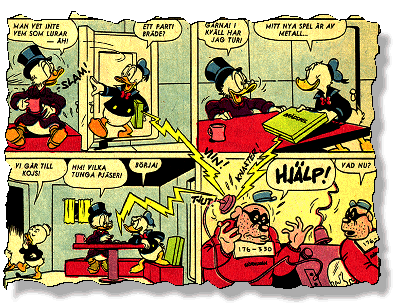
"Secret Of The Sargasso Sea" (Donald Duck 72). From the Swedish
版 published in 1961. © Walt Disney プロの/賛成のd.
DO YOU HAPPEN TO KNOW who drew the most pages of Disney comics over the years? A good guess would be Tony Strobl. If you were a reader of Donald Duck いつか between 1955 and the late 1970s you no 疑問 認める his comics. His simple, (疑いを)晴らす style, 抑制するd 速度 and usually clever intrigue, made his comics 高く評価する/(相場などが)上がるd by many. In short, his 指名する is one of those that deserves to be brought out from behind the 影をつくる/尾行するs of the 巨大(な) trademark of Walt Disney.
Anthony Joseph Strobl was born on 12 May 1915 in Cleveland, Ohio and was raised there by his Czechoslovakian parents. He acquired a solid general arts education at the Cleveland School of Art, between 1933 and 1937. A curious fact of comic 調書をとる/予約する history is that he went there at the same time as Jerry Siegel and Joe Shuster. They had an idea about a new type of comic 調書をとる/予約する hero and were just in the 過程 of developing it. Tony 補助装置d in 罰金-tuning the character technically, but he didn't think that it would have any 広大な/多数の/重要な 未来. The character was Superman.
By the time Tony had 完全にするd his degree, the first animated feature film, "Snow White and the Seven Dwarfs", had just had its 首相. Tony saw it and, of course, thought that 製図/抽選 dwarfs and 削減(する) animals could be something for him, so he sent off his 使用/適用 to the Disney studio. They were not so 納得させるd, 拒絶するing him after three months with the 動機づけ that he needed to have a degree from an art school! Some time later, when he arrived in Hollywood and 本人自身で visited the studio's 職員/兵員 office, he was 受託するd with the same 大臣の地位 and no questions about the art school 信任状 he in fact had.
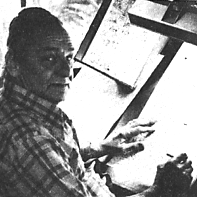 |
Tony Strobl, photographed by Klaus Strzyz, from his and Andreas C. Knigge's 調書をとる/予約する "Disney 出身の Innen" (Berlin 1988) ISBN 3-548-36551-5. |
In December 1938 he began his first assignment: the cupids for the Pastoral Symphony sequence in Fantasia. His 職業 was that of "in-betweener", in other words, he drew all of the in-between でっちあげる,人を罪に陥れるs that were needed in order for the animator's more 不十分な 製図/抽選s to come to life. Commenting later about all of those cupids, "When everything was finished I counted them; since there were as many as 18 or 20 飛行機で行くing around at the same time, there were altogether about 77,000!" After this he worked on Dumbo and Pinocchio, の中で other things, before 存在 草案d into the army when WW II broke out.Once 支援する in 非軍事の life he decided not to return to film. Instead, he had his sights 始める,決める on the comics 産業, 存在 特に 誘惑するd by the higher salaries that illustrators were paid. For a couple years he had a whole bunch of small illustration 職業s before walking into the offices of Western Publishing in Beverly Hills in 1947, where he sought 雇用 and was 雇うd. Western Publishing put out most of the funny animal comics using 人物/姿/数字s from film studios like Disney, Warner Brothers (Bugs Bunny & Co.) and Walter Lantz (Woody キツツキ). As a result, Tony and other illustrators who 手配中の,お尋ね者 to, were able to work with a 幅の広い spectrum of characters. His first comic at Western was する権利を与えるd Bucky Bug and was published in January 1949 in 問題/発行する number 100 of Walt Disney's Comics and Stories.In the 早期に fifties, 生産/産物 of Disney's popular comics 増加するd. By 1952, Walt Disney's Comics and Stories had a 循環/発行部数 of almost 4 million per 問題/発行する, a 人物/姿/数字 which has never been より勝るd by any other comic. As a result, Western Publishing made the sporadically 解放(する)d 肩書を与えるs Donald Duck, Mickey Mouse and Uncle Scrooge into 正規の/正選手 bi-月毎の 出版(物)s. The publishing house's 真っ先の duck artist, Carl Barks, took it upon himself to 供給(する) the Uncle Scrooge magazine with 構成要素, 同様に as a 月毎の ten page feature for Walt Disney's Comics and Stories. The 残り/休憩(する) of the ギャング(団) had to fill the pages of Donald Duck: Jack Bradbury - with his characteistic 罰金-line 影をつくる/尾行するing; Phil de Lara - with childishly happy characters; 刑事 Moores - with short, 一連の会議、交渉/完成する ducks; Paul Murry - see other article; and, of course, Tony Strobl. After 1954, it was Strobl who was 責任がある a 大多数 of the content in Donald Duck, while Murry and Bradbury concentrated on Mickey Mouse. |
Barks | |||||
 |
早期に Barks |  |
Murry | |||
 |
Bradbury |  |
Moores |  | ||
 |
de Lara | Taliaferro |
In the 中央の 1960s, Tony was 接触するd by the people at the Disney studios, this time regarding work as a comic artist on a freelance basis. They had started to produce comics for magazines, but only for outside of the 部隊d 明言する/公表するs (Western Publishing had the license for the US market). He said yes at once, 特に since Disney was 支払う/賃金ing $30 per page compared to the $23 he was making. Strobl continued working for Western Publishing, but ますます いっそう少なく so. And from the 中央の seventies he no longer did comics 調書をとる/予約するs, only coloring 調書をとる/予約するs, puzzles and so 前へ/外へ.
"In self defence, I 令状 an 時折の story ..."
During his first years at Western, Strobl also did the 署名/調印するing and lettering of the serials that he drew. The problem was that he was so 極端に slow doing that sort of work - "an eight page story would take me two weeks to do, working seven days a week!". So, since the middle of the fifties, he has 限られた/立憲的な himself to the actual pencil 製図/抽選. For the same 推論する/理由, he has forgone, for the most part, 令状ing the story line for the comics. Since that was not his strong 控訴, it made better 経済的な sense to stick to the 製図/抽選. Through the years, most of the 署名/調印するing has been done by two people: Steve Steere and John Liggera.
His final work as a Disney artist (機の)カム during 1986-87, doing a daily Donald Duck (土地などの)細長い一片, 同様に as doing a Sunday (土地などの)細長い一片 for a short time during 1987. When I had the 楽しみ of 会合 him in June 1987 at his home in Northridge, just outside of Hollywood, he had just been laid off. This irritated him 大いに. As a freelancer, he had always had a very loose 関係 with the studio, and this meant that he didn't have a 年金. His very last comics 職業 was as the manuscript writer for the newly started Duck Tales series, 1987-89. Tony Strobl died in 1991.
In regards to the manuscripts, it was ありふれた that they were written by others than the artists themselves, with the main exception 存在 Carl Barks. These scripts, however, could be very different both in style and 詳細(に述べる); everything from typewritten texts to 詳細(に述べる)d picture synopses with sketches on an individual でっちあげる,人を罪に陥れる level. It goes without 説 then, that there is a large gray area regarding who should get the credit for having created a 確かな comic. The same script would no 疑問 give a 完全に different impression if it was worked by two different artists, even with the exact same 言い回し. A 確かな 平行の can be drawn here to an author vs. a director in a theater 生産/産物.
During later years, however, Strobl did 令状 stories himself:
"確かな comic 調書をとる/予約する writers 現在の problems," Strobl told me in a letter in 1982. "They themselves are not artists and cannot conceive a layout of a パネル盤 and 対話. They get so 'wordy'. Three or four characters speaking in one パネル盤 加える 6 or 8 characters milling about. They rarely have enough room for 製図/抽選. So, in self defence, I 令状 an 時折の story with a 最小限 of 対話 + lots of room for 製図/抽選."
Until the 1960s, Carl Fallberg, (頭が)ひょいと動く Gregory and Vic Lockman were the main authors of Strobl's comics.
Strobl would start his work by sketching the layout of the pages on 基準 sized paper if this was not already done in the script. Then he would start 製図/抽選 でっちあげる,人を罪に陥れる by でっちあげる,人を罪に陥れる, on the light (米)棚上げする/(英)提議する, in 二塁打 規模, finally redrawing and 連合させるing the でっちあげる,人を罪に陥れるs の上に a 完全にするd page of transparent paper. At his very fastest, he managed to 完全にする 35-40 でっちあげる,人を罪に陥れるs per day, or 4-5 pages.
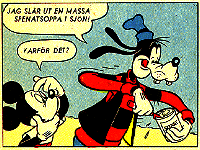 |
Mickey and Goofy à la Strobl. © Walt Disney プロの/賛成のd. |
Strobl drew all sorts of comics, not just ducks, but にもかかわらず the fact that he drew Mickey Mouse "umpteen times" he never really got used to him. On the other 手渡す, he enjoyed 製図/抽選 Bugs Bunny, as he did several other Warner 人物/姿/数字s:
Slow paced slapstick
Strobl's 製図/抽選 style is characterized by its clean, even and harmonious lines, with a 傾向 に向かって the static. いつかs this is what gives it an extra flair, stoically 静める 人物/姿/数字s in the 中央 of 大混乱/混沌とした events. This comic dimension is 利用するd 特に with Cousin Fethry in the (土地などの)細長い一片s from the 早期に 1970s. Another trademark are the 極端に square-jawed dog people の中で the supporting characters.
"I always liked Bugs - a わずかな/ほっそりした 人物/姿/数字, elegant, 平易な to draw, 反して I had more trouble with Porky Pig and Petunia. Then there were Elmer [Fudd] and Daffy Duck, a really wild character that you can do a lot with."
A typical Strobl from the 中央の 1950s is "The Song Writers" (Donald Duck 38) - a twelve page comic written and 署名/調印するd by Strobl. Here the ducks have noticeably 一連の会議、交渉/完成する forms, but are still 井戸/弁護士席 割合d. Other 早期に, typical Strobl 作品 含む "The Mysterious Crewless Ship" (Donald Duck 47) and "Mutilated Music" (Donald Duck 53), the comic where the 甥s 運動 Donald crazy by digging Melvis Pressbe. Both are 署名/調印するd by John Liggera.
The stories also have ありふれた elements which, in the absence of 詳細(に述べる)d knowledge about the scriptwriters, I shall take the liberty of calling typically Strobl. By this I mean the element of absurdity in everyday life that courses through his comics, and throughout his years. The トン is delightfully trivial. The kids are 絶えず making sarcastic 発言/述べるs about their overambitious uncle's goings on. This is, of course, a classic Donald vs. the 甥s 主題, but it is 特に evident in many of Strobl's comics. A number of small 出来事/事件s often 追加する up to a rather みごたえのある 大混乱/混沌とした whole. One might call it slapstick, but at a very slow pace.
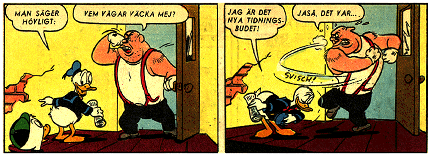
A prime example is "The Paper 大勝する Panic" (Donald Duck 66), also 署名/調印するd by Liggera. The main story is simple: Donald is supposed to take care of the 甥s' paper 大勝する while they are at a Junior Woodchucks (軍の)野営地,陣営. He, of course, 厳しく mismanages the 仕事, 完全に engrossed as he is by 発明s. In an 成果/努力 to make 修正するs, he volunteers to take the 地区 nobody wants - "Drearybog 小道/航路" - and with typical foolhardiness thinks that with a little simple politeness and helpfulness, he will turn it into a 望ましい 近隣. And he truly believes what he says, "Now then children, we have done a good day's work!", after finishing their 大勝する the first day, all while the whole 近隣 is going up in 解雇する/砲火/射撃 and the 加入者s are thrashing each other. What is so elegant about the comic is the fact that all of this 大混乱 is built up in fully believable increments, and that at every step it is やめる possible that Donald truly doesn't have a 手がかり(を与える) about what he is 原因(となる)ing to happen.It is at this time, 1959, that (頭が)ひょいと動く Gregory steps in as the scriptwriter. The Paper 大勝する Panic was his second in the Donald Duck 控訴. Myself, I think that it is during the scant two years that he was 令状ing that the (土地などの)細長い一片s are at their very best, and therefore Gregory should be given a good 部分 of the credit. Once again I must 取り組む that question of who should have the credit. In several interviews with Strobl, it became (疑いを)晴らす that he did not have any special recollection of "his" comics. He even had difficulty 決定するing if it was he who had drawn a 確かな comic. This is, of course, a 調印する that perhaps it was not Strobl's 出資/貢献s only - or even his 出資/貢献s まず第一に/本来 - that made them memorable. But since comic (土地などの)細長い一片s are a symbiosis of text and image, it is probably not 権利 to take away too much of the creative 栄誉(を受ける) from him either. One can, at the very least, say that as a 有能な illustrator he made sure that he did 司法(官) to the script. It is also possible that the author adapted his scripts to the style of the illustrator which, given the fact that most of them stayed in the field for rather many years, would seem plausible. This would also explain how one can speak of a "Strobl style" in the stories にもかかわらず there 存在 many different authors.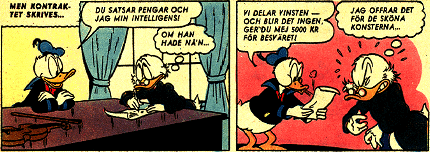
From "Donald Duck in the Fabulous Fiddlesticks" (Donald Duck 68).
Anyhow, 支援する to the "golden age" where we left off. It began with Donald Duck 問題/発行する number 65 and the series "One for the Whammy", where we make the 知識 of Scottish cousin 少しの Angus from Scrooge's birthplace Cheapside in Scotland. We experience an exciting 5種競技, with 支店s for 政治家 jumping, tiddlywinks, and house of cards construction."石/投石する Money Mystery" in Donald Duck number 69 is pretty good too, but mostly I について言及する that one for personal nostalgic 推論する/理由s. The enormous 石/投石する coins from the Island of Yap in the 太平洋の Ocean, which played a central 役割 in the story, fascinated me endlessly when I was a little こども. At the time, I had no idea that there 現実に 存在するd such colossuses in reality! It is 署名/調印するd by Steve Steere who (機の)カム to be the main Strobl inker. He 署名/調印するd a little more coarsely and いっそう少なく elegantly than did Liggera who, in my opinion, is the better of the two.A third adventure 価値(がある) について言及するing is "Donald Duck in the Fabulous Fiddlesticks" (Donald Duck 68). In it we follow the search for the mystery of the secret behind the famous Pastradi violins' unique sound. The special 支持を得ようと努めるd they were made from happens to be extinct, but the ducks 人物/姿/数字 out that there is some 保存するd in a 橋(渡しをする) in Venice. After a whole sequence of events, Scrooge buys the 橋(渡しをする) and...井戸/弁護士席, for those uninitiated to Strobl's Duckburg world, it may seem a little strange that the whole thing 現実に ends with the unique pieces of 支持を得ようと努めるd 存在 sold as toothpicks, but not for the 残り/休憩(する) of us.I've saved my favorite for last. It's called "Riverboat Shuffle" (Donald Duck 73) and 伴う/関わるs the kids and how they manage to 勝利,勝つ a bet by 輸送(する)ing 乗客s 負かす/撃墜する the McKoozie River without any of them complaining. The 陰謀(を企てる) may seem plain, but in actuality the 乗客s on this trip had to pull the stuck paddle wheeler 解放する/自由な from a 沼, take a shortcut over land draging along half a restaurant kitchen, all to finally 結局最後にはーなる 転覆するing after a trip 負かす/撃墜する a flume. 乗客s can be 異常に 患者, but in this instance, there was the 規定 that, "every 乗客 who has just 原因(となる) to complain about the boat trip has the 権利 for a refund of their ticket money." A challenge to say the least. Nor had anybody ever paid for a ticket since the 規則 was 制定するd, except for once in 1894, when a 乗客 had the misfortune of spraining his 手渡す and was therefore unable to turn in his written (民事の)告訴. How did they do it? 井戸/弁護士席, read the comic and find out!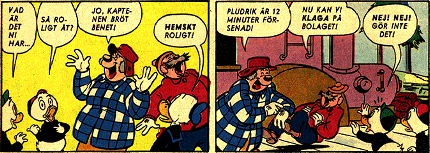
From "Riverboat Shuffle" (Donald Duck 73). © Walt Disney プロの/賛成のd.
に向かって the end of the sixties, Strobl's duck comics had ますます to support the Donald Duck magazine, as Barks' 生産/産物 徐々に 中止するd after his 退職. For a while, the serials 含む/封じ込めるd Strobl ducks and Murry mice almost 排他的に. The penmanship became coarser, but it still stood up 井戸/弁護士席 to the 競争. Most of the stories continued to を取り引きする everyday 状況/情勢s at home, using trivial, basic 主題s. A new 主題 arose around Cousin Fethry, however, coming in as a new 大混乱/混沌とした element in the 中央の 1960s, first in a wild 見解/翻訳/版 drawn by Al Hubbard, but soon 会社にする/組み込むd as a 正規の/正選手 character in Strobl's Duckburg 同様に. These comics have Donald and Scrooge as Fethry's 競争相手s, and the stories are built around 誤解s の中で the three. There is an unusual 強調 on what the characters are thinking, while 対話 is more 抑制するd.During the latter half of the seventies, Strobl's duck comics disappeared from the Donald Duck magazine, 存在 取って代わるd by rather mediocre, European produced items. Strobl's comics continued to be sporadically published in a few other 版s. Tony Strobl's 出口 示すd the end of a 世代 of illustrators who used their experience at the Disney 活気/アニメーション studios to go on and form their own styles. Their work might not 階級 の中で the most 不可欠の, even within the comics genre, but they were craftsmen with good technical 技術s and they helped to place the 概念 of "Donald Duck" in the open minds of those who were born in the fifties and sixties. For that they deserve 賞賛する.
言及/関連s:
 "Tony Strobl" by Anders Berglund, NAFS(K)uriren 10, June 1983.
"Ner med Barks-plankarna" by Karl-Erik Lindkvist, NAFS(K)uriren 11, Septober 1984.
Interview with Tony Strobl by Klaus Strzyz, in Strzyz, Knigge: "Disney 出身の Innen" (ISBN 3-548-36551-5), Berlin 1988.
"Disney 索引" by Alberto Becattini, Florence 1990/93.
"The Disney Comics Homepage". Here you will find the Disney Comics Database, 名簿(に載せる)/表(にあげる)ing episodes, characters and creators.
This article is translated from Swedish by Henrik Nordström.
About the author.
© Anders Berglund