
このページはEtoJ逐語翻訳フィルタによって翻訳生成されました。

翻訳前ページへ


Of the Turnerian Picturesque

Please 公式文書,認める: All とじ込み/提出するs 示すd with a copyright notice are 支配する to normal copyright 制限s. These とじ込み/提出するs may, however, be downloaded for personal use. Electronically 分配するd texts may easily be corrupted, deliberately or by technical 原因(となる)s. When you base other 作品 on such texts, 二塁打-check with a printed source if possible.


Of the Turnerian Picturesque

John Ruskin


§ 1. The work which we 提案するd to ourselves, に向かって the の近くに of the last 容積/容量, as first to be undertaken in this, was the examination of those peculiarities of system in which Turner either stood alone, even in the modern school, or was a distinguished 代表者/国会議員 of modern, as …に反対するd to 古代の, practice.
  And the most 利益/興味ing of these 支配するs of 調査, with which, therefore, it may be best to begin, is the 正確な form under which he has 認める into his work the modern feeling of the picturesque, which, so far as it consists in a delight in 廃虚, is perhaps the most 怪しげな and 疑わしい of all the characters distinctively belonging to our temper, and art.
  It is 特に so, because it never appears, even in the slightest 手段, until the days of the 拒絶する/低下する of art in the seventeenth century. The love of neatness and precision, as …に反対するd to all disorder, 持続するs itself 負かす/撃墜する to Raphael's childhood without the slightest 干渉,妨害 of any other feeling; and it is not until Claude's time, and 借りがあるing in 広大な/多数の/重要な part to his 影響(力), that the new feeling distinctly 設立するs itself.
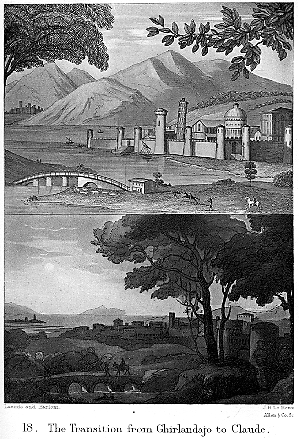
  Plate 18 shows the 肉親,親類d of modification which Claude used to make on the towers and backgrounds of Ghirlandajo; the old Florentine giving his idea of Pisa, with its leaning tower, with the 最大の neatness and precision, and handsome 青年s riding over neat 橋(渡しをする)s on beautiful horses; Claude 減ずるing the delicate towers and 塀で囲むs to unintelligible 廃虚, the 井戸/弁護士席-built 橋(渡しをする) to a rugged 石/投石する one, the handsome rider to a 疲れた/うんざりした traveller, and the perfectly drawn leafage to 混乱 of copsewood or forest.*

* Ghirlandajo is seen to the greatest possible disadvantage in this plate, as I have been 軍隊d again to copy from Lasinio, who leaves out all the light and shade, and vulgarizes every form; but the points 要求するing notice here are 十分に shown, and I will do Ghirlandajo more 司法(官) hereafter.

  How far he was 権利 in doing this; or how far the moderns are 権利 in carrying the 原則 to greater 超過, and 捜し出すing always for poverty-stricken rusticity or pensive 廃虚, we must now endeavour to ascertain.
  The essence of picturesque character has been already defined* to be a sublimity not inherent in the nature of the thing, but 原因(となる)d by something 外部の to it; as the ruggedness of a cottage roof 所有するs something of a mountain 面, not belonging to the cottage as such. And this sublimity may be either in mere 外部の ruggedness, and other 明白な character, or it may 嘘(をつく) deeper, in an 表現 of 悲しみ and old age, せいにするs which are both sublime; not a 支配的な 表現, but one mingled with such familiar and ありふれた characters as 妨げる the 反対する from becoming perfectly pathetic in its 悲しみ, or perfectly venerable in its age.

* Seven Lamps of Architecture, chap. vi. § 12. [Vol. VIII. p. 236.]

  § 2. For instance, I cannot find words to 表明する the 激しい 楽しみ I have always in first finding myself, after some 長引かせるd stay in England, at the foot of the old tower of Calais church. The large neglect, the noble unsightliness of it; the 記録,記録的な/記録する of its years written so visibly, yet without 調印する of 証拠不十分 or decay; its 厳しい wasteness and gloom, eaten away by the Channel 勝利,勝つd, and overgrown with the bitter sea grasses; its 予定するs and tiles all shaken and rent, and yet not 落ちるing; its 砂漠 of brickwork 十分な of bolts, and 穴を開けるs, and ugly fissures, and yet strong, like a 明らかにする brown 激しく揺する; its carelessness of what any one thinks or feels about it, putting 前へ/外へ no (人命などを)奪う,主張する, having no beauty or desirableness, pride, nor grace; yet neither asking for pity; not, as 廃虚s are, useless and piteous, feebly or 情愛深く garrulous of better days; but usefill still, going through its own daily work,  - as some old fisherman beaten grey by 嵐/襲撃する, yet 製図/抽選 his daily 逮捕するs: so it stands, with no (民事の)告訴 about its past 青年, in blanched and meagre massiveness and serviceableness, 集会 human souls together underneath it; the sound of its bells for 祈り still rolling through its rents; and the grey 頂点(に達する) of it seen far across the sea, 主要な/長/主犯 of the three that rise above the waste of surfy sand and hillocked shore,  - the lighthouse for life, and the belfry for 労働, and this for patience and 賞賛する.
  § 3. I cannot tell the half of the strange 楽しみs and thoughts that come about me at the sight of that old tower; for, in some sort, it is the epitome of all that makes the Continent of Europe 利益/興味ing, as …に反対するd to new countries; and, above all, it 完全に 表明するs that agedness in the 中央 of active life which 貯蔵所d the old and the new into harmony. We, in England, have our new street, our new inn, our green shaven lawn, and our piece of 廃虚 emergent from it,  - a mere 見本/標本  of the Middle Ages put on a bit of velvet carpet to be shown, which, but for its size, might 同様に be on a museum shelf at once, under cover. But, on the Continent, the links are 無傷の between the past and 現在の, and, in such use as they can serve for, the grey-長,率いるd 難破させるs are 苦しむd to stay with men; while, in 無傷の line, the 世代s of spared buildings are seen 後継するing each in its place. And thus in its largeness, in its permitted 証拠 of slow 拒絶する/低下する, in its poverty, in its absence of all pretence, of all show and care for outside 面, that Calais tower has an infinite of symbolism in it, all the more striking because usually seen in contrast with English scenes expressive of feelings the exact 逆転する of these.
  § 4. And I am sorry to say that the 対立 is most 際立った in that noble carelessness as to what people think of it. Once, on coming from the Continent, almost the first inscription I saw in my native English was this:
  "To Let, a Genteel House, up this road."
  And it struck me 強制的に, for I had not come across the idea of gentility, の中で the upper 石灰岩s of the アルプス山脈, for seven months; nor do I think that the 大陸の nations in general have  the idea. They would have advertised a "pretty" house, or a "large" one, or a "convenient" one; but they could not, by any use of the 条件 afforded by their several languages, have got at the English "genteel." Consider, a little, all the meanness that there is in that epithet, and then see, when next you cross the Channel, how scornful of it that Calais spire will look.
  § 5. Of which spire the largeness and age are also …に反対するd 正確に/まさに to the 長,指導者 外見s of modern England, as one feels them on first returning to it; that marvellous smallness both of houses and scenery, so that a ploughman in the valley has his 長,率いる on a level with the 最高の,を越すs of all the hills in the neighbourhood; and a house is 組織するd into 完全にする 設立,  - parlour, kitchen, and all, with a knocker to its door, and a garret window to its roof, and a 屈服する to its second story,* on a 規模 of 12 feet wide by 15 high, so that three such at least would go into the granary of an ordinary スイスの cottage: and also our serenity of perfection, our peace of conceit, everything 存在 done that vulgar minds can conceive as wanting to be done; the spirit of 井戸/弁護士席-原則d housemaids everywhere, 発揮するing itself for perpetual propriety and 革新, so that nothing is old, but only "old-fashioned," and 同時代の, as it were, in date and impressiveness only with last year's bonnets. Abroad, a building of the eighth or tenth century stands ruinous in the open street; the children play 一連の会議、交渉/完成する it, the 小作農民s heap their corn in it, the buildings of yesterday nestle about it, and fit their new 石/投石するs into its rents, and tremble in sympathy as it trembles. No one wonders at it, or thinks of it as separate, and of another time; we feel the 古代の world to be a real thing, and one with the new: antiquity is no dream; it is rather the children playing about the old 石/投石するs that are the dream. But all is continuous; and the words, "from 世代 to 世代," 理解できる there. 反して here we have a living 現在の, consisting 単に of what is "流行の/上流の " and "oldfashioned"; and a past, of which there are no 痕跡s; a past which 小作農民 or 国民 can no more conceive; all 平等に far away; Queen Elizabeth as old as Que en Boadicea, and both incredible. At Verona we look out of Can Grande's window to his tomb; and if he does not stand beside us, we feel only that he is in the 墓/厳粛/彫る/重大な instead of the 議会,  - not that he is old,  but that he might have been beside us last night. But in England the dead are dead to 目的. One cannot believe they ever were alive, or anything else than what they are now  - 指名するs in school-調書をとる/予約するs.

* The 主要な/長/主犯 street of Canterbury has some curious examples of this tininess.

  § 6. Then that spirit of trimness. The smooth 覆うing 石/投石するs; the 捨てるd, hard, even, rutless roads; the neat gates and plates, and essence of 国境 and order, and spikiness and spruceness. Abroad, a country-house has some 自白 of human 証拠不十分 and human 運命/宿命s about it. There are the old grand gates still, which the 暴徒 圧力(をかける)d sore against at the 革命, and the 緊張するd hinges have never gone so 井戸/弁護士席 since; and the broken greyhound on the 中心存在  - still broken  - better so: but the long avenue is gracefully pale with fresh green, and the 中庭 有望な with orange-trees; the garden is a little run to waste  - since Mademoiselle was married nobody cares much about it; and one 範囲 of apartments is shut up  - nobody goes into them since Madame died. But with us, let who will be married or die, we neglect nothing. All is polished and 正確な again next morning; and whether people are happy or 哀れな, poor or 繁栄する, still we sweep the stairs of a Saturday.*

* This, however, is of course true only of insignificant 義務s, necessary, for 外見' sake. Serious 義務s, necessary for 親切' sake, must be permitted in any 国内の affliction, under 苦痛 of shocking the English public.

  § 7. Now, I have 主張するd long on this English character, because I want the reader to understand 完全に the opposite element of the noble picturesque: its 表現, すなわち, of 苦しむing,  of poverty,  or decay,  nobly 耐えるd by unpretending strength of heart. Nor only unpretending, but unconscious. If there be 明白な pensiveness in the building, as in a 廃虚d abbey, it becomes, or (人命などを)奪う,主張するs to become, beautiful; but the picturesqueness is in the unconscious 苦しむing,  - the look that an old labourer has, not knowing that there is anything pathetic in his grey hair, and withered 武器, and sunburnt breast; and thus there are the two extremes, the consciousness of pathos in the 自白するd 廃虚, which may or may not be beautiful, によれば the 肉親,親類d of it; and the entire 否定 of all human calamity and care, in the swept proprieties and neatnesses of English modernism: and, between these, there is the unconscious 自白 of the facts of 苦しめる and decay, in by-words; the world's hard work 存在 gone through all the while, and no pity asked for, nor contempt 恐れるd. And this is the 表現 of that Calais spire, and of all picturesque things, in so far as they have mental or human 表現 at all.
  § 8. I say, in so far as they have mental 表現, because their 単に outward delightfulness  - that which makes them pleasant in 絵, or, in the literal sense, picturesque  - is their actual variety of colour and form. A broken 石/投石する has やむを得ず more さまざまな forms in it than a whole one; a bent roof has more さまざまな curves in it than a straight one; every excrescence or cleft 伴う/関わるs some 付加 複雑さ of light and shade, and every stain of moss on eaves or 塀で囲む 追加するs to the delightfulness of colour. Hence, in a 完全に picturesque 反対する, as an old cottage or mill, there are introduced, by さまざまな circumstances not 必須の to it, but, on the whole, 一般に somewhat detrimental to it as cottage or mill, such elements of sublimity  - コンビナート/複合体 light and shade, 変化させるd colour, undulatory form, and so on  - as can 一般に be 設立する only in noble natural 反対するs, 支持を得ようと努めるd, 激しく揺するs, or mountains. This sublimity, belonging in a parasitical manner to the building, (判決などを)下すs it, in the usual sense of the word, "picturesque."
  § 9. Now, if this outward sublimity be sought for by the painter, without any regard for the real nature of the thing, and without any comprehension of the pathos of character hidden beneath, it forms the low school of the surface-picturesque; that which fills ordinary 製図/抽選-調書をとる/予約するs and 捨てる-調書をとる/予約するs, and 雇うs, perhaps, the most popular living landscape painters of フラン, England, and Germany. But if these same outward characters be sought for in subordination to the inner character of the 反対する, every source of pleasurableness 存在 辞退するd which is 相いれない with that, while perfect sympathy is felt at the same time with the 反対する as to all that it tells of itself in those sorrowful by-words, we have the school of true or noble picturesque; still distinguished from the school of pure beauty and sublimity, because, in its 支配するs, the pathos and sublimity are all by the way,  as in Calais old spire,  - not inherent, as in a lovely tree or mountain; while it is distinguished still more from the schools of the lower picturesque by its tender sympathy, and its 拒絶 of all sources of 楽しみ inconsistent with the perfect nature of the thing to be 熟考する/考慮するd.
  § 10. The reader will only be 納得させるd of the 幅の広い 範囲 of this 法律 by careful thought, and comparison of picture with picture; but a 選び出す/独身 example will make the 原則 of it (疑いを)晴らす to him.
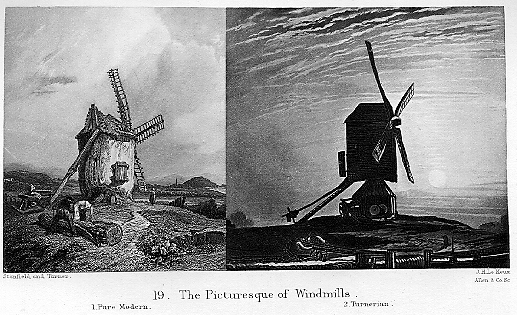
  

  On the whole, the first master of the lower picturesque, の中で our living artists, is Clarkson Stanfield; his 範囲 of art 存在, indeed, 限られた/立憲的な by his 追跡 of this character. I take, therefore, a windmill, forming the 主要な/長/主犯 支配する in his 製図/抽選 of Brittany 近づく Dol (engraved in the Coast Scenery), Fig. 1, Plate 19, and beside it I place a windmill, which forms also the 主要な/長/主犯 支配する in Turner's 熟考する/考慮する of the Lock, in the Liber Studiorum. At first sight I dare say the reader may like Stanfield's best; and there is, indeed, a 広大な/多数の/重要な 取引,協定 more in it to attract liking. Its roof is nearly as 利益/興味ing in its ruggedness as a piece of the stony 頂点(に達する) of a mountain, with a chalet built on its 味方する; and it is exquisitely 変化させるd in swell and curve. Turner's roof, on the contrary, is a plain, ugly gable,  - a windmill roof, and nothing more. Stanfield's sails are 新たな展開d into most 効果的な 難破させるs, as beautiful as pine 橋(渡しをする)s over Alpine streams; only they do not look as if they had ever been serviceable windmill sails; they are bent about in cross and ぎこちない ways, as if they were warped or cramped; and their 木材/素質s look heavier than necessary. Turner's sails have no beauty about them like that of Alpine 橋(渡しをする)s; but they have the exact switchy sway of the sail that is always 緊張するing against the 勝利,勝つd; and the 木材/素質s form 明確に the lightest possible 枠組み for the canvas,  - thus showing the essence of windmill sail. Then the clay 塀で囲む of Stanfield's mill is as beautiful as a piece of chalk cliff, all worn into furrows by the rain, coated with mosses, and rooted to the ground by a heap of 崩壊するd 石/投石する, embroidered with grass and creeping 工場/植物s. But this is not a serviceable 明言する/公表する for a windmill to be in. The essence of a windmill, as distinguished from all other mills, is, that it should turn 一連の会議、交渉/完成する, and be a spinning thing, ready always to 直面する the 勝利,勝つd; as light, therefore, as possible, and as vibratory; so that it is in no wise good for it to approximate itself to the nature of chalk cliffs.
  Now 観察する how 完全に Turner has chosen his mill so as to 示す this 広大な/多数の/重要な fact of windmill nature; how high he has 始める,決める it; how slenderly he has supported it; how he has built it all of 支持を得ようと努めるd; how he has bent the lower planks so as to give the idea of the building lapping over the pivot on which it 残り/休憩(する)s inside; and how, finally, he has 主張するd on the 広大な/多数の/重要な てこ入れ/借入資本 of the beam behind it, while Stanfield's lever looks more like a 支え(る) than a thing to turn the roof with. And he has done all this fearlessly, though 非,不,無 of these elements of form are pleasant ones in themselves, but tend, on the whole, to give a somewhat mean and spider-like look to the 主要な/長/主犯 feature in his picture; and then, finally, because he could not get the windmill dissected, and show us the real heart and centre of the whole, behold, he has put a pair of old millstones, lying outside,  at the 底(に届く) of it. These  - the first 原因(となる) and 動機 of all the fabric  - laid at its 創立/基礎; and beside them the cart which is to fulfil the end of the fabric's 存在, and take home the 解雇(する)s of flour.
  §11. So far of what each painter chooses to draw. But do not fail also to consider the spirit in which it is drawn. 観察する, that though all this 廃虚 has befallen Stanfield's mill, Stanfield is not in the least sorry for it. On the contrary, he is delighted, and evidently thinks it the most fortunate thing possible. The owner is 廃虚d, doubtless, or dead; but his mill forms an admirable 反対する in our 見解(をとる) of Brittany. So far from 存在 grieved about it, we will make it our 主要な/長/主犯 light;  - if it were a fruit-tree in spring-blossom, instead of a desolate mill, we could not make it whiter or brighter; we illumine our whole picture with it, and exult over its every rent as a special treasure and 所有/入手.
  Not so Turner. His  mill is still serviceable; but, for all that, he feels somewhat pensive about it. It is a poor 所有物/資産/財産, and evidently the owner of it has enough to do to get his own bread out from between its 石/投石するs. Moreover, there is a 薄暗い type of all melancholy human 労働 in it,  - catching the 解放する/自由な 勝利,勝つd, and setting them to turn grindstones. It is poor work for the 勝利,勝つd; better, indeed, than 溺死するing sailors or 涙/ほころびing 負かす/撃墜する forests, but not their proper work of marshalling the clouds, and 耐えるing the wholesome rains to the place where they are ordered to 落ちる, and fanning the flowers and leaves when they are faint with heat. Turning 一連の会議、交渉/完成する a couple of 石/投石するs, for the mere pulverization of human food, is not noble work for the 勝利,勝つd. So, also, of all low 労働 to which one 始める,決めるs human souls. It is better than no 労働; and, in a still higher degree, better than destructive wandering of imagination; but yet that grinding in the 不明瞭, for mere food's sake, must be melancholy work enough for many a living creature. All men have felt it so; and this grinding at the mill, whether it be 微風 or soul that is 始める,決める to it, we cannot much rejoice in. Turner has no joy of his mill. It shall be dark against the sky, yet proud, and on the hill-最高の,を越す; not ashamed of its 労働, and brightened from beyond, the golden clouds stooping ovel it, and the 静める summer sun going 負かす/撃墜する behind, far away, to his 残り/休憩(する).
  § 12. Now in all this 観察する how the higher 条件 of art (for I suppose the reader will feel, with me, that Turner is  the highest) depends upon largeness of sympathy. It is おもに because the one painter has communion of heart with his 支配する, and the other only casts his 注目する,もくろむs upon it feelinglessly, that the work of the one is greater than that of the other. And, as we think さらに先に over the 事柄, we shall see that this is indeed the 著名な 原因(となる) of the difference between the lower picturesque and the higher. For, in a 確かな sense, the lower picturesque ideal is eminently a heartless  one; the lover of it seems to go 前へ/外へ into the world in a temper as merciless as its 激しく揺するs. All other men feel some 悔いる at the sight of disorder and 廃虚. He alone delights in both; it 事柄s not of what. Fallen cottage   - desolate 郊外住宅  - 砂漠d village  - 爆破d ヒース/荒れ地  - mouldering 城  - to him, so that they do but show jagged angles of 石/投石する and 木材/素質, all are sights 平等に joyful. Poverty, and 不明瞭, and 犯罪, bring in their several 出資/貢献s to his 財務省 of pleasant thoughts. The 粉々にするd window, 開始 into 黒人/ボイコット and 恐ろしい rents of 塀で囲む, the foul rag or straw wisp stopping them, the dangerous roof, decrepit 床に打ち倒す and stair, ragged 悲惨, or wasting age of the inhabitants,  - all these 反対/詐欺d uce, each in 予定 手段, to the fulness of his satisfaction. What is it to him that the old man has passed his seventy years in helpless 不明瞭 and untaught waste of soul? The old man has at last 遂行するd his 運命, and filled the corner of a sketch, where something of an unshapely nature was wanting. What is it to him that the people fester in that feverish 悲惨 in the low 4半期/4分の1 of the town, by the river? Nay, it is much to him. What else were they made for? what could they have done better? The 黒人/ボイコット 木材/素質s, and the green water, and the soaking 難破させるs of boats, and the torn 残余s of 着せる/賦与するs hung out to 乾燥した,日照りの in the sun;  - truly the fever-struck creatures, whose lives have been given for the 生産/産物 of these 構成要素s of 影響, have not died in vain.*

* I 抽出する from my 私的な diary a passage 耐えるing somewhat on the 事柄 in 手渡す [The passage is in Ruskin's diary of 1854, though it is somewhat altered for use here  - editor's 公式文書,認める]:
  "Amiens, 11th May,  18 -. I had a happy walk here this afternoon 負かす/撃墜する の中で the 支店ing 現在のs of the Somme; it divides into five or six,  - shallow, green, and not over-wholesome; some やめる 狭くする and foul, running beneath clusters of fearful houses, reeling 集まりs of rotten 木材/素質; and a few mere stumps of pollard willow sticking out of the banks of soft mud, only 保持するd in 形態/調整 of bank by 存在 shored up with 木材/素質s; and boats like paper boats, nearly as thin at least, for the costermongers to paddle about in の中で the 少しのd, the water soakiug through the lath 底(に届く)s, and floating the dead leaves from the vegetable-baskets with which they were 負担d. 哀れな little 支援する yards, 開始 to the water, with 法外な storne steps 負かす/撃墜する to it, and little 壇・綱領・公約s for the ducks; and separate duck staircases, composed of a sloping board with cross bits of 支持を得ようと努めるd 主要な to the ducks' doors; and いつかs a flower-マリファナ or two on them, or even a flower,  - one group, of wallflowers and geraniums, curiously vivid, 存在 seen against the 不明瞭 of a dyer's 支援する yard, who had been dyeing 黒人/ボイコット all day, and all was 黒人/ボイコット in his yard but the flowers, and they fiery and pure; the water by no means so, but still working its way 刻々と over the 少しのd, until it 狭くするd into a 現在の strong enough to turn two or three mill-wheels, one working against the 味方する of an old flamboyant Gothic church, whose richly traceried buttresses sloped into the filthy stream;  - all exquisitely picturesque, and no いっそう少なく 哀れな. We delight in seeing the 人物/姿/数字s in these boats 押し進めるing them about the bits of blue water, in Prout's 製図/抽選s; but as I l ooked to-day at the unhealthy 直面する and melancholy mien of the man in the boat 押し進めるing his 負担 of peats along the 溝へはまらせる/不時着する, and of the people, men 同様に as women, who sat spinning gloomily at the cottage doors, I could not help feeling how many 苦しむing persons must 支払う/賃金 for my picturesque 支配する and happy walk."

  § 13. Yet, for all this, I do not say the lover of the lower picturesque is a monster in human form. He is by no means this, though truly we might at first think so, if we (機の)カム across him unawares, and had not met with any such sort of person before. 一般に speaking, he is 肉親,親類d-hearted, innocent of evil, but not 幅の広い in thought; somewhat selfish, and incapable of 激烈な/緊急の sympathy with others; gifted at the same time with strong artistic instincts and capacities for the enjoyment of 変化させるd form, and light, and shade, in 追跡 of which enjoyment his life is passed, as the lives of other men are for the most part, in the 追跡 of what they  also like,  - be it honour, or money, or indolent 楽しみ,  - very irrespective of the poor people living by the 沈滞した canal. And, in some sort, the hunter of the picturesque is better than many of these, inasmuch as he is simple-minded and 有能な of unostentatious and economical delights, which, if not very helpful to other people, are at all events not utterly injurious, even to the 犠牲者s or 支配するs of his picturesque fancies; while to many others his work is entertaining and useful. And, more than all this, even that delight which he seems  to take in 悲惨 is not altogether unvirtuous. Through all his enjoyment there runs a 確かな undercurrent of tragical passion,  - a real vein of human sympathy;  - it lies at the root of all those strange morbid hauntings of his; a sad excitement, such as other people feel at a 悲劇, only いっそう少なく in degree, just enough, indeed, to give a deeper トン to his 楽しみ, and to make him choose for his 支配する the broken 石/投石するs of a cottage 塀で囲む rather than of a 道端 bank, the picturesque beauty of form in each 存在 supposed 正確に the same: and, together with this slight tragical feeling, there is also a humble and romantic sympathy; a vague 願望(する), in his own mind, to live in cottages rather than in palaces; a joy in humble things, a contentment and delight in 一時しのぎの物,策s, a secret 説得/派閥 (in many 尊敬(する)・点s a true one) that there is in these 廃虚d cottages a happiness often やめる as 広大な/多数の/重要な as in kings' palaces, and a virtue and nearness to God infinitely greater and holier than can 一般的に be 設立する in any other 肉親,親類d of place; so that the 悲惨 in which he exults is not, as he sees it, 悲惨, but nobleness,  - "poor and sick in 団体/死体, and beloved by the Gods."* And thus, 存在 nowise sure that these things can be mended at all, and very sure that he knows not how to mend them, and also that the strange 楽しみ he feels in them must  have some good 推論する/理由 in the nature of things, he 産する/生じるs to his 運命, enjoys his dark canal without scruple, and 嘆く/悼むs over every 改良 in the town, and every movement made by its sanitary commissioners, as a miser would over a planned 強盗 of his chest; in all this 存在 not only innocent, but even respectable and admirable, compared with the 肉親,親類d of person who has no  楽しみ in sights of this 肉親,親類d, but only in fair faç広告s, 削減する gardens, and park palings, and who would thrust all poverty and 悲惨 out of his way, collecting it into 支援する alleys, or 広範囲にわたる it finally out of the world, so that the street might give wider play for his chariot-wheels, and the 微風 いっそう少なく offence to his nobility.

* Epitaph on Epictetus.

  § 14. Therefore, even the love for the lower picturesque せねばならない be cultivated with care, wherever it 存在するs: not with any special 見解(をとる) to artistic, but to 単に humane, education. It will never really or 本気で 干渉する with practical benevolence; on the contrary, it will 絶えず lead, if associated with other benevolent 原則s, to a truer sympathy with the poor, and better understanding of the 権利 ways of helping them; and, in the 現在の 行う/開催する/段階 of civilization, it is the most important element of character, not 直接/まっすぐに moral, which can be cultivated in 青年; since it is おもに for the want of this feeling that we destroy so many 古代の monuments, ーするために 築く "handsome" streets and shops instead, which might just 同様に have been 築くd どこかよそで, and whose 影響 on our minds, so far as they have any, is to 増加する every disposition to frivolity, expense, and 陳列する,発揮する.
  These, and such other considerations not 直接/まっすぐに connected with our 支配する, I shall, perhaps, be able to 圧力(をかける) さらに先に at the の近くに of my work; 合間, we return to the 即座の question, of the distinction between the lower and higher picturesque, and the artists who 追求する them.
  § 15. It is evident, from what has been 前進するd, that there is no 限定された 妨げる/法廷,弁護士業 of 分離 between the two; but that the dignity of the picturesque 増加するs from lower to higher, in exact 割合 to the sympathy of the artist with his 支配する. And in like manner, his own greatness depends (other things 存在 equal) on the extent of this sympathy. If he 残り/休憩(する) content with 狭くする enjoyment of outward forms, and light sensation of luxurious 悲劇, and so goes on multiplying his sketches of mere picturesque 構成要素, he やむを得ず settles 負かす/撃墜する into the ordinary "clever" artist, very good and respectable, 持続するing himself by his sketching and 絵 in an honourable way, as by any other daily 商売/仕事, and in 予定 time passing away from the world without having, on the whole, done much for it. Such has been the necessary, not very lamentable, 運命 of a large number of men in these days, whose gifts 勧めるd them to the practice of art, but who 所有するing no breadth of mind, nor having met with masters 有能な of concentrating what gifts they had に向かって nobler use, almost perforce remained in their small picturesque circle; getting more and more 狭くするd in 範囲 of sympathy as they fell more and more into the habit of 熟視する/熟考するing the one particular class of 支配するs that pleased them, and recomposing them by 支配するs of art.
  I need not give instances of this class, we have very few painters who belong to any other; I only pause for a moment to except  from it a man too often confounded with the draughtsmen of the lower picturesque;  - a very 広大な/多数の/重要な man, who, though partly by chance, and partly by choice, 限られた/立憲的な in 範囲 of 支配する, 所有するd for that 支配する the profoundest and noblest sympathy,  - Samuel Prout. His renderings of the character of old buildings, such as that spire of Calais, are as perfect and as 深く心に感じた as I can conceive possible; nor do I suppose that any one else will ever hereafter equal them.* His 早期に 作品 show that he possesed a しっかり掴む of mind which could have entered into almost any 肉親,親類d of landscape 支配する; that it was only chance  - I do not know if altogether evil chance  - which fettered him to 石/投石するs; and that in reality he is to be numbered の中で the true masters of the nobler picturesque.

* I believe when a thing is once 井戸/弁護士席 done  in this world, it never can be done over again.

  § 16. Of these, also, the 階級s rise in worthiness, によれば their sympathy. In the noblest of them that sympathy seems やめる 制限のない; they enter with their whole heart into all nature; their love of grace and beauty keeps them from delighting too much in 粉々にするd 石/投石するs and stunted trees, their 親切 and compassion from dwelling by choice on any 肉親,親類d of 悲惨, their perfect humility from 避けるing 簡単 of 支配する when it comes in their way, and their しっかり掴む of the highest thoughts from 捜し出すing a lower sublimity in cottage 塀で囲むs and penthouse roofs. And, whether it be home of English village thatched with straw and 塀で囲むd with clay, or of Italian city 丸天井d with gold and roofed with marble; whether it be 沈滞した stream under ragged willow, or ちらりと見ることing fountain between arcades of laurel, all to them will bring equal 力/強力にする of happiness, and equal field for thought.
  § 17. Turner is the only artist who hitherto has furnished the entire type  of this perfection. The attainment of it in all 尊敬(する)・点s is, of course, impossible to man; but the 完全にする type of such a mind has once been seen in him, and, I think, 存在するd also in Tintoret; though, as far as I know, Tintoret has not left any work which 示すs sympathy with the humour  of the world. Paul Veronese, on the other 手渡す, had sympathy with its humour, but not with its deepest 悲劇 or horror. Rubens wants the feeling for grace and mystery. And so, as we pass through the 名簿(に載せる)/表(にあげる) of 広大な/多数の/重要な painters, we shall find in each of them some 地元の narrowness. Now, I do not, of course, mean to say that Turner has 遂行するd all to which his sympathy 誘発するd him; やむを得ず, the very breadth of 成果/努力 伴う/関わるd, in some directions, manifest 失敗; but he has shown, in casual 出来事/事件s, and byways, a 範囲 of feeling  which no other painter, as far as I know, can equal. He cannot, for instance, draw children at play 同様に as Mulready; but just glean out of his 作品 the 証拠 of his sympathy with children;  - look at the girl putting her bonnet on the dog in the foreground of the Richmond, Yorkshire; the "juvenile tricks" and "海洋 dabblers" of the Liber Studiorum; the boys 緊急発進するing after their 道具s in the 支持を得ようと努めるd of the Greta and Buckfastleigh; and the 著名な and most pathetic 製図/抽選 of the Kirkby Lonsdale churchyard, with the schoolboys making a 要塞 of their larger 調書をとる/予約するs on the tombstone, to 砲撃する with the more 発射物 容積/容量s; and passing from these to the 激しい horror and pathos of the Rizpah, consider for yourself whether there was ever any other painter who could strike such an octave. Whether there has been or not, in other walks of art, this 力/強力にする of sympathy is unquestionably in landscape unrivalled; and it will be one of our pleasantest 未来 仕事s to 分析する in his さまざまな 製図/抽選s the character it always gives; a character, indeed, more or いっそう少なく 示すd in all good work whatever, but to which, 存在 pre-著名な in him, I shall always hereafter give the 指名する of the "Turnerian Picturesque."

  
[English Homepage]
[Svensk bassida]
[Ruskin menu (overview)]

***