

|
このページはEtoJ逐語翻訳フィルタによって翻訳生成されました。 |
|
|
| |
| Of knowledge |
| From the article ”Metaphysics”, Encyclopaedia Britannica, 1771 |
| | | 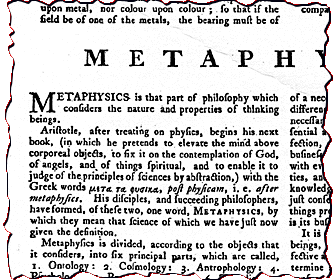 The beginning of the article Metaphysics in the Britannica of 1771.
Of knowledge in general.
Since the mind, in all its thoughts and reasonings, has no other 即座の 反対する but its own ideas, which alone it does or can 熟視する/熟考する, it is evident that our knowledge is only conversant about them. Knowledge then seems to be nothing but the perception of the 関係 and 協定, or 不一致 and repugnancy of any of our ideas: where this perception is, there is knowledge; and where it is not, there, though we fancy, guess, or believe, yet we always come short of knowledge. When we know that white is not 黒人/ボイコット, what do we but perceive that these two ideas do not agree? Or that the three angles of a triangle, are equal to two to 権利 ones; what do we more but perceive that equality to two 権利 ones does neccessarily agree to, and is separable from the three angles of a triangle? But to understand a little more distinctly wherein this 協定 or 不一致 consists, we may 減ずる it all to these four sorts: 1st, 身元 or 多様制; 2dly, Relation; 3dly, Coexistence; 4thly, Real 存在.
1. 身元 or 多様制. It is the first 行為/法令/行動する of the mind, to perceive its ideas; and so far as it perceives them, to know each whatit is, and その為に to perceive their difference, that is, the one not to be the other: by this the mind 明確に perceives each idea to agree with itself, and to be what it is; and all 際立った ideas to 同意しない. This it does without any 苦痛s or deduction, by its natural 力/強力にする of perception and distinction. This is what men of art have 減ずるd to those general 支配するs, viz. what is, is; and, it is impossible for the same thing to be and not to be. But no maxim can make a man know it clearer, that 一連の会議、交渉/完成する is not square, than the 明らかにする perception of those two ideas, which the mind at first sight perceives to 同意しない.
2. The next sort of 協定 or 不一致 thge mind perceives in any 肉親,親類d of its ideas, may be called 親族, and is nothing but the perception of the relation between any two ideas of what 肉親,親類d soever; that is, their 協定 or 不一致 one with another in several ways the mind takes of comparing them.
3. The third sort of 協定 or 不一致 to be 設立する in our ideas, is, coexistence or 非,不,無-coexistence in the same 支配する; and this belongs 特に to 実体s. Thus when we pronounce 関心ing gold, that it is 直す/買収する,八百長をするd, it 量s to no more but this, that fixedness, or a 力/強力にする to remain in the 解雇する/砲火/射撃 unconsumed, is an idea that always …を伴ってs that particular sort of yellowness, 負わせる, fusibility, &c, which make our コンビナート/複合体 idea 示す by the word gold.
4. The fourth sort, is that of actual and real 存在 agreeing to any idea. Within these four sorts of 協定 or 不一致, is 含む/封じ込めるd all the knowledge we have, or are 有能な of. For all that we know or can 断言する 関心ing any idea, is, That it is, or is not the same with some other; as, that blue is not yellow: That it does, or does not coexist with another in the same 支配する; as, that アイロンをかける is susceptible of magnetical impressions; That it has that or this relation to some other ideas; as, That two triangles, upon equal bases between two 平行のs, are equal: or, that it has a real 存在 without the mind; as, that God is.
There are several ways wherein the mind is 所有するd of truth, each of which is called knowledge. First, There is actual knowledge, when the mind has a 現在の 見解(をとる) of the 協定 or 不一致 of any of its ideas, or of the relation they have one with another. Secondly, A man is said to know any proposition, when having once evidently perceived the 協定 or 不一致 of the ideas whereof it consists, and so 宿泊するd it in his memory, that whenever it comes to be 反映するd on again, the mind assents to it without 疑問 or hesitation, and is 確かな of the truth of it. And this may be called habitual knowledge. And thus a man may be said to know all those truths which are 宿泊するd in his memory by a foregoing, (疑いを)晴らす, and 十分な perception.
Of habitual knowledge there are two sorts: The one is of such truths laid up in the memory, as whenever they occur to the mind, it 現実に perceives the relatin that is between those ideas. And this is in all those truths, where the ideas themselves, by an 即座の 見解(をとる), discover their 協定 or 不一致 one with another. The other is of such truths, whereof the mind having been 納得させるd, it 保持するs the memory of the 有罪の判決, without the proofs. Thus a man that remembers certainly, that he once perceived the demonstration, that the three angles of as triangle are equal to two 権利 ones, knows it to be true, when the demonstration is gone out of his mind, and かもしれない cannot be recollected: But he knows it in a different way from what he did before, すなわち, not by the 介入 of thos eintermediate ideas, whereby the 協定 or 不一致 of thois ein the proposition was at first perceived, but by remembring, i.e. knowing that he was once 確かな of the truth of this proposition, that the three angles of a triangle are equal to two 権利 ones. The immutability of the same relations between the same immutable things, is now the idea that shews him, that if the three angles of a trianglöe were once equal to two 権利 ones, they will always be so. And hence he comes to be 確かな , that what was once true, is always true; what ideas once agreed, will always agree; and その結果, what he once knew to be true, he will always know to be true, as long as he can remember that he once knew it.
Of the degrees of our knowledge.
All our knowledge consisting in the 見解(をとる) the mind has of its own ideas, which is the 最大の light and greatest certainty we are 有能な of, the different clearness of our knowledge seems to 嘘(をつく) in the different way of perception the mind has of the 協定 or 不一致 of any of its ideas.
When the mind perceives this 協定 or 不一致 of two ideas すぐに by themselves, without the 介入 of any other, we may call it intuitive knowledge, in which 事例/患者s the mind perceives truth, as the 注目する,もくろむ does light, only by 存在 directed に向かって it. Thus the mind perceives, that white is not 黒人/ボイコット; that three are more than two, and equal to one and two. This part of knowledge is irresistible, and, like the 有望な sun-向こうずね, 軍隊s itself すぐに to be perceived as soon as ever the mind turns its 見解(をとる) that way. It is on this intuition that depends all the certainty and 証拠 of our other knowledge; which certainty every one finds to be so 広大な/多数の/重要な, that he cannot imagine, and therefore not 要求する a greater.
The next degree of knowledge, is, where the mind perceives not this 協定 or 不一致 すぐに, or by the juxta-position, as it were, of the ideas, because those ideas 関心ing whose 協定 or 不一致 the 調査 is made, cannot by the mind be so put together, as to shew it. In this 事例/患者 the mind is fond to discover the 協定 or 不一致 which it searches, by the 介入 of other ideas: And this is that which we call 推論する/理由ing. And thus, if we would know the 協定 or 不一致 in bigness, between the three angles of a triangle, and two 権利 angles, we cannot by an 即座の 見解(をとる) and comparing them do it; because the three angles of a triangle cannot be brought at once, and be compared with any other one or two angles. And so of this the mind has no 即座の or intuitive knowledge. But we must find out some other angles, to which the three angles of a triangle have equality; and finding those equal to two 権利 ones, we come to know the equality of these three angles to two 権利 ones. Those 介入するing ideas which serve to shew the 協定 of any two others, are called proofs; and where the 協定 or 不一致 is by this means plainly and 明確に perceived, it is called demonstration. A quickness in the mind to find those proofs, and to 適用する them 権利, is that which is called sagacity.
This knowledge, though it be 確かな , is not so (疑いを)晴らす and evident as intuitive knowledge. It 要求するs 苦痛s and attention, and 安定した 使用/適用 of mind, to discover the 協定 or 不一致 of the ideas it considers; and there must be a progression by steps and degrees, before the mind can in this way arrive at certainty. Before demonstration there was a 疑問, which, in intuitive knowledge, cannot happen to the mind that has its faculty of preception left to a degree 有能な of 際立った ideas, no more than it can be a 疑問 to the 注目する,もくろむ (that can distinctly see white and 黒人/ボイコット) whether this 署名/調印する and paper be all of a colour.
Now, in every step that 推論する/理由 makes in demonstrative knowledge, there is an intuitive knowledge of that 協定 or 不一致 it 捜し出すs with the next 中間の idea, which it uses as a proof; for if it were not so, that yet would need a proof; since without the perception of such 協定 or 不一致, there is no knowledge produced. By which it is evident, that every step in 推論する/理由ing, that produces knowledge, has intuitive certainty: which when the mind perceives, there is no more 要求するd but to remember it, to make the 協定 or 不一致 of the ideas 関心ing which we 問い合わせ 明白な and 確かな . This intuitive perception of the 協定 or 不一致 of the 中間の ideas in each step and progression of the demonstration, must also be 正確に/まさに carried in the mind; and a man must be sure that no part is left out; which because in long deductions the memory cannot easily 保持する, this knowledge becomes more imperfect than intuitive, and men often embrace falsehoods for demonstrations.
|
| | |
|
| | | But in other simple ideas, whose 方式s and differences are made and counted by degrees, and not 量, we have not so nice and 正確な a distinction of their differences, as to perceive or find ways to 手段 their just equality, or the least differences: For those other simple ideas 存在 外見s or sensations produced in us by the size, 人物/姿/数字, 動議, &c. of minute 血球s singly insensible, their different degrees also depend on the variation of some, or all of those 原因(となる)s; which since it cannot be 観察するd by us in 粒子s of 事柄, whereof each is too subtile to be perceived, it is impossible for us to have any exact 対策 of the different degrees of these simple ideas. Thus, for instance, not knowing what number of 粒子s, nor what 動議 of them, is sit to produce any 正確な degree of whiteness, we cannot 論証する the 確かな equality of any two degrees of whiteness, because we have no 確かな 基準 to 手段 them by, nor means to distinguish every the least difference; the only help we have 存在 from our senses, which in this point fail us. But where the difference is so 広大な/多数の/重要な as to produce in the mind ideas 明確に 際立った, there ideas of colours, as we see in different 肉親,親類d, blue and red, (for instance,) are as 有能な of demonstration as ideas of number and 拡張. What is here said of colours, 持つ/拘留するs true in all 第2位 qalities. These two then, intuition and demonstration, are the degress of our knowledge; whatever comes short of one of these, is but 約束 or opinion, not knowledge, at least, in all general truths. There is, indeed, another perception of the mind 雇うd about the particular 存在 of finite 存在s without us; which going beyond probability, but not reaching to either of the foregoing degrees of certainty, passes under the 指名する of knowledge.
|
| | |
|
| | | But since our knowledge is 設立するd on, and 雇うd about our ideas only, will it follow thence that it must be conformable to our ideas; and that where our ideas are (疑いを)晴らす and 際立った, obscure and 混乱させるd, there our knowledge will be so too? No. For our knowledge consisting in the perception of the 協定 or 不一致 of any two ideas, its clearness or obscurity consists in the clearness or obscurity of that perception, and not in the clearness or obscurity of the ideas themselves. A man (for instance) that has a (疑いを)晴らす idea of the angles of a triangle, and of equality to two 権利 ones, may yet have but an obscure perception of their 協定; and so have but a very obscure knowledge of it. But obscure and 混乱させるd ideas can never produce any (疑いを)晴らす or 際立った knowledge; because, as far as any ideas are obscure or 混乱させるd, so far the mind can never perceive 明確に whether they agree or 同意しない.
Of the extent of human knowledge. From what has been said 関心ing knowledge, it follows, First, That we can have no knowledge さらに先に than we have ideas. Secondly, That we have no knowledge さらに先に than we can have perception of that 協定 or 不一致 of our ideas, either by intuition, demonstration, or sensation. Thirdly, We cannot have an intuitive knowledge that shall 延長する itself to all our ideas, and all that we would know about them, because we cannot 診察する and perceive all the relations they have one to another, by juxta-position, or an 即座の comparison one with another. Thus we cannot intuitively perceive the equality of two 拡張s, the difference of whose 人物/姿/数字s makes their parts incapable of an exact 即座の 使用/適用. Fourthly, Our 合理的な/理性的な knowledge cannot reach to the whole extent of our ideas; because between two different ideas we would 診察する, we cannot always find such proofs as we can connect one to another, with an intuitive knowledge in all the parts of the deduction. Fifthly, 極度の慎重さを要する knowledge reaching no さらに先に than the 存在 of things 現実に 現在の to our senses, is yet much narrower than either of the former. Sixthly, From all which it is evident, that the extent of our knowledge, comes not only short of the reality of things, but even of the extent of our own ideas. We have the ideas of a square, a circle, and equality; and yet, perhaps, shall never be able to find a circle equal to a square. The affirmations or negations we make 関心ing the ideas we have, 存在 減ずるd to the four sorts above について言及するd, viz. 身元, coexistence, relation, and real 存在, we shall 診察する how far our knowledge 延長するs in each of these. First, As to 身元 and 多様制, our intuitive knowledge is as far 延長するd as our ideas themselves; and there can be no idea in the mind, which it does not presently, by an intuitive knowledge, perceived to be what it is, and to be different from any other. Secondly, As to the 協定 or 不一致 of our ideas in coexistence: In this our knowledge is very short; though in this consists the greatest and most 構成要素 part of our knowledge, 関心ing 実体s. For our ideas of 実体s 存在 nothing but 確かな collections of simple ideas, coexisting in one 支配する, (our idea of 炎上, for instance, is a 団体/死体 hot, luminous, and moving 上向き;) when we would know any thing さらに先に 関心ing this, or any other sort of 実体, what do we but 問い合わせ what other 質s or 力/強力にするs these 実体s have, or have not? Which is nothing else but to know what other simple ideas do or do not coexist with those that (不足などを)補う that コンビナート/複合体 idea. The 推論する/理由 of this is, because the simple ideas which (不足などを)補う our コンビナート/複合体 ideas of 実体s, have no 明白な-necessary 関係 or inconsistense with other simple ideas whose coexistence with them we would 知らせる ourselves about. These ideas 存在 likewise, for the most part, 第2位 質s, which depend upon the 最初の/主要な 質s of their minute or insensible parts, or on something yet more remote from our comprehension, it is impossible we should know which have a necessary union or inconsistency one with another, since we know not the root from whence they spring, or the size, 人物/姿/数字, and texture of parts on which they depend, and from which they result. Besides this, there is no discoverable 関係 between any 第2位 質, and those 最初の/主要な 質s that it depends on. We are so far from knowing what 人物/姿/数字, size, or 動議 produces (for instance) a yellow colour, or 甘い taste, or a sharp sound, that we can by no means conceive how any size, 人物/姿/数字, or 動議 can かもしれない produce in us the idea of any colour, taste, or sound どれでも; and there is no 考えられる 関係 between the one and the other. Our knowledge therefore of coexistence reaches little さらに先に than experience, Some few, indeed, of the 最初の/主要な qalities have a necessary dependence and 明白な 関係 one with another; as 人物/姿/数字 やむを得ず supposes 拡張, receiving or communicating 動議 by impulse supposes solidity. But 質s coexistent in any 支配する, without this dependence and 関係, cannot certainly be known to coexist any さらに先に than experience by our senses 知らせるs us. Thus, though upon 裁判,公判 we find gold yellow, 重大な, malleable, fusible, and 直す/買収する,八百長をするd, yet because 非,不,無 of these have any evident dependence or necessary 関係 with the other, we cannot certainly know that where any four of these are, the fifth will be there also, how 高度に probable soever it may be: But the highest degree of probality 量s not to certainty; without which there can be no true knowledge: For this coexistence can be no その上の known, than it is perceived; and it cannot be perceived, but either, in particular 支配するs, by the 観察 of our senses, or, in general, by the necessary 関係 of the ideas themselves. As to incompatibility, or repugnancy to coexistence, we may know that any 支配する can have of each sort of 最初の/主要な 質s but one particular at once, one 拡張, one 人物/姿/数字; and so of sensible ideas, peculiar to each sense: for whatever of each 肉親,親類d is 現在の in any 支配する, 除外するs all other of that fort; for instance, one 支配する cannot have two smells or two colours at the same time. As to 力/強力にするs of 実体s, which make a 広大な/多数の/重要な part of our 調査s about them, and are no inconsiderable 支店 of our knowledge; our knowledge as to these reaches little さらに先に than experience; because they consist in a texture and 動議 of parts which we cannot by any means come to discover. Experience is that which in this part we must depend on; and it were to be wished that it were more 改善するd. As to the third sort, the 協定 or 不一致 of our ideas in any other relation, this is the largest field of knowledge, and it is hard to determinate how far it may 延長する. This part depending on our sagacity in finding 中間の ideas that may shew the habitudes and relations of ideas, it is an hard 事柄 to tell when we are at the end of such 発見s. They that are ignorant of algebra, cannot imagine the wonders in this 肉親,親類d that are to be done by it; and what さらに先に 改良s and helps advantageous to other parts of knowledge the sagacious mind of man may yet find out, it is not 平易な to 決定する. The ideas of 量 are not those alone that are 有能な of demonstration and knowledge; other, and perhaps more useful parts of contemplation, would undoubtedly afford us certainty, if 副/悪徳行為s, passions, and domineering 利益/興味, did not …に反対する or menace endeavours of this 肉親,親類d. The idea of a 最高の 存在, infinite in 力/強力にする, goodness, and 知恵, whose workmanship we are, and on whom we depend; and the idea of ourselves, as understanding 合理的な/理性的な creatures; would, if duely considered, afford such 創立/基礎s of our 義務, and 支配するs of 活動/戦闘, as might place morality の中で the sciences 有能な of demonstration. The relations of other 方式s may certainly be perseived, 同様に as those of number and 拡張. Where there is no 所有物/資産/財産, there is no 不正, is a proposition as 確かな as any demonstration in Euclid: for the idea of 所有物/資産/財産 存在 a 権利 to any thing; and the idea of 不正, 存在 the 侵略 or 違反 of that 権利; it is evident, that these ideas 存在 thus 設立するd, and these 指名するs 別館d to them, we can as certainly know this proposition to be true, as that a triangle has three angles equal to two 権利 ones. Again, No 政府 許すs 絶対の liberty. The idea of 政府 存在 the 設立 of society upon 確かな 支配するs or 法律s which 要求する 順応/服従 to them, and the idea of 絶対の liberty 存在 for any one to do whatever he pleases, we are as 有能な of 存在 確かな of the truth of this proposition, as of any in mathematicks. What has given the advantage to the ideas of 質, and made them thought more 有能な of certainty and demonstration, is, First, That they can be 代表するd by sensible 示すs which have a nearer correspondence with them than any words or sounds. Diagrams drawn on paper are copies of the ideas, and not liable to the 不確定 that words carry in their signification: But we have no sensible 示すs that 似ている our moral ideas, and nothing but words to 表明する them by; which though when written they remain the same, yet the ideas they stand for may change in the same man; and it is very seldom that they are not different in different persons. Secondly, Moral ideas are 一般的に more コンビナート/複合体 than 人物/姿/数字s. Whence these two inconveniences follow: First, That their 指名するs are of more uncertain signification; the 正確な collection of simple ideas they stand for not 存在 so easily agreed on, and so the 調印する that is used for them in communication always, and in thinking often, does not 刻々と carry with it the same idea. Secondly, The mind cannot easily 保持する those 正確な combinations so 正確に/まさに and perfectly as is necessary; in the examination of the habitudes and correspondencies, 協定s or 不一致s of several of them one with another, 特に where it is to be 裁判官d off by long deductions, and the 介入 of several other コンビナート/複合体 ideas, to shew the 協定 or 不一致 of two remote ones. Now one part of these disadvantages in moral ideas, which has made them be thought not 有能な ofdemonstration, may in good 手段 be 治療(薬)d by 鮮明度/定義s, setting 負かす/撃墜する that collection of simple ideas which every 称する,呼ぶ/期間/用語 shall stand for, and then using the 条件 刻々と and 絶えず for that 正確な collection. As to the fourth sort of knowledge, viz. of the real actual 存在 of things, we have an intuitive knowledge of our own 存在; a demonstrative knowledge of the 存在 of God; and a 極度の慎重さを要する knowledge of the 反対するs that 現在の themselves to our senses.
|
| | |
|
| | | First, There are some things we are ignorant of for want of ideas. All the simple ideas we have are 限定するd to the 観察s of our senses, and the 操作/手術s of our own minds that we are conscious of in ourselves. What other ideas it is possible other creatures may have, by the 援助 of other senses and faculties more or perfecter than we have, or different from ours, it is not for us to 決定する; but to say or think there are no such, because we conceive nothing of them, is no better an argument, than if a blind man should be 肯定的な in it, that there was no such thing as sight and colours, because he had no manner of idea of any such thing. What faculties therefore other 種類 of creatures have to 侵入する into the nature and inmost 憲法s of things, we know not. This we know, and certainly find, that we want other 見解(をとる)s of them, besides those we have, to make 発見s of them more perfect. The 知識人 and sensible world are in this perfectly alike, that the parts which we see of either of them, 持つ/拘留する no 割合 with that we see not; and どれでも we can reach with our 注目する,もくろむs or our thoughts of either of them, is but a point almost nothing in comparison of the 残り/休憩(する). Another 広大な/多数の/重要な 原因(となる) of ignorance, is the want of ideas that we are 有能な of. This keeps us in ignorance of things we conceive 有能な of 存在 known. 本体,大部分/ばら積みの, 人物/姿/数字, and 動議 we have ideas of; yet not knowing what is the particular 本体,大部分/ばら積みの, 動議, and 人物/姿/数字 of the greatest part of the 団体/死体s of the universe, we are ignorant of the several 力/強力にするs, efficacies, and ways of 操作/手術, whereby the 影響s we daily see are produced. These are hid from us in some things, by 存在 too remote; in others, by 存在 too minute. When we consider the 広大な distance of the known and 明白な parts of the world, and the 推論する/理由s we have to think that what lies within our ken is but a small part of the 巨大な universe, we shall then discover an 抱擁する abyss of ignorance. What are the particular fabricks of the 広大な/多数の/重要な 集まりs of 事柄, which (不足などを)補う the whole stupenduous でっちあげる,人を罪に陥れる of corporeal 存在s; how far they are 延長するd; and what is their 動議, and how continued; and what 影響(力) they have upon one another; are contemplations, that at first glimpse our thoughts lose themselves in. If we 限定する our thoughts to this little system of our sun, and the grosser 集まりs of 事柄 that visibly move about it; what several sorts of vegetables, animals, and 知識人 corporeal 存在s, infinitely different from those of our little 位置/汚点/見つけ出す of earth, may probably be in other 惑星s, to the knowledge of which, even of their outward 人物/姿/数字s and parts, we can no way 達成する, whilst we are 限定するd to this earth, there 存在 no natural means, either by sensation or reflection, to 伝える their 確かな ideas into our minds? There are other 団体/死体s in the universe, no いっそう少なく 隠すd from us by their minuteness. These insensible 血球s 存在 the active parts of 事柄, and the 広大な/多数の/重要な 器具s of nature on which depend all their 第2位 質s and 操作/手術s, our want of 正確な 際立った ideas of their 最初の/主要な 質s keeps us in incurable ignorance of what we 願望(する) to know about them. Did we know the mechanical affections of rhubarb and あへん, we might as easily account for their 操作/手術s of 粛清するing or 原因(となる)ing sleep, as a watchmaker can for the 動議s of his watch. The 解散させるing of silver in aqua fortis, or gold in aqua regia, and not 副/悪徳行為 versa, would be then, perhaps, no more difficult to know, than it is to a smith to understand why the turning of one 重要な will open a lock, and not the turning of another. But whilst we are destitute of senses 激烈な/緊急の enough to discover the minute 粒子s of 団体/死体s, and to give us ideas of their mechanical affections, we must be content to be ignorant of their 所有物/資産/財産s and 操作/手術s: Nor can we be 保証するd about them any さらに先に than some few 裁判,公判s we make are able to reach; but whether they will 後継する again another time, we cannot be 確かな . This 妨げるs our 確かな knowledge of 全世界の/万国共通の truths 関心ing natural 団体/死体s; and our 推論する/理由 carries us herein very little beyond particular 事柄s of fact. And therefore, how far soever human 産業 may 前進する useful and 実験の philosophy in physical things, yet scientifical will still be out of our reach; because we want perfect and 適する ideas of those very 団体/死体s which are nearest to us, and most under our 命令(する). This, at first sight, shews us how disproportionate our knowledge is to the whole extent, even of 構成要素 存在s; to which if we 追加する the consideration of that infinite number of spirits that may be, and probably are, which are yet more remote from our knowledge, whereof we have no cognizance; we shall find this 原因(となる) of ignorance 隠す from us, in an impenetrable obscurity, almost the whole 知識人 world, a greater certainly, and a more beautiful world than the 構成要素: For bating some very few ideas of spirit we get from our own mind by reflection, and from thence the best we can collect of the Father of all spirits, the Author of them and us and all things, we have no 確かな (警察などへの)密告,告訴(状) so much as of the 存在 of other spirits but by 発覚; much いっそう少なく have we 際立った ideas of their different natures, 明言する/公表するs, 力/強力にするs, and several 憲法s, wherein they agree or 異なる one from another, and from us: And therefore in what 関心s their different 種類 and 所有物/資産/財産s, we are under an 絶対の ignorance. The second 原因(となる) of ignorance, is the want of discoverable 関係 between those ideas we have: Where we want that, we are utterly incapable of 全世界の/万国共通の and 確かな knowledge: and are, as in the former 事例/患者, left only to 観察 and 実験. Thus the mechanical affections of 団体/死体s having no affinity at all with the ideas they produce in us, we can have no 際立った knowledge of such 操作/手術s beyond our experience; and can 推論する/理由 no さもなければ about them, than as the 影響s or 任命 of an infinitely wise スパイ/執行官, which perfectly より勝る our comprehensions.
|
| | |
|
| | | In some of our ideas there are 確かな relations, habitudes, and 関係s, so visibly 含むd in the nature of the ideas themselves, that we cannot conceive them separable from them by any 力/強力にする どれでも: In these only we are 有能な of 確かな and 全世界の/万国共通の knowledge. Thus the idea of a 権利 lined triangle, neccessarily carries with it an equality of its angles to two 権利 ones. But the coherence and 連続 of the parts of 事柄, the 生産/産物 of sensation in us of colours and sounds, &c. by impulse and 動議, 存在 such wherein we can discover no natural 関係 with any ideas we have, we cannot but ascribe them to the 独断的な will and good 楽しみ of the wise Architect. The things that we 観察する 絶えず to proceed 定期的に, we may 結論する to 行為/法令/行動する by a 法律 始める,決める them; but yet by a 法律 that we know not; whereby, though 原因(となる)s work 刻々と, and 影響s 絶えず flow from them, yet their 関係s and dependencies 存在 not discoverable in our ideas, we can have but an 実験の knowledge of them. The third 原因(となる) of ignorance, is our want of tracing those ideas we have or may have, and finding out those 中間の ideas which may shew us what habitude of 協定 or 不一致 they may have one with another: And thus many are ignorant of mathematical truths, for want of 使用/適用 in 問い合わせing, 診察するing, and by 予定 ways comparing those ideas. Hitherto we have 診察するd the extent of our knowledge, in 尊敬(する)・点 of the several sorts of 存在s that are: There is another extent of it, in 尊敬(する)・点 of universality, which will also deserve to be considered; and in this regard our knowledge follows the nature of our ideas. If the ideas are abstract, whose 協定 or 不一致 we perceive, our knowledge is 全世界の/万国共通の. For what is known of such general ideas, will be true of every particular thing in which that essence, that is abstract idea, is to be 設立する: And what is once known of such ideas, will be perpetually, and for ever true. So that, as to all general knowledge, we must search and find it only in our own minds: And it is only the 診察するing of our own ideas that furnishes us with that. Truths belonging to essences of things, (that is, to abstract ideas), are eternal, and are to be 設立する out by the contemplation only of those essences, as the 存在 of things is to be known only from experience.
Of the reality of our knowledge. The reader by this time may be ready to 反対する, If it be true, that all knowledge lies only in the perception of the 協定 or 不一致 of our own ideas, the 見通しs of an 熱中している人, and the reasonings of a sober man, will be 平等に 確かな : It is no 事柄 how things are, so a man 観察する but the 協定 of his own imaginations, and talk conformably: it is all truth, all certainty. To this it is answered, that if our knowledge of our ideas should 終結させる in them, and reach no さらに先に, where there is something さらに先に ーするつもりであるd, our most serious thoughts would be of little more use than the reveries of a crazy brain. But it is evident, that this way of certainty, by the knowledge of our own ideas, goes a little さらに先に than 明らかにする imagination: and that all the certainty of general truths a man has, lies in nothing else but this knowledge of our ideas. It is evident, that the mind knows not things すぐに, but by the 介入 of the ideas it has of them. Our knowledge therefore is real, only so far as there is a 順応/服従 between our ideas and the reality of things. But how shall we know when our ideas agree with things themselves? There are two sorts of ideas, that we may be 保証するd agree with things: These are, First, Simple ideas; which since the mind can by no means make to itself, must be the 影響 of things operating upon the mind in a natural way, and producing therein those perceptions, which, by the will of our 製造者, they are 任命するd and adapted to. Hence it fullows, that simple ideas are not fictions of our fancies, but the natural and 正規の/正選手 生産/産物s of things without us, really operating upon us; which carry with them all the 順応/服従 our 明言する/公表する 要求するs, which is to 代表する things under those 外見s they are fitted to produce in us. Thus the idea of whiteness, as it is in the mind, 正確に/まさに answers that 力/強力にする which is in any 団体/死体 to produce it there. And this 順応/服従 between our simple ideas, and the 存在 of things, is 十分な for real knowledge. Secondly, All our コンビナート/複合体 ideas, except those of 実体s, 存在 archetypes of the mind´s own making, and not referred to the 存在 of things as to their 初めのs, cannot want any 順応/服従 neccessary to real knowledge: For that which is not designed to reprecent any thing but itself, can never be 有能な of a wrong 代表. Here the ideas themselves are considered as archetypes, and things no さもなければ regarded than as they are conformable to them. Thus the mathematician considers the truth and 所有物/資産/財産s belonging to a rectangle, or circle, only as they are ideas in his own mind, which かもしれない he never 設立する 存在するing mathematically, that is, 正確に true; yet his knowledge is not only 確かな , but real; because real things are no さらに先に 関心d, nor ーするつもりであるd to be meant by any such propositions, than as things really agree to those archetypes in his mind. It is true of the idea of a triangle, that its three angles are equal to two 権利 ones: It is true also of a triangle, wherever it 存在するs: What is true of those 人物/姿/数字s that have barely an ideal 存在 in his mind, will 持つ/拘留する true of them also when they come to have a real 存在 in 事柄.
|
| | |
|
| | | Thirdly, But the コンビナート/複合体 ideas, which we 言及する to archetypes without us, may 異なる from them, and so our knowledge about them may come short of 存在 real; and such are our ideas of 実体s. These must be taken from something that does or has 存在するd, and not be made up of ideas arbitrarily put together, without any real pattern. Herein, therefore, is 設立するd the reality of our knowledge 関心ing 実体s, that all our コンビナート/複合体 ideas of them must be such, and such only, as are made up of such simple ones as have been discovered to coexist in nature. And our ideas 存在 thus true, tho' not perhaps very exact copies, are the 支配するs of the real knowledge of them. Whatever ideas we have, the 協定 we find they have with others will be knowledge. If those ideas be abstract, it will be general knowledge. But to make it real 関心ing 実体s, the ideas must be taken from the real 存在 of things. Wherever, therefore, we perceive the 協定 or 不一致 of our ideas, there is 確かな knowledge: And wherever we are sure those ideas agree with the reality of things, there is 確かな real knowledge.
Of truth in general. Truth, in the proper 輸入する of the world, signifies the joining or separating of 調印するs, as the things 示す by them do agree or 同意しない one with another, The joining or separating of 調印するs, is what we call propositions: so that truth 適切に belongs only to propositions: Whereof there are two sorts, mental and 言葉の; as there are two sorts of 調印するs 一般的に made use of, ideas and words.
|
| | |
|
| | | We must then 観察する two sorts of propositions that we are 有能な of making: First. Mental propositions, wherein the ideas in our understandings are put together or separated by the mind perceiving or 裁判官ing of their 協定 or 不一致. Secondly, 言葉の propositions; which are words put together or separated in affirmative or 消極的な 宣告,判決s: So that proposition consists in joining or separating 調印するs; and truth consists in putting together or separating these 調印するs, (許可,名誉などを)与えるing as the things they stand for agree or 同意しない. Truth, 同様に as knowledge, may 井戸/弁護士席 come under the distinction of 言葉の and real; that 存在 only 言葉の truth, wherein 条件 are joined によれば the 協定 or 不一致 of the ideas they stand for, without regarding whether our ideas are such as really have or are 有能な of having an 存在 in nature. But then it is they 含む/封じ込める real truth, when these 調印するs are joined as our ideas agree: and when our ideas are such as, we know, are 有能な of having an 存在 in nature; which in 実体s we cannot know, but by knowing that such have 存在するd. Truth is the 場内取引員/株価 負かす/撃墜する in words the 協定 or 不一致 of ideas as it is: Falsehood is the 場内取引員/株価 負かす/撃墜する in words the 協定 or 不一致 of ideas さもなければ than it is; and so for as these ideas, thus 示すd by sounds, agree to their archetypes, so far only is the truth real. The knowledge of this truth consists in knowing what ideas the words stand for, and the perception of the 協定 or 不一致 of those ideas, (許可,名誉などを)与えるing as it is 示すd by those words. Besides truth taken in the strict sense before について言及するd, there are other sorts of truths: As, first, Moral truth; which is speaking things によれば the 説得/派閥 of our own minds. Secondly, Metaphysical truth; which is nothing but the real 存在 of things conformable to the ideas to which we have 別館d their 指名するs. These considerations of truth either having been before taken notice of, or not 存在 much to our 現在の 目的, it may 十分である here only to have について言及するd them.
|
|
公式文書,認める 1: Paragraphs in bold 直面する are not formatted in that way in the source text. This is done here only, for 編集(者)の and design 目的s. /The Art 貯蔵所 editor
公式文書,認める 2: This excerpt is taken from the 広範囲にわたる treatise on knowledge that is to be 設立する in the article ”Metaphysics”, which runs from pages 174 through 203 of the third 容積/容量 of the ”Encyclopaedia Britannica: or, a dictionary of arts and sciences, 収集するd upon a new 計画(する)”, Edinburgh, 1771. The Metaphysics article is divided into the に引き続いて sections (those in bold 直面する are 含むd in the excerpt made here): |