

|
このページはEtoJ逐語翻訳フィルタによって翻訳生成されました。 |
|
|
| |
Chin Chin Kobakama
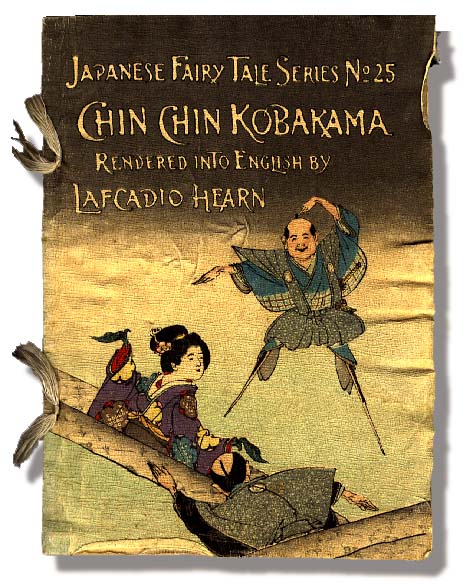 |
| In his preface to this small and beautiful 調書をとる/予約する, Lafcadio Hearn 会談 about mischivous children and ghosts in Japan. And he knew a lot about the adult world's strange 需要・要求するs on children, and the 恐れるs of a small child. His own childhood was - to put it bluntly - a real mess. He was born in Greece (1850) and grew up in Ireland, England, フラン and the US, living with his mother, his aunt, with his aunts 議会 maid, with a brother in 法律 ... Aunt Sarah locked him up at night in a dark room to cure him from his 恐れる of 不明瞭. 井戸/弁護士席, he grew up and became a sort of Grimm brother, who notated and collected folkloristic tales and legends, first in Greece and later in Japan. When he arrived at Yokohama in 1890, he すぐに felt that this was his new 母国. At last a place where he was 扱う/治療するd with 尊敬(する)・点 and 設立する friends. 初めは he (機の)カム to Japan because of an assignment for Harper's Magazine, but he やめる journalism and started working as a schoolteacher in English. He married, had four children, and in 1896 he 可決する・採択するd a Japanese 指名する, Koizumi Yakumo. Between 1896 and 1903, Hearn worked as a professor of English literature at the 皇室の University of Tokyo. During this time he wrote, for instance, "Exotics and Retrospective" (1898), "In Ghostly Japan" (1899), "Shadowings" (1900), and "A Japanese Miscellany" (1901). Hearn died in 1904.The small 調書をとる/予約する that is published here, Chin Chin Kobakama, is from 1905, printed in Tokyo on 二塁打 倍のd, very soft crêpe paper and bound with silk. The 判型 on-審査する is だいたい the natural size. /KET
(Lafcadio Hearn's untitled Preface) The 床に打ち倒す of a Japanese room is covered with beautiful 厚い soft mats of woven reeds. They fit very closely together, so that you can just slip a knife-blade between them. They are changed once every year, and are kept very clean. The Japanese never wear shoes in the house, and do not use 議長,司会を務めるs or furniture such as English people use. They sit, sleep, eat, and いつかs even 令状 upon the 床に打ち倒す. So the mats must be kept very clean indeed, and Japanese children are taught, just as soon as they can speak, never to spoil or dirty the mats. Now Japanese children are really very good. All traveIlers, who have written pleasant 調書をとる/予約するs about Japan, 宣言する that Japanese children are much more obedient than English children and much いっそう少なく mischievous. They do not spoil and dirty things, and they do not even break their own toys. A little Japanese girl does not break her doll. No, she takes 広大な/多数の/重要な care of it, and keeps it even after she becomes a woman and is married. When she becomes a mother, and has a daughter, she gives the doll to that little daughter. And the child takes the same care of the doll that her mother did, and 保存するs it until she grows up; and gives it at last to her own children, who play with it just as nicely as their grandmother did. So I, - who am 令状ing this little story for you, - have seen in Japan, dolls more than a hundred years old, looking just as pretty as when they were new. This will show you how very good Japanese children are; and you will be able to understand why the 床に打ち倒す of a Japanese room is nearly always kept clean, - not scratched and spoiled by mischievous play. You ask me whether all, all Japanese children are as good as that? 井戸/弁護士席 - no, there are a few, a very few naughty ones. And what happens to the mats in the houses of these naughty children? Nothing very bad - because there are fairies who take care of the mats. These fairies tease and 脅す children who dirty or spoil the mats. At least - they used to tease and 脅す such mischievous children. I am not やめる sure whether those little fairies still live in Japan, - because the new 鉄道s and the telegraph-政治家s have 脅すd a 広大な/多数の/重要な many fairies away. But here is a little story about them: - |