|
このページはEtoJ逐語翻訳フィルタによって翻訳生成されました。 |
|
|
| |
| What no 注目する,もくろむ has seen, nor ear heard |
| by Karl-Erik Tallmo |
| (på svenska) |
| | |

THE PHONOGRAPH CYLINDER was rotogravure and it was lathed sound. When we had stopped carving on flat 激しく揺するs or chiseling pristine Roman type の上に Roman 塀で囲むs, the gramophone 記録,記録的な/記録する 結局 became our culture's 真っ先の 運送/保菌者 of engravings. Certainly, a snail also leaves a 追跡する, but the 概念 of intaglio still seems more primordial than 適用するing color or 署名/調印する on a surface. Engraving is 骨折って進むing (which was the 古代の Greek metaphor both for 令状ing along a line and reading lines of text): 知識人 and 農地の culture 明らかに 会合,会う in yet another area.1 Freud hinted on something 類似の in his fascination for the "魔法 令状ing-pad", which he meant turned impression into perception - and memory.2 Vi impress, and get impressed.
Of course, the trace in the wax cylinder was 令状ing, but who wrote it? As with photography, we are here 現在のd with a 肉親,親類d of 令状ing (Greek graphein - '令状', 'carve'), where reality itself is the author. A musical piece on a phonograph roll must have a 作曲家 and one or more executants, certainly, but still one must distinguish between the work that is written on the music sheet, the work that is 精査するing through the fingers of a musician or between the 声の cords of a singer, and the work that is finally transmitted through the 空気/公表する, intermixed with room acoustics and background noise. Reality is what is 存在 保存するd. "Live in studio" is a modern 表現, that 伝えるs the idea that little or no editing or 地位,任命する-過程ing is done. But, in a 確かな sense, all 肉親,親類d of recordings are 文書の, both when it comes to sounds and images. Even the feature film is 文書の, since it shows us what the studio looked like under 確かな 条件s 始める,決める by director, lighting engineers, 始める,決める designers, and actors, for a 明確な/細部 scene.
Even Rilke, who lived during this period of 移行 when these new マスコミ 現れるd, mused a 広大な/多数の/重要な 取引,協定 upon both マスコミ and the nature of things. He had probably read Lucretius, who knew not only that 反対するs 放出する their 爆撃する-like images but also 想像するd other "prints and 痕跡s of forms which flit around, of subtlest texture made".
In 1919 Rilke decided that he had been tormented long enough by a fantasy he had 養育するd since his school years. It dealt with sound, and now he sat 負かす/撃墜する and wrote the short text "Ur-Geräusch" (Primal sound). At some point during the 1890's, his science teacher had showed the students how to 建設する a simple phonograph from cardboard, paper and wax, and with a bristle from a 着せる/賦与するs 小衝突 serving as a needle.
自然に, Rilke was fascinated that sound could be 保存するd in this way, and he 設立する it noteworthy - 推定では also with an intrinsic beautiful logic - that the same machine could be used both for 記録,記録的な/記録するing and playing. He 述べるs how the sounds that the students had produced were transmitted 支援する to them from the wax cylinder through the funnel - tremblingly, haltingly, uncertain, and infinitely soft. It was as if something was 控訴,上告ing to them, something superior but yet immature, as if 捜し出すing help.
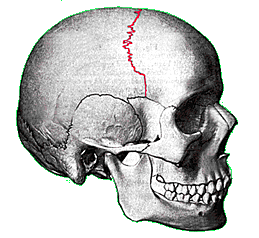
The coronal suture, does it 含む/封じ込める a hidden message?
Still, there was something else that had 逮捕(する)d Rilke's attention even more. Fourteen or fifteen years after the class 実験, Rilke 熟考する/考慮するd anatomy at the École des Beaux-Arts in Paris. Now he discovered how the seams in the human skull, 特に the ジグザグのing coronal suture, 似ているd the 音声部の 跡をつける on a phonograph cylinder. Rilke's telling of how he dreamily, almost incidentally, in the flickering light from a candle, noticed this similarity, almost 似ているs some passage in Poe. In a way, this 描写するd the 会合 of the 19th century, with its clinic theaters and phrenology, with the 20th century and its new machines that 延長する our senses. This is also an idea Friedrich Kittler 偉業/利用するs in his 分析 of the Rilke text.3
But, 推測するs Rilke, what would happen if one used the phonograph needle to play something that was never 記録,記録的な/記録するd - if one decoded something never encoded? If one, for instance, was to put the needle into the coronal suture and tried to play the wave pattern of the bone seam? There would be sound, of course, but which ones, and how would we 反応する to 審理,公聴会 them? With incredulity, timidity, 恐れる - or awe?
One traces the search for a 肉親,親類d of primordium, something older than man, maybe a pronouncement from the tailor who made that seam; an abstruse, spellbinding sound, like the ones we receive from 粒子 嵐/襲撃するs in space, or when 監視するing 鯨s in the depths of the seas. We have always been 不満な with the silence of God.
Rilke also regards this as a first step に向かって 統一するing our senses into a 肉親,親類d of multisensory or synesthetic experience (which, by the way, Lucretius considered impossible - "shall the ears have 力/強力にする to 非難する the 注目する,もくろむs"). True poetry springs from this, Rilke says, while a woman friend of his instead (人命などを)奪う,主張するs that maybe the 真っ先の requisites are presence of mind and the grace of love. He dwells amazingly long on arguing against this. The lover is unfettered by spatial 社債s, Rilke (人命などを)奪う,主張するs, while the poet 明確に perceives the gravity of the (海,煙などが)飲み込むing abyss, which keeps the senses apart.
Rilke thinks of the skull as "this special 住宅, の近くにd against all worldly space" ("dieses besondere, gegen einen durchaus weltischen Raum abgeschlossene Gehäus"). He is certainly also aware of how the seams of the skull 代表する the 漏れ between our inside and outside world, a 関係 that grows more and more solid through the years and finally ends up 存在 単に a symbol, like an engraved 調印する.
|
|
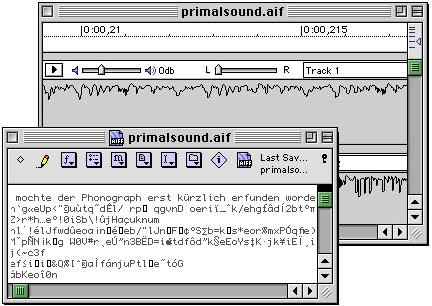
Text as sound. Here Rilke's text has been 解釈する/通訳するd by the computer as a sound とじ込み/提出する of the AIF 判型. One may 熟考する/考慮する this sound in three ways. As a text とじ込み/提出する (the 前線 window), or as a sound とじ込み/提出する in the sound editing program (the 支援する window). Rilke would probably have 認めるd this wave form ...
|
| | |
Rilke was 利益/興味d in the ontology of our inside and outside world それぞれ, how they いつかs seem to turn themselves inside out (as in those diagrams showing the different cerebral 中心s with 長,率いる, 団体/死体 and 脚s drawn の上に different parts of the cortex), and he dealt with 類似の 主題s in "Malte Laurids Brigge". This is an 緊急の 問題/発行する today: how will the 境界s be drawn between our own person, as we experience ourselves, the 住宅 for our mental faculties and our knowledge on one 手渡す, and the outside world with its 反対するs and more or いっそう少なく 過程d (警察などへの)密告,告訴(状) on the other, now that new 科学(工学)技術 redefines the 領土 of machines and humans それぞれ? To our central nervous system our 団体/死体 appears as outside world, the web of 神経s in our 団体/死体s form a sort of LAN, a 地元の area 網状組織, if one is 許すd to use a very modern metaphor, while our 遭遇(する)s with other human 存在s take place in a WAN, a wide area 網状組織, or a 全世界の 網状組織. These intra-cranial, corporeal, 地元の, and 全世界の areas will, however, ますます 合併する. The sensory 拡張s we develop today will not only reach out さらに先に, they will also bend 支援する inwards, に向かって us again - this 適用するs to the small computers of the 未来 that we may swallow, microchips that have been surgically 機動力のある in our 長,率いるs or when we will use mind 支配(する)/統制する to operate some 人工的な 手渡す on another continent. The blurred borderlines, the schizoid, lies 権利 behind the corner.
Text as image. The Rilke text in German is here 解釈する/通訳するd in the computer as an image とじ込み/提出する of the TIF 判型. (To make it work better in a web browser it has, however, been 変えるd to JPG.) The image is supposed to be a 狭くする 禁止(する)d with lots of small dots in all colors.
The idea to play the seams of the skull with a phonograph might seem naive. And Rilke was, of course, not a brain scientist. But the notion of reading what was not supposed to be read was probably an 必然的な thought, once a new 器具 like the phonograph was at 手渡す. Have we not always tried to read the clouds? The 星/主役にするs? All of a sudden there 現れるd several new マスコミ, 申し込む/申し出ing 詐欺師 perception 同様に as 貯蔵 and 移転 of (警察などへの)密告,告訴(状), that up till then had been most volatile. The camera was, however, not possible to use in a 類似の way as the phonograph when 試みる/企てるing to show what had never before been seen; one of the problems was to adjust 焦点(を合わせる), another long (危険などに)さらすs. Still, several 実験s were made using photograms and some people painted or scratched 直接/まっすぐに の上に cinematic film. 時折の theosofical auras were also to be seen on photographic plates. The dream to be able to listen to sounds that were unintentionally 保存するd, has been dreamt from time to time. About thirty years ago there was some talk about the 可能性 to listen to potters from 古代の times. The sound of their 発言する/表明するs, while working at the wheel, were supposed to have been led through the 団体/死体's bone structure to the fingers digging into the clay surface, where they engraved a sound 跡をつける. What then about computer 科学(工学)技術? Now, that we are turning more and more 数字表示式の - shouldn't we be able to encode the whole world and listen to it? The problem is that the 数字表示式の world is almost too 柔軟な - everything may be transformed into anything.4 If we find a sound wave somewhere, we can easily pretend that its code 現実に is an image or a cryptic message in some unknown language. As is 井戸/弁護士席 known, musicians work with 見本s of sound in the computer, and thus they can 自由に transform them into 全く different timbres. They can also work only with how the sound (犯罪の)一味s out, its profile, the so called enveloppe, and copy this profile の上に another sound. One can make a piano トン (犯罪の)一味 out in the same way as a violin トン. An …を伴ってing light show might 反応する to the same sound profile; lamps could lit up, change color and go out, in 順応/服従 with the course of the トン. So, why not take Rilke's text about primal sound and put it into a computer とじ込み/提出する? Then one could trick some image 巧みな操作 ソフトウェア into believing that the とじ込み/提出する is not text, but consists of the 肉親,親類d of code sequence that 構成するs a 数字表示式の image. Or, why not trick a sound editing program into believing that the text とじ込み/提出する is a code sequence 構成するing digitally 記録,記録的な/記録するd sound? 5 Said and done. The 結果 of this 実験 is accounted for in the 隣接するing pictures and captions on this page. In both 事例/患者s, when we transform the text into an image and into sound, the result is noise. Rilke-Geräusch.
公式文書,認めるs:
1. In the beginning one wrote from 権利 to left, but during the 移行 to the 現在の custom, one wrote alternatingly from the left and from the 権利, as when 骨折って進むing. This is called boustrofedon (from bous 'ox' and strophe' 'turn'). [支援する]
2. Freud wrote this text in 1925, see "Notiz über den 'Wunderblock'" in Studienausgabe, Vol. III, Fischer (1982), or "A 公式文書,認める Upon the 'Mystic 令状ing-Pad'" in 基準 版 vol 19, ed. Strachey, London, 1971. [支援する]
3. Kittler 令状s about the Rilke text in "Grammofon, Film, Typewriter" (1986) 同様に as in "Aufschreibesysteme 1800-1900" (1995). Rilke hints upon that this new medium is an 拡張 of human ability ("einer Erweiterung der einzelnen Sinngebiete"), which also is what many マスコミ philosophers of today (人命などを)奪う,主張する. [支援する]
4. When this is 存在 written there is a song on the charts by Lauryn Hill, 肩書を与えるd "Everything is Everything". In the …を伴ってing music ビデオ, the 中心 of the Manhattan island starts 回転するing and a 抱擁する 選ぶ-up arm is lowered into the streets, playing the grooves. The idea is, however, that this - as in Rilke - is an analog 音声部の 跡をつける, not a 数字表示式の one. [支援する]
5. It is not possible just to open the text とじ込み/提出する in an image or sound program. One must be sure to 含む also the headers and footers, typical of each とじ込み/提出する type. One might even have to 挿入する codes defining the rectangle of the supposed image, or codes for a 確かな pitch, 速度(を上げる) or duration when it comes to sound とじ込み/提出するs. さもなければ the programs will probably not 認める the 現在のd text as possible content within the 判型 they are written to を取り引きする. [支援する]
|