

|
このページはEtoJ逐語翻訳フィルタによって翻訳生成されました。 |
|
|
| |
I end as a 反逆者 to my party, a 反逆者 who must be 発射.
Sergei Mrachkovsky, 22 August, 1936
IN 1936, TERROR REIGNED in the Soviet Union and Anna Akhmatova wrote: "I have seen 直面するs 消費するd, glimpsed horror under lowered eyelids, cheeks etched by 苦痛." Even André Gide 観察するd after his visit to the Soviet Union in 1936: "In my opinion, no country today not even in Hitler's Germany is the spirit more 抑えるd, more timid, more servile than in the Soviet Union." Or, as 旅団 指揮官 S. P. Kolosov whose final 運命/宿命 is unknown 表明するd it in an anything but timid letter in 1937: "I am afraid to open my mouth. Whatever you say, if you say the wrong thing, you're an enemy of the people. Cowardice has become the norm."
Stalin had won the struggle for 力/強力にする and was now 取引,協定ing death blows to the 対立 by organising uncontrolled terror at every level of society. The 粛清するs carried out within the party, the army, の中で members of the 科学の community, artists and 目だつ cultural 人物/姿/数字s (機の)カム to be known as the 広大な/多数の/重要な Terror. The 称する,呼ぶ/期間/用語 is 現実に bizarre; terror is hardly a 階級 広大な/多数の/重要な or small but 絶対の: once it has taken root in a social system it spreads and acquires a life of its own.
The Terror did not stop until Stalin's death, but its 創立/基礎s were laid by Lenin. A new society was to be created, a new human 存在 was to 現れる. But the New Men and Women lived in paralysing 恐れる and the consequences were 破滅的な. For Nikolai Bukharin, himself 非難するd and 発射 during the last of the three show 裁判,公判s held in Moscow, the worst 面 of the collectivisation of 農業 was not the privations 苦しむd by the 小作農民s but "the 深遠な psychological change in those 共産主義者s who took part in the (選挙などの)運動をする. Instead of going mad, they 受託するd terror as a normal 行政の method and regarded obedience to all orders from above as a 最高の virtue."
[1]The number of 犠牲者s carried off during the Stalin 時代 has not been 公式に 設立するd. Even now, nearly a 10年間 after the 解散 of the Soviet Union, only parts of the 古記録s have been opened to the public, a fact which を強調するs the continuing sensitivity of the 問題/発行するs 伴う/関わるd. When, under Gorbachev, General Dmitri Volkogonov was 許すd 接近 to 以前 分類するd 記録,記録的な/記録するs, he arrived at the に引き続いて 人物/姿/数字s: collectivisation in 1937-38 cost 8.5-9 million lives; in 1937-38, 4.5-5.5 million people were 逮捕(する)d, of which 800,000-900,000 were 宣告,判決d to death; at the end of the 1940s, between 5.5 and 6.5 million 囚人s were held in the Gulag 群島. Volkogonov 見積(る)s that the Stalin 時代 (人命などを)奪う,主張するd between 19 and 22 million lives, not 含むing war 犠牲者s.
[2]These 人物/姿/数字s are in 相当な 協定 with 見積(る)s made in the 1960s, without 接近 to the 古記録s, by US 研究員 Robert Conquest. He calculates that only ten per cent of those sent to the (軍の)野営地,陣営s in 1936-38 生き残るd.
[3] The 大多数 of those 宣告,判決d during the repression of 1936-38 were tried behind の近くにd doors. This was the 事例/患者, for example, with the 粛清するs in the Red Army in 1937, which (人命などを)奪う,主張するd the に引き続いて 犠牲者s: 3 out of 5 field-保安官s, 13 out of 15 army 指揮官s, 8 out of 9 海軍大将s, 50 out of 57 army 軍団 指揮官s, 154 out of 186 divisional 指揮官s, all 16 army 軍団 commissars, 58 out of 64 divisional commissars, all 11 副/悪徳行為-defence commissars and 98 of the 108 members of the 最高の 軍の 会議. In the 共産主義者 Party, 98 of the 139 members and 候補者 members elected to the of the Central 委員会 in 1934 were 遂行する/発効させるd in 1937-38. [4] And so the 粛清するs spread, from the centre to the 共和国s and 地域s.
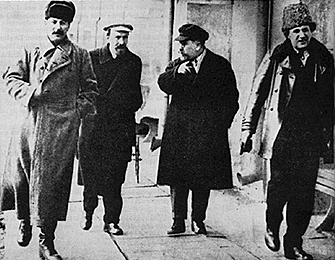
Stalin with three of his Bolshevik comrades, who later became his 犠牲者s
It is in this 状況 that the three show 裁判,公判s, held in Moscow between 1936 and 1938 and 伴う/関わるing a large part of the old Bolshevik guard, must be seen. It all began in August, 1936, just over sixty years ago, when Kamenev and Zinoviev の中で others, stood in the ドッキングする/減らす/ドックに入れる. The next 裁判,公判 was held on 23-30 January, 1937. の中で those 告発(する),告訴(する)/料金d were Pyatakov, Radek (who received a twenty-year 刑務所,拘置所 宣告,判決) and Sokolnikov. The last 裁判,公判, with Bukharin, Rykov and Yagoda の中で the (刑事)被告 was held on 2-13 March, 1983. A total of 54 people were brought before the 法廷,裁判所 during these public 裁判,公判s, 47 of which were 宣告,判決d to death. Long 刑務所,拘置所 宣告,判決s were 手渡すd 負かす/撃墜する to the 残り/休憩(する).
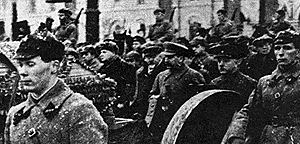
The 殺人 of the Leningrad Party 長官, Sergei Kirov in 1934 供給するd the formal pretext for the terror, the 追跡(する) for いわゆる enemies of the people and the Moscow 裁判,公判s. The latter 供給するd a bizarre theatrical spectacle, in which old Bolshevik 退役軍人s 自白するd to the most conspiratorial 罪,犯罪s against the 明言する/公表する they helped to create. The Public 検察官,検事 Andrei Vyshinsky (a Menshevik up to 1921) drew attention to himself with his 悪名高い 需要・要求するs that "the mad dogs" should be taken out and 発射. The (刑事)被告 played their parts, admitting to co-operating with the Japanese and German 知能 services, to 共謀s against both Lenin and Stalin and 取引 with Trotsky. Only one person, Nikolai Krestinsky, 辞退するd to 自白する.
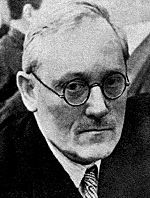
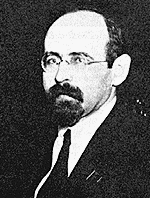
An old Bolshevik, Krestinsky had been a member of the first (共産党)政治局. Under Lenin, he served for a time as 長官 of the Central 委員会. The 交流 in the courtroom on 2 March is 価値(がある) 引用するing. At this 行う/開催する/段階 in the 訴訟/進行s, the 大統領 of the 法廷,裁判所, V. Ulrich is asking the (刑事)被告 whether they 罪を認める to the 告発(する),告訴(する)/料金s. All reply in the affirmative until:[5]
The 大統領: (刑事)被告 Krestinsky, do you 罪を認める to the 告発(する),告訴(する)/料金s brought agalnst you?
Krestinsky: I 無罪を主張する. I am not a Trotskyite. I was never a member of the 圏 of 権利s and Trotskyites, of whose 存在 I was not aware. Nor have I commltted any of the 罪,犯罪s with which I 本人自身で am 告発(する),告訴(する)/料金d, in particular I 無罪を主張する to the 告発(する),告訴(する)/料金 of having had 関係s wlth the German 知能 service.
The 大統領: Do you corrobarate the 自白 you made at the 予選 調査?
Krestinsky: Yes, at the 予選 調査 I 自白するd, but I have never been a Trotskyite.
The 大統領: I repeat the question, do you 罪を認める?
Krestinsky: Before my 逮捕(する) I was a member of the 共産主義者 Party of the Soviet Union (Bolsheviks) and I remain one now.
The 大統領: Do you 罪を認める to the 告発(する),告訴(する)/料金 of 参加するing in スパイ activities and of 参加するing in テロリスト activities?
Krestinsky: I have never been a Trotskyite, I have never belonged to the 圏 of 権利s and Trotskyites and have not committed a 選び出す/独身 罪,犯罪.
On the に引き続いて day, Krestinsky pleaded 有罪の to the 告発(する),告訴(する)/料金s:
Krestinsky: Yesterday, under the 影響(力) of a momentary keen feeling of 誤った shame, evoked by the atmosphere of the ドッキングする/減らす/ドックに入れる and the painful impression created by the public reading of the 起訴,告発, which was 悪化させるd by my poor health, I could not bring myself to tell the truth, I could not bring myself to say that I was 有罪の. And instead of 説, "Yes, I am 有罪の," I almost mechanically answered, "No, I am not 有罪の."Vyshinsky preferred to be on the 安全な 味方する. Krestinsky was 遂行する/発効させるd but rehabilitated in 1965.
Vyshinsky: Mechanically?
Krestinsky: In the 直面する of world public opinion, I had not the strength to 収容する/認める the truth that I had been 行為/行うing a Trotskyite struggle all along. I request the 法廷,裁判所 to 登録(する) my 声明 that I fully and 完全に 収容する/認める that I am 有罪の of all the gravest 告発(する),告訴(する)/料金s brought against me 本人自身で, and that I 収容する/認める my 完全にする 責任/義務 for the 背信 and treachery I have committed.
The 裁判,公判s received 普及した attention both within and outside the country. What bewildered and 脅すd people most were the 自白s. How could they have 自白するd? Even Pravda, the Party newspaper, published an article in 1937 under the headline "Why do They 自白する?" Reactions to the 裁判,公判s were often 示すd by naiveté or complaisance or both. The 代表 sent by the International 協会 of Lawyers 公式文書,認めるd in its 報告(する)/憶測 on the first 裁判,公判; "We consider the (人命などを)奪う,主張する that the 訴訟/進行s were 要約 and unlawful to be 全く unfounded.[...] We hereby categorically 宣言する that the (刑事)被告 were 宣告,判決d やめる 合法の. It was fully proven that there were links between them and the Gestapo. They やめる rightly deserved the death 刑罰,罰則."
[6] Bertolt Brecht's 発言/述べる summed up the 見解(をとる)s of the 知識人 Left: "The more innocent they are, the more they deserve to die." In passing, it may be について言及するd that Brecht's former lover, Carola Neher, was 逮捕(する)d in the Soviet Union and 消えるd without trace.
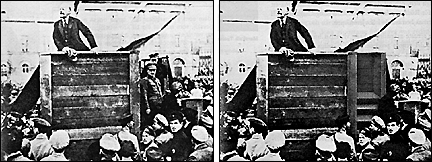
History re-written and retouched. The photo to the left was taken in May, 1920, during a speech by Lenin at the Sverdlov Square. Kamenev and Trotsky are standing on the steps to the 壇・綱領・公約. The photo to the 権利 was published during the Stalin 時代.
There is no 疑問 that 拷問 was used to 軍隊 自白s. Though by no means uncommon earlier, 拷問 only became an 認可するd method of examination during the 調査s 主要な up to the first Moscow 裁判,公判. On 29 July, 1936, an 公式の/役人, albeit secret, 文書 was drawn up, 許可/制裁ing the use of "all means" to 抽出する 自白s.[7] Krestinsky's submission was 明確に the result of a night of 残虐な 拷問. 自然に, psychological 拷問 in the form of 脅しs to 親族s and the 逮捕(する) of family members also played their part in the 自白s. But, important though it was, 拷問 was not the whole explanation. Many of the (刑事)被告 were 常習的な 革命のs. 起訴するd and punished by the Czar's 法廷,裁判所s, they were themselves 支持するs of hard methods. Here lies an important part of the explanation: 観念的な 忠義.
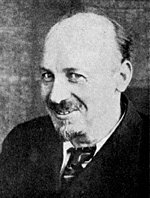
Bukharin's 声明 is 利益/興味ing in that he 否定するd every particular 犯罪の 行為/法令/行動する he was (刑事)被告 of, の中で them the 告発(する),告訴(する)/料金 that he conspired to 殺人 Lenin. にもかかわらず he pleaded 有罪の to the 告発(する),告訴(する)/料金s:
I 罪を認める to 存在 one of the 優れた leaders of this '圏 of 権利s and Trotskyites.' その結果, I 罪を認める to what 直接/まっすぐに follows from this, the sum total of 罪,犯罪s committed by this 反対する-革命の organization, irrespective of whether or not I knew of, whether or not I took direct part, in any particular 行為/法令/行動する.[8]In his last 嘆願, he explained:
For three months I 辞退するd to say anything. Then I began to 証言する. Why? Because while in 刑務所,拘置所 I made a revaluation of my entire past. For when you ask yourself: ”If you must die, what are you dying for?” - an 絶対 黒人/ボイコット vacuity suddenly rises before you with startling vividness. There was nothing to die for, if one 手配中の,お尋ね者 ta die unrepented. And, on the contrary, everything 肯定的な that glistens in the Soviet Union acquires new dimensions in a man’s mind. This in the end 武装解除するd me 完全に and led me to bend my 膝s before the Party and the country.[9]It has いつかs been said that the terror under Stalin had nothing to do with 共産主義, that the Soviet Union did not 残り/休憩(する) on true 共産主義者 創立/基礎s. On the contrary, the system had everything to do with 共産主義者 ideology. The writer Isaac Babel understood this at an 早期に 行う/開催する/段階. 証言 against him 含むd a 声明 that in 1938 he had said: "The Soviet Union 生き残るs only through its ideology. Without that all would have been over ten years ago. It was ideology that 許すd them to carry through the 宣告,判決s against Kamenev and Zinoviev."[10] Such insights were 罰せられるべき by death and Babel was 発射 in 1940.
Babel may have been alone in understanding the significance of ideology in 1938. Today history has vindicated him many years and millions of human deaths too late.
 Read the 初めの 文書 in English published in the Soviet Union, "The 事例/患者 of the Trotskyite-Zinovievite テロリスト Centre, Heard before the 軍の Collegium of the 最高裁判所 of the U.S.S.R., Moscow, August 19-24, 1936" (Overview) Divided into 10 とじ込み/提出するs (18-107 K) (ENG)
公式文書,認めるs:
1. Nicolaevsky, Boris. 力/強力にする and the Soviet エリート, New York, 1965, pp. 18-19. [Go 支援する]
2. Volkogonov, Dmitri. Stalin: 勝利 & 悲劇, New York, 1991, pp. 307-08, 524. [Go 支援する]
3. Conquest, Robert. The 広大な/多数の/重要な Terror: A Reassessment, Oxford, 1990, pp. 338-39, 450. [Go 支援する]
4. Volkogonov. Ibid, p. 310. [Go 支援する]
5. 報告(する)/憶測 of 法廷,裁判所 訴訟/進行s in the 事例/患者 of the Anti-Soviet 封鎖する of 権利s and Trotskyites, Moscow, 1938, p. 36. [Go 支援する]
6. Vaksberg, Arkadij. Skjut de galna hundarna! Berättelsen om Stalins åklagare Vysjinskij och hans tid, Stockholm, 1990, p. 124. [Go 支援する]
7. Conquest. Ibid, pp. 121-22. [Go 支援する]
8. 報告(する)/憶測 of 法廷,裁判所 訴訟/進行s in the 事例/患者 of the Anti-Soviet 封鎖する of 権利s and Trotskyites, Moscow, 1938, p. 370. [Go 支援する]
9. 報告(する)/憶測 of 法廷,裁判所 訴訟/進行s in the 事例/患者 of the Anti-Soviet 封鎖する of 権利s and Trotskyites, Moscow, 1938, p. 777. [Go 支援する]
10. Conquest, Robert. Stalin and the Jews. The New York Review of 調書をとる/予約するs, July 11, 1996, Vol. XLIII, No 12, p. 47. [Go 支援する]
© Gudrun Persson. About the author.