

|
このページはEtoJ逐語翻訳フィルタによって翻訳生成されました。 |
|
|
| |
The dark Marilyn she has been called. Not a 特に 深遠な 観察 - who could be darker than Marilyn? And, if we stick to the superficial - who could be more cheerful, not to say innocent, in her mischief than Bettie - whether it be swim-控訴 提起する/ポーズをとるs on a public beach or 私的な photo 開会/開廷/会期s with leather and ropes? |
Bettie Page - The Life of a Pin-up Legend, by Karen Essex and James L. Swanson (General Publishing, Santa Monica 1996, 288 p, ISBN: 1-881649-62-8). |
Bettie Page is a woman of 正直さ, she does not 明らかにする/漏らす much about what was going on under the surface in this new coffee (米)棚上げする/(英)提議する 調書をとる/予約する about her life and career, although she has submitted a short preface of her own 手渡す. This is truly a 90's 製品, an artifact from this 現在の day, when the paraphernalia of assorted 部分的な/不平等な 性の 運動s have become 世帯 knowledge. At the same time the 調書をとる/予約する 放出するs the 申し立てられた/疑わしい naive charm of easily listenable music and cocktail parties of the 50's - when cigarettes still were good for you and chronic 疲労,(軍の)雑役 syndrome was unheard of - not to について言及する women's lib ...A powerful Bettie Page 復活 is going on 権利 now, that is やめる unmistakable. While working on this article, I had only to watch TV for a couple of days to see Bettie's image flicker by three times: in the George Michael ビデオ 急速な/放蕩な Love from this year, in the Swedish movie The Summer ("Sommaren", from 1995), directed by Kristian Petri, and in the John Waters movie Serial Mom from 1994.Bettie Page never really fit into the stereotype of an American pin-up girl. Her 測定s were hardly those of a Jane Mansfield, her lips were to thin, and if you look closely, you may see that she has a slow 権利 注目する,もくろむ. There were also something homespun about her bikinis. And they 現実に were, she designed and sew them herself.Models (機の)カム and went in 早い succession at this time. Few of them lasted for more than two or three years. Apart from Bettie, perhaps Diane Webber did. And very few of them appeared in both worlds - over and under the 反対する. | There were lots and lots of magazines like this one, but if you were even more broadminded, you had to look under the 反対する. |  |
No 事柄 how it is written, a 調書をとる/予約する like this with more than 500 pictures on 388 pages must be remarkable. The text, however, is 適する, written in a rather 中立の, still 同情的な, 報告(する)/憶測ing トン.It is also remarkable how the 調書をとる/予約する (機の)カム to be. The 弁護士/代理人/検事 James Swanson was 雇うd to 保護する Bettie's 権利s and 正直さ when the 復活 really started around 1991-92. At this time she was still living 不明な, but several people were trying to trace her 負かす/撃墜する and 令状 her story. Writer and 新聞記者/雑誌記者 Karen Essex had written an article about Bettie Page for L.A 週刊誌. Swanson sent Bettie the article, and she liked it. So, if anyone was going to 令状 the true story about this pin-up legend, it was Essex & Swanson.Some of her fans today could be her grandchildren, as she herself 発言/述べるs in a 特に written preface to the 調書をとる/予約する. "If I am remembered today, it is because you, the reader, see something in me that I never saw in myself," Bettie 令状s in her foreword. Does she mean 正確に/まさに that, or does she mean "something in me that I never saw myself"? Did we, her audience, discover something or did we invent something?Bettie Mae Page is a Southern girl. She was born in Jackson, Tennessee, in 1923, on April 22 at 3 a.m., which makes her a Taurus with Pisces rising. If you know anything about the 水陸両性の 調印するs of the zodiac, it is not so surprising to read her biography, a story of sensuality and 親切, 連合させるd with a spiritual 勧める, and a capacity to calmly 得る,とらえる what the moment has to 申し込む/申し出. Bettie was the second of Roy and Edna Page's six children. Roy was an 自動車 mechanic, and "a womanizer", somewhat cruel and sex crazy it seems. Edna 離婚d Roy after he had made a 17-year old girl 妊娠している. As if they hadn't been poor enough before, the 残り/休憩(する) of the family was now without any support from Roy Page. This was in 1933, and Bettie was ten years old. Edna put Bettie and two of her sisters into an orphanage for a year:"In the orphanage my sisters and I would play a game we called 'program.' We would get movie 星/主役にする pictures from the magazines, and there was a color section in the newspaper on Sunday of movie 星/主役にする pictures, and we would mimic the movie 星/主役にする 提起する/ポーズをとるs. I guess that's where I started learning how to 提起する/ポーズをとる, because I never took any courses or anything. I just always knew what to do with my 団体/死体," Bettie says in an online interview in March 1996 at Starwave's Celebrity Lounge.Later Edna 申し込む/申し出d Roy to rent a room in their house, to somewhat lighten their 経済的な 重荷(を負わせる). This was indeed a mistake. Roy Page began to 乱用 his daughter sexually. He 支払う/賃金d for her silence with movie tickets. This was a silence that lasted 59 years. In the 調書をとる/予約する Bettie says that she didn't understand until later what had happened to her. She was very innocent and unknowing at the time. When she had her first menstruation she believed she was dying. To 推測する about this experience of 乱用 and what it meant for Bettie's later inclination, would of course be 平易な but a little beyond the 範囲 of this article. And Essex & Swanson don't dwell on it either. We do, however, get to know that Bettie, during her teens, concentrated on her 熟考する/考慮するs, she did not go out with boys, and the 可能性s of marrying rich was never an 選択 for her. She 手配中の,お尋ね者 a career of her own. At the Hume-Fogg High School, she indulged in extracurricular activities such as the 劇のs Club. She worked very hard, without any 激励 from her parents, to get a scholarship to Vanderbilt University. She failed, but instead she got a scholarship to a teacher's college. This was in 1940, and Bettie was 17 years old.In college she continued to play theater, and she 時代遅れの a boy 指名するd Billy Neal, whom she even married, mostly to be 肉親,親類d to him, since he got 草案d after Pearl Harbor. Husband Billy didn't care much either for her college 熟考する/考慮するs, he thought she 行為/法令/行動するd "high and mighty", while she only wished she could discuss literature with him. After 卒業生(する)ing in 1944 she moved to San Francisco (where Billy was 駅/配置するd), and worked as a 長官. She was photographed by some sort of Hollywood スパイ/執行官, the pictures were sent to L.A. and she was 実験(する)d for the 審査する. This didn't work out, though, the movie people tried to de-southernize her and de-naturalize her into something like Joan Crawford. 支援する in San Francisco she took a modeling course, and her first 職業 in this new profession was showing fur coats for the company where she worked as 長官, Geary Furriers. | ||
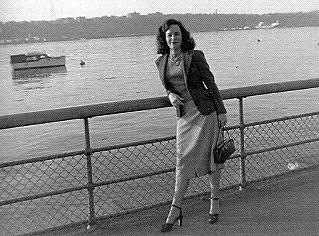 | Bettie in New York in 1949, then 26 years old and working as a 長官. | |
| ||
After the war Bettie moved to Nashville, she 離婚d Billy, and in 1947 she moved to New York - after a short adventure as a 長官 for a furniture 会社/堅い in Haiti. In New York she hoped to carry out her 事実上の/代理 計画(する)s (she did 熟考する/考慮する with Herbert Berghof later on, in '53, and appeared in a couple of off-Broadway shows in '56). While working in an office at Rockefeller Plaza, she fell in love with a handsome Peruvian from Lima, Carlos Garcia Arrese. They were passionately in love, and Bettie was very happy - until she 設立する out that the man was married. If I ever was in love with a man, it was with Carlos, Bettie says in Essex & Swanson's 調書をとる/予約する. And then: one day in 1950, while walking on a 砂漠d beach at Coney Island, she was approached by a policeman - Jerry Tibbs. Tibbs had a hobby - photography. Had she ever done any photographic modeling? He helped her with a 大臣の地位 and her first cover was that of a Harlem newsprint magazine. She was introduced to the camera clubs, where she did 私的な photo 開会/開廷/会期s for a whole group of photographers. Soon she was the most popular model at the clubs:"I enjoyed my modeling years because I would 提起する/ポーズをとる for two hours and make more than working all week as a 長官," Bettie said in the online 雑談(する) at Celebrity Lounge. "I had plenty of 解放する/自由な time to redecorate my apartment. I had a nice little apartment with a small bedroom and living room, a small kitchenette, downtown on 46th Street, 権利 の近くに to Broadway, and all I paid was $46.29 a month."Since the club photographs were not supposed to be published, they were more daring. So, here Bettie 提起する/ポーズをとるd nude. She wasn't embarrassed even the first time, she says. It just never occurred to her to be shy in 前線 of the camera. It was Tibbs who 示唆するd to Bettie that she should wear those famous bangs - to hide her somewhat protruding forehead.Not only was the nudity 議論の的になる. At the Concorde Camera Club, there were many 黒人/ボイコット photographers, and Bettie often 提起する/ポーズをとるd for them - definitely a no-no at the time, for a Southern girl of course, but 現実に for any white girl. In 1951 her image migrated from the camera clubs to the covers of men's magazines like Wink, Titter, Dare, Bold, Male Life, 黒人/ボイコット Nylons, 悪賢い, Breezy, Jest, Joker, He, Gaze, She, 星/主役にする, Tab, Beauty Parade, or Eyeful - and of course, Sunbathing for Health Magazine. Bettie always liked best to 提起する/ポーズをとる outdoors. And, as a 事柄 of fact, she always looked 極端に healthy. As Essex & Swanson point out, at this time Bettie clowns and goofs and teases for the camera, but the 確信して seductress had not yet 現れるd. True. There are smiles, and there are smiles. It is not that rare that 女性(の) pin-up photographers make it in this world. Today a few of the most successful centerfold photographers are themselves women. One with a special good 注目する,もくろむ for Bettie Page's 資源s was Bunny Yeager, a former model, who switched to photography. Bettie met her in Miami, and many of the best outdoor pictures are by Yeager.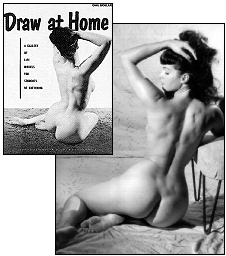 |
Some 提起する/ポーズをとるs 似ているd those in the 素晴らしい 製図/抽選s of Alberto Vargas, some were more like the arty postures typical of the time. |
At the same time as Bettie 提起する/ポーズをとるd for those healthy looking beach pictures, she also 提起する/ポーズをとるd for Irving Klaw's mail orders. Here she appeared with whips and leather, tied up, or 格闘するing with some other girl in underwear. This was the dark angel 味方する of Bettie Page, によれば Essex & Swanson. But with Bettie's 態度 to it all, there seems to have been no discrepancy between the different 肉親,親類d of modeling.Some of her 格闘するing scenes 解任する 発射s from the movie "Bitter Rice", directed by Giuseppe de Santis in 1948, with Silvana Mangano. But that was Italy. Hollywood was not ready for this. Such 構成要素 had to stay under the 反対する.Irving Klaw and his sister Paula had started by selling publicity photos from Hollywood, through their 会社/堅い Movie 星/主役にする News, but soon public 需要・要求する for heavier stuff made them 始める,決める up their own studio at 14th Street. We learn, from the Essex & Swanson 調書をとる/予約する, that the bondage scenes were 奮起させるd by "Little John", who held a "high profile 連邦の 職業" and who still is 匿名の/不明の. Little John also 財政/金融d much of the 支え(る)s - things such as fancy silk or leather 衣料品s and 特に made high-heels. With the Klaws Bettie also made about 50 short films, with 肩書を与えるs such as Tambourine Dance or French Garter Fight. From the 調書をとる/予約する you get the impression that Bettie really did all this work with that light touch that the images 伝える. She 明白に had a strong sense of 正直さ and never sunk into some sort of porno cesspool. She continued her 事実上の/代理 classes and never tried to get herself a career by sleeping with important men. She even turned 負かす/撃墜する Howard Hughes. 
In the 中央の 50's there were a lot of 調査s going on, not only of the 申し立てられた/疑わしい 共産主義者 infiltration within the movie 産業, but of all sorts of culture regarded as indecent and harmful to moral 基準s. In 1956 the Elia Kazan movie Baby Doll with Karl Malden was banned by the Legion of Decency. In 1955 Irving Klaw became 支配する to a 上院 調査, that tried to link pornography with juvenile delinqency. Klaw couldn't stand up to this 肉親,親類d of 圧力, and in '57 he の近くにd his 商売/仕事 - and that also put an end to Bettie's modeling years. The 復活 we are now experiencing at its 頂点(に達する) first started in 1979, when Belier 圧力(をかける) in New York reprinted some of the pictures from 私的な photo 開会/開廷/会期s in four 容積/容量s, 肩書を与えるd Betty Page - 私的な Peeks. This was about twenty years after she had 中止するd to appear in print. 支援する in '79 she was known mostly の中で fans in their forties and fifties and to some younger aficionados. The editor of 私的な Peeks 容積/容量 2 wrote that whatever became of Bettie, that is the question: "There have been さまざまな stories, mostly erroneous about 殺人, 自殺, a 宗教的な 転換 and living in convent, but the most 最近の, best 研究d and almost certainly the most 正確な is that Bettie Page is Alive and 井戸/弁護士席, lives in the South and has developed a 深い 宗教的な belief in Christianity."This was of course the perfect myth for a budding legend like Bettie Page: she should be either dead or 宗教的な - or preferably a combination of both - maybe 吸収するd in some sort of repentant social work, a 肉親,親類d of Major Barbara. There really was some truth in those rumours, she had developed an 利益/興味 in spiritual 事柄s. When Irving Klaw had 終結させるd his 商売/仕事, Bettie moved 支援する to Florida and married an old boyfriend, Armond Walterson. This marriage bored her, they didn't really have much in ありふれた, and Bettie's 利益/興味 was directed に向かって 宗教. She had a 命令(する)ing experience at a 地元の church, and later on, when she had left Armond and moved to Los Angeles, she also joined the Bible 学校/設ける of Los Angeles. In L.A. she lived a secluded life, working as a 長官, e.g. for the Bible 学校/設ける and for Compton's Encyclopedia. She spent some time working for Billy Graham, and she also worked as a 助言者/カウンセラー, helping unmarried 妊娠している 十代の少年少女s. After 離婚ing Armond, she remarried her first husband Billy and lived with him for some time, but he almost killed her in a fight, so she left again. (I 疑問 that Hollywood can keep away from making a movie out of this in - shall we say a year or two? As a 事柄 of fact, Demi Moore has already 提起する/ポーズをとるd for some ludicrous stills as Bettie Page.)In '67 Bettie met Harry Lear, who became her third husband. A good marriage in many ways it seems, but difficult, since Lear's former wife wouldn't leave him and Bettie in peace. Still, they managed to live together - more or いっそう少なく - for some eleven years. 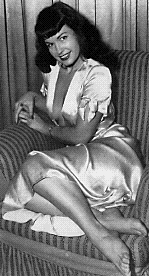
This brings us to the year 1978, when the 復活 slowly 選ぶd up steam with the 解放(する) of the first of Belier's 私的な Peeks. Robert Blue also made his - in my opinion - hideous airbrush 絵s of famous Bettie Page 提起する/ポーズをとるs. (I can imagine why he made them. There is no other way to really make a paper doll a doll the other fellas cannot steal. But then, why publish them?)
During the 80's and 早期に 90's Bettie Page appeared in comic (土地などの)細長い一片s, by Eric Stanton and Dave Stevens for instance, illustrators like Frank Frazetta or Olivia De Barardinis drew and painted her, she ended up on posters for 激しく揺する 禁止(する)d, and today (人が)群がるs of Bettie Page look-alikes are filling the 滑走路s and covers of fashion magazines. Bettie even 覆うd the way for a model's 権利 to smile again in fashion photography. But nobody can, of course, compete with the real Bettie:
"I've never seen the impish glee in Bettie's 注目する,もくろむs in any other model," says fashion editor of USA Today, Elizabeth Snead, in the Essex & Swanson 調書をとる/予約する. And photographer Albert Watson is also 引用するd: "She may have appeared in cheap magazines, on cheap postcards, or was 発射 by some bad photographers, but she always rose above that. Seventy or eighty パーセント of her photographs, you could run in Vogue."
Today's models may cram the fashion scene with all of Bettie Page's fetish ware in わずかに updated 見解/翻訳/版s by Versace or Dolce & Gabbana, and some of them may even 似ている Bettie, but they certainly don't look as healthy.
As illustrator John Silke points out in his 調書をとる/予約する Bettie Page, Queen of Hearts (Dark Horse 調書をとる/予約するs, Milwaukie, Oregon, 1995, ISBN 1-56971-124-0), Bettie seems to be in 動議, even in her stills, they have a before and an after. We can imagine Bunny Yeager or Paula Klaw asking her to 可決する・採択する yet another 提起する/ポーズをとる, or we can invent our own narrative ... This sense of 動議 is not so much a question of 提起する/ポーズをとる, or of 確かな angles of 脚s and 武器, but mostly a question of her facial 表現, her gaze. ーするつもりであるd 動議, not mimicked 動議.
"It seemed she would 心配する just what I 手配中の,お尋ね者," Bunny Yeager says in Silke's 調書をとる/予約する, "I would just throw adjectives at her, 'Look devilish! 尋問! Seductive! Surprised! Breathless! Innocent! Vivacious! Wanton! 支配するing! Teasing!' It was like we were dancing together". "I was 表明するing myself with her 団体/死体 instead of 地雷," Yeager explains in Essex & Swanson. Bettie, on the other 手渡す, says to Essex & Swanson that she tried to imagine the camera as if it were a man.
... still nice and pleasant somehow. No 事柄 how bizarre the 状況/情勢, she にもかかわらず kept her cheerful 態度. 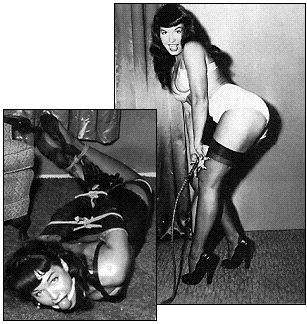
Of course, pornography, even the 純粋に visual, is in need of a story. Sex needs only 活動/戦闘, but pornography needs a story. Pictures with 確かな 支え(る)s 示唆する all sorts of happenings, whether it be just a telephone or whips and ropes. But even without those things, Bettie always told a story, alluding with her 直面する to a long tradition of illustrations for 低俗雑誌 探偵,刑事 stories, and not least, the artwork that …を伴ってd stories and serials in womens magazines of the 40's and 50's.
Bettie had a special talent for 提起する/ポーズをとるing, that is obvious, even 裁判官ing from the amateur pictures. Although they often were 不正に 行う/開催する/段階d and lit, they 伝える the same persona, so it couldn't have been just in the 注目する,もくろむ of the professional photographer.
There are some pictures where she seems almost caught off-guard, were she 明らかにする/漏らすs for a かもしれない unintended moment, an 表現 of some strange gravity. It would be 平易な to imagine this as the true Bettie - and the smiling Bettie as a 商業の trademark, 軍隊d upon her by 開発/利用. Her 調印する were the smile and the bangs, and it was probably her very own. The 50's was a dashing 10年間 alright, filled with 戦後の 楽観主義 - and maybe a trace of paranoia - but smiling bondage queens were not that ありふれた. The innocence of that scant and 甘い 着せる/賦与するing of her own design, together with 時折の whips and ropes, made her at the same time both good and bad. But the off-guard pictures seem neither good nor bad; they just signal some 肉親,親類d of danger.
The both コンビナート/複合体 and straightforward, for short: enigmatic, nature of Bettie Page, together with the fact that she has not yet been used up by the proper movie 産業, like Marilyn Monroe or James Dean, makes her perfect as raw 構成要素 for 同時代の dreams. The 危険 of course could be that a 調書をとる/予約する like this de-iconizes her, remoulds her into a human like us, with everyday problems. On the other 手渡す, that will probably work too. After all, we do live in the age of Ricki Lake and Oprah Winfrey.
See also:
 Starwave's Celebrity Lounge interview with Bettie Page, March 1996
A Bettie Page Hyperlist of 場所/位置s
About the author.