Please 公式文書,認める: All とじ込み/提出するs 示すd with a copyright notice are 支配する to normal copyright 制限s. These とじ込み/提出するs may, however, be downloaded for personal use. Electronically 分配するd texts may easily be corrupted, deliberately or by technical 原因(となる)s. When you base other 作品 on such texts, 二塁打-check with a printed source if possible.
ARE YOU ESPECIALLY FOND OF those long Mickey Mouse adventures from the fifties, sixties and seventies? If so, this article is for you, since it is about the man who, more than anyone else, created the adventurous Mickey Mouse character of those 10年間s - comics artist Paul Murry.
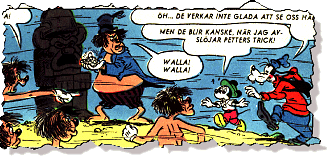
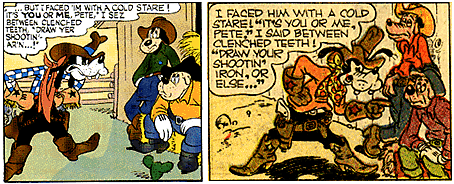
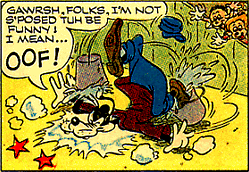
Although Mickey Mouse's personality and 教祖的指導力 were already formed in the thirties and forties through Floyd Gottfredson's daily comic (土地などの)細長い一片s, it is the opinion of most people that Murry was the 最初の/主要な person to continue this 遺産/遺物 in the comic 調書をとる/予約する form (compare with Gottfredson, Strobl and Barks here!). During his career, Murry drew thousands of pages of comics and was one of the very few artists who could essentially draw all of the Disney characters. In 新規加入 to Mickey, he also drew such diverse characters as Donald Duck, Little Hiawatha, Li'l Bad Wolf and Dumbo. However, he is most known, and rightly so, for the American Mickey Mouse serial that he drew for Walt Disney's Comics and Stories (WDC) during the years 1953-73.
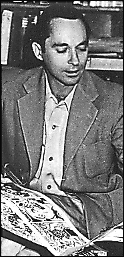
Paul Murry (1911-1989)
Murry was born in 1911 in Missouri and 初めは worked as a 農業者. He taught himself to draw and began working for an engraving company in 1937. He was 雇うd after the owner of the company saw a questionnaire form he submitted to a contest, the 国境s of which he had decorated with his own sketches. He also won a new piano in that contest. This, in turn, 財政/金融d his trip to Hollywood the に引き続いて year for a period of 裁判,公判 雇用 at Disney.
At this point in time, Disney comics were only 存在 drawn for the daily newspapers in the 部隊d 明言する/公表するs, so Murry first worked his way up to the 職業 of film animator. Mostly he worked for Fred Moore, who was one of Disney's 真っ先の animators, and who essentially created the modern Mickey Mouse. This is the 最初の/主要な 推論する/理由 that Murry gives for his その後の 強調 on 製図/抽選 Mickey comics. In 新規加入 to short films, he also worked on "Pinocchio", "Dumbo", "Saludos Amigos" and "Song of the South"; all 含む/封じ込めるing characters that he would later work on in his comics.
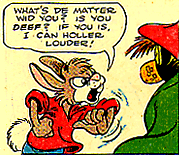
In 1943, Murry started 製図/抽選 his first comic (土地などの)細長い一片 for the newspapers, a Sunday (土地などの)細長い一片 with José Carioca from the film "Saludos Amigos", which ran between 1942 and 1944. In the に引き続いて years, up to 1946, he also drew scattered daily comic (土地などの)細長い一片s with Mickey Mouse and the Sunday (土地などの)細長い一片 Uncle Remus with Br'er Rabbit. Soon he was 製図/抽選 his first (土地などの)細長い一片s made 特に for comic 調書をとる/予約するs, which were published in "Uncle Remus and His Tales of Br'er Rabbit", Four Color 129, at the end of 1946. Some of them were little more than comics 見解/翻訳/版s of tales from the film, "Song of the South", of the same year, but they are still very readable. の中で the sequences is one, where Br'er Rabbit smears himself with a doll made of tar (sic!), indicative of Murry's time in 活気/アニメーション. It is funny that Br'er Rabbit also in the comics hops around, humming the Oscar winning song, "Zip-a dee-doo-dah", from the film.
In 1947, Murry only drew a few stories for WDC, の中で them the Li'l Bad Wolf episode in WDC 79, which was published in the first 問題/発行する of the different Scandinavian Donald Duck comic 調書をとる/予約するs (the second 問題/発行する in Germany).
The First Mickey Mouse Comics
During 1948 and 1949 Murry's work was hardly seen at all in Disney magazines, but 再現するd in the summer of 1950. His first Mickey Mouse comic 調書をとる/予約する, "The Monster 鯨", could be seen in the bound 容積/容量, Vacation Parade 1, which also 含む/封じ込めるs Carl Bark's Donald Duck classic, "Vacation Time". The story is not, however, a high point in Murry's career. The enormous monster 鯨, について言及するd in the 肩書を与える, is continuously 苦しむing from a toothache, and after Mickey and Goofy have helped the 鯨 with this problem, he then becomes nice again. It is only of 利益/興味 from a comics history 視野. That same year, he 取って代わるd Bark's ten page Donald Duck episodes in five 問題/発行するs of WDC. Barks was 充てるing more time に向かって longer adventure stories for Four Color.
Much more 利益/興味ing are Murry's two その後の Mickey Mouse stories. The first of these, "The Mystery of the 二塁打-Cross Ranch" from FC 313, February 1951, is a 32 page masterpiece. Mickey and Goofy visit Minnie's ranch to find out who is stealing her cows at night. There is no real mystery 伴う/関わるd since one 嫌疑者,容疑者/疑うs 早期に on who the どろぼう is, but the story very 効果的に 連合させるs humor and 演劇. I think that the final scene, where Minnie kisses Mickey in a ヘリコプター, is one of the best endings ever to a Mickey Mouse comic.
The next story with Mickey, "The Ruby 注目する,もくろむ of Homar-Guy-Am", (機の)カム out in FC 343 in August of that same year. Unlike "The Mystery of the 二塁打-Cross Ranch", this one is 十分な of absurd humor, and Goofy really has one of his 広大な/多数の/重要な starring 役割s. In その後の adventures of Mickey Mouse in the years to follow, Goofy's naive or stupid 味方するs were held 支援する so as not to steal the show or the 結局の 探偵,刑事 mystery from Mickey. That is not the 事例/患者 at all in this story; it is 十分な of 初めの 状況/情勢s and clever 対話. This is one of the best funny comic (土地などの)細長い一片s ever drawn with Mickey.
に引き続いて this, Murry, together with 刑事 Muemer, tried to start their own newspaper comic (土地などの)細長い一片, Buck O'Rue. This 努力する did not go 特に 井戸/弁護士席, however, and it was ended after a couple years, to the joy of all Disney fans.
The Classic Serials
Already from the beginning in 1940, WDC published an 分割払い of Mickey Mouse in every 問題/発行する. During the forties, these were only reprints of Floyd Gottfredson's daily adventures, but around 1950, new serials were produced 特に for the magazine. Around this time, there started to be a 不足 of daily comic (土地などの)細長い一片 serials that were long enough without 存在 不快な/攻撃. The serials that had appeared in the daily newspapers were not as 厳密に 限られた/立憲的な in their content since they were meant まず第一に/本来 for an adult audience. A number of different artists were 実験(する)d before Murry's first serial was published in WDC 152, in May 1953. This tale, "The Last 訴える手段/行楽地" is a milestone in the history of Mickey Mouse. Not only was it Murry's first serial comic - it was also written by 退役軍人 Carl Fallberg. During the golden years, up until 1962, it was Murry and Fallberg who stood for almost all of those serials in WDC, which etched themselves into the minds of millions of readers. During his career Murry never wrote a story of his own, making it difficult to overemphasize Fallberg's 出資/貢献s. "The Last 訴える手段/行楽地" was a brilliant story to 開始する,打ち上げる their 統治する with. Mickey and Goofy are vacationing at the Whispering Pines Hotel, but soon discover that somebody is trying to 脅す them away. に引き続いて さまざまな mysterious events, they find the villains' hangout by 事故, only to be discovered and almost used for ゆすり,恐喝ing the woman who owns the hotel. The whole story is richly illustrated and very readable.
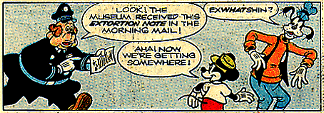
In the serials, Mickey and Goofy are sent off on adventures all over the world (and into outer space for that 事柄). They often 共同製作する with the police, and 非常に/多数の villains pass through the comic (土地などの)細長い一片s over the course of time. Mickey's 遭遇(する)s with 黒人/ボイコット Pete are the most ありふれた, occurring in だいたい every third serial. Murry also 利用するs a group of 基準 villains, adapted to さまざまな 状況/情勢s. One of the usual villains who appear with 黒人/ボイコット Pete, is often referred to as Catfoot, a 比較して short character with a very 厚い 耐えるd under his long nose. Also ありふれた is a rather fat scoundrel with 耐えるd stubble.
Indicative of Murry's serials during the fifties was the enormous 量 of work that he put into the backgrounds and the 詳細(に述べる)s. Serials such as, "The Marvelous Magnet" (WDC 182-184), "The Phantom 解雇する/砲火/射撃s" (WDC 200-202) and "The 脅し of the 石/投石する-Eaters" (WDC 217-219) all 含む/封じ込める brilliant depictions of nature, 勝利,勝つd and the 天候. His half page illustrations which begin the さまざまな 分割払いs of the serials are 特に magnificent. Murry, himself, has said that he was never 特に 利益/興味d in 製図/抽選 comics but rather, did it mostly for the money, although there is no trace of this during the fifties.
Redrawn daily (土地などの)細長い一片s
At the end of the 1940s a number of old adventures were redrawn to make them more timely, but that stopped after a few years. Another two redrawn newspaper adventure (土地などの)細長い一片s from 1940 were published in 1959/60. The first of them was "The 妨げる/法廷,弁護士業-非,不,無 Ranch" in WDC 229-233. It tells the story of Mickey's and Goofy's adventures at a vacation ranch in the Wild West, where 黒人/ボイコット Pete 誘拐するs women and 需要・要求するs 身代金s for them. Like most of these old adventures, it is very long, and Murry's 見解/翻訳/版 was no いっそう少なく than forty pages. The second one was just as long, "An Education for Thursday" (WDC 237-241), and was about the adventures of the little savage Thursday, in Mickey's home town.
Already some years earlier, Murry had gotten the 職業 of redrawing 確かな sequences of Floyd Gottfredson's classic story, "Mickey Mouse Outwits the Phantom Blot" from 1939. The redraws, in this 事例/患者, are 完全に 理解できる, since 確かな scenes where the Phantom Blot gets Mickey into さまざまな death 罠(にかける)s are rather rough. This did not mean, however, that the new 見解/翻訳/版s were all that much better. の中で other things, a cat which jumped up and was going to 解雇する/砲火/射撃 a ピストル at Mickey was taken away. The whole scene has instead been 取って代わるd by one where the Phantom Blot places Mickey over a pile of dynamite. Not much more humane. Murry's 見解/翻訳/版 was published in the Mickey Mouse Club Parade, at the end of 1955.
In 新規加入 to the serials in WDC, Murry also drew stories with Mickey in the magazine Mickey Mouse (MM). The longer, introductory adventure in every 問題/発行する is 類似の to the serials in WDC, but the shorter tales in Mickey Mouse show another 味方する of Mickey. In those instances, he is usually in his hometown or its 周辺, and there are rarely 探偵,刑事 adventures. Of course there are often shady characters, but in these stories, Mickey is much more helpless. They are more about how Mickey, with 変化させるing results, 取り組むs his everyday problems. Mickey is often 混乱させるd and isn't always able to get out of 状況/情勢s by himself. Pluto, Minnie, and Morty and Ferdie appear 定期的に in them.
Goofy and Pluto were the two characters, aside from Mickey, that Murry 扱うd best, and they both also appeared in their own magazines. For a long time, there was a four page story with Pluto in every 問題/発行する of WDC, which Murry often illustrated. In these stories, Pluto is very sentimental and is often 描写するd dreaming. 外見s by Mickey, and Morty and Ferdie are usually as 第2位 characters. During later years, Pluto 参加するd more frequently in Mickey's 探偵,刑事 work, while at the same time becoming more 抑制するd so as not to detract from the story.
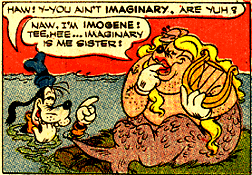
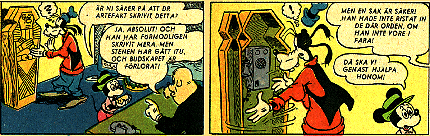
Murry was a master at 製図/抽選 Goofy. He had the ability of 新たな展開ing and turning Goofy's 武器 and 脚s so that they always pointed in 正確に/まさに the 権利 direction. It was also Murry who 早期に on introduced Goofy's characteristic way of 持つ/拘留するing his 手渡す in 前線 of his mouth. Goofy's own stories from the end of the fifties are often small comedic gems. The 真っ先の example is probably "The Unknown Hero" (FC 952/1958), where Goofy unknowingly 脅すs the wits out of an escaped 罪人/有罪を宣告する 簡単に by behaving clumsily.
Mickey of the Sixties
In the beginning of the sixties, things started going downhill for Mickey Mouse comics in the 部隊d 明言する/公表するs. The scripts became ますます uninteresting, the 製図/抽選s more bland and いっそう少なく 完全に worked-out. Murry's serials were no exception. For a short period during the sixties, Murry used a much more boxy style of illustration, and after that one can notice a 劇の 拒絶する/低下する in the 質 of his artwork. This is most true of the stories in Mickey Mouse, however. The serials in WDC still had good manuscripts, which seemed to 奮起させる Murry to make more of an 成果/努力. Serials 価値(がある) について言及するing 含む, "The Return of the Phantom Blot" (WDC 284-287/1964) where the Phantom Blot made his first return since Gottfredson created him in 1939.
に向かって the end of the sixties there was, however, a 一時的な 増加する in 質 even in the stories in Mickey Mouse. Readers from these years certainly remember the exciting serials such as "Blackbeard the 著作権侵害者" (MM 114), "The Ski Ghost" (MM 120) or "The Moose Monster Mystery" (MM 122), which are in fact 優れた. の中で my personal favorites is "The Mysterious Knight Rider" (MM 119), where Goofy 相続するs an old 城 in Scotland, only to discover that at night it is visited by a knight on a horse. After this 一時的な 上昇, Murry only drew 時折の stories for Mickey Mouse, putting his energies instead into WDC.
Two 主題s became popular in the Mickey Mouse comics in the late sixties, すなわち science fiction, and to 位置を示す the stories at a point somewhere in history. Serials like "The Red Wasp Mystery" (WDC 317-319), "The Strange 事例/患者 of Professor 無" (WDC 339-341) and "Kingdom in the Clouds" (WDC 366-368) are very 奮起させるd by science fiction. Professor 無 comes from the 75th century and is 存在 used by, の中で others, Emil Eagle for shady 目的s. Emil has the idea of 輸送(する)ing water into the 未来 where it has become a 不十分な 商品/必需品. It is not at the same high level of 質 as Carl Fallberg's old serials, but it is definitely 価値(がある) reading.
In two of the three serials that Carl Fallberg wrote after 1962, he places the events 支援する in time. In "The River 著作権侵害者s" (WDC 336-338), Mickey and Goofy are fur 仲買人s in the 19th century, while in "The 著作権侵害者s of Port Placid" (WDC 374-376) they 落ちる prey to 著作権侵害者s from the 18th century. And there are other stories from this period with 類似の 主題s.
A very unusual 事業/計画(する) was 行為/行うd in Mickey Mouse in 1966. Murry was 許すd to work together with Dan Spiegle, resulting in Mickey and Goofy living in a 完全に 現実主義の world. Only three such 問題/発行するs were produced and published in MM 107-109, but they are very 利益/興味ing as 実験s. Of course they 欠如(する) the charm of a normal "funny animal" comics, but at least the latter two work 公正に/かなり 井戸/弁護士席.
Around 1964/65, Murry was put in 告発(する),告訴(する)/料金 of two new comics that Disney rolled out. Soon after the Phantom Blot character was 生き返らせるd in WDC in 1964, The Phantom Blot (PB) comic 調書をとる/予約する was started. While there were only seven 問題/発行するs, it still 含む/封じ込めるd several gems, for example "The Phantom Blot 会合,会うs Mad Madam Mim" in PB 4. The Blot 誘惑するs Madam Mim into helping him get out of 刑務所,拘置所 by telling her that he 深く,強烈に loves her. Mim, 奮起させるd by Snow White and dream princes, of course 落ちるs for the Blot and 混乱させるs Mickey and the police. Absurd, but very funny.
The other new comic 調書をとる/予約する was 最高の Goof (SG) which was started in October 1965. The first 最高の Goof story was published in PB 2 and was, 自然に, する権利を与えるd "The Phantom Blot 会合,会うs 最高の Goof". In it, Goofy believed that he had 最高の 力/強力にするs and ran around the Wild West dressed in long underwear and a potato 解雇(する). The first story with a strong 最高の Goof ran in Donald Duck 102 (1965) after which 最高の Goof was started. All of these serials, 含むing the first six 問題/発行するs of SG, were illustrated by Murry. Some of them are definitely の中で Murry's funniest. "The 巨大(な) Windoola Jade" (SG 3) is a prime example, as is the classic 問題/発行する before that, "The Strange 事例/患者 of Dr. Syclocks" (SG 2). Dr. Syclocks is a living mechanical clock with delusions of grandeur, invented by Gepetto, Pinocchio's father. He runs around and burglarizes clock 蓄える/店s ーするために get more clock jewels than any other clock in the world. The very idea is 完全に ingenious.
During the seventies, Murry's 製図/抽選 became ますます 決まりきった仕事. The serials in WDC were ended in 1973 and were 取って代わるd with an eight page story in every 問題/発行する. These stories were rarely of very high 質, and were probably not too 奮起させるing to draw. Murry's illustrations became much more stiff and the backgrounds more Spartan - when they were not left out altogether. But he did continue to draw, on a 減ずるd 規模, until 1984 when the final 問題/発行する of WDC (until Gladstone took over two years later) was published. By this point, he had lost all 願望(する) to draw comics. Those final years, 事前の to his death in 1989, were probably not 充てるd to Mickey at all.
Those who would like to 調査する Murry's fantastic world would do 井戸/弁護士席 to start with the gems from the fifties. It is the memories of all of those fantastic adventures that remain の中で millions of comic 調書をとる/予約する readers.
言及/関連s:
Klaus Spillman: "The Man Who drew More Tales for the Mouse", The Duckburg Times 16, 1982. Jim Korkis: "Mr. Murry: The Other Mouse Man"; The Duckburg Times 19, 1983. Kjell Croné: "Paul Murry", NAFS(k)uriren 8, 1982. Germund 出身の Wowern (Silvegren): "Musse i serietidningarnas värld", NAFS(k)uriren 25, 1995. "INDUCKS.org". Here you will find the Disney Comics Database, 名簿(に載せる)/表(にあげる)ing episodes, characters and creators.