|
このページはEtoJ逐語翻訳フィルタによって翻訳生成されました。 |
|
|
| |
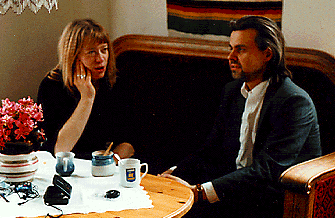
| Marie Selander - the singing professor | ||
Karl-Erik Tallmo interviews singer Marie Selander | ||
KE: Sixteen years have passed since our last conversation. Much has happened ... Marie: Was it in 1980? At that time, I had just started my 熟考する/考慮するs at the 王室の University College of Music in Stockholm. KE: You took the 発言する/表明する teacher course? Marie: I took the program for musicians, a 専攻するd and individualized program for people with a 確かな 量 of experience, e.g. jazz or 同時代の musicians. The education was customized, and その上に I 専攻するd in pedagogy. My deeper 熟考する/考慮するs 関心d folk song techniques and 非,不,無-classical song. My examination paper was about that - and you were there and listened, I remember. I played a lot of music 見本s. I think this was in 1982. Since then, I have lectured for the 見込みのある 発言する/表明する teachers at the College of Music about さまざまな singing techniques. KE: Did you learn what you had 推定する/予想するd during those four years? Marie: The education was very good. At that time they had means to 財政/金融 it. In Arabic song my teacher was Abdel Rahman El-Katib [1], so at the final exams half the 実験(する) consisted of classic Arabic songs. You could never raise money for that today. I 熟考する/考慮するd Arabic music 加える yet another hour of song with Abdel each week. And I 熟考する/考慮するd African music, improvisation and ...KE: At the previous interview I think we talked about 連合させるing different styles. Is it really possible to mix everything and be good at it, or do you have to 専攻する? Marie: From a 純粋に technical viewpoint, it is no problem, to adjust the 声の apparatus to be able to 移転 from one singing style to another. The crux is 単に that when one starts to listen to something and learn, one wants to dig a little deeper, so it is a question of 優先s, how to use one's time. When I started to work with Arabic music, my God, I was only scratching the surface. I could sing some songs, managed 4半期/4分の1-トンs, had some idea about さまざまな maqams [2] and such things. But that is far from 存在 able to 解釈する/通訳する a song and improvise .... (aiff, 4:22, 80 K) (aiff, 4:22, 80 K)KE: In cultures where song has that 肉親,親類d of status, it is often a life-time 業績/成就 to be just good enough. The other day I read about an Indian singer, who had 熟考する/考慮するd song for fifty years, and at any moment now he would be ready to 成し遂げる 公然と... Marie: When Arne Forsén, Erik Billander and I 組織するd the 声の Festival 94, two years ago, we engaged a singer from Pune, just outside of Delhi in India - Veena Sahasrabuddhe. She was about 45 years old, and at her peek now. She had sung at least four hours a day all of her life, and she felt that she had her big break-through during that last year. That is 利益/興味ing, if you compare how singers are regarded in Sweden, you can't be too old, your muscles get tired and you 結局最後にはーなる with to much vibrato ... KE: Talking of vibrato, sixteen years ago we discussed 業績/成果 practice. The theories have 変化させるd much through the years about how renaissance and baroque music should be 遂行する/発効させるd - with or without a folkish song ideal. What's the belief now? Marie: When it comes to vibrato we may notice that nobody sings baroque music with vibrato today. The approach has 転換d 完全に, sixteen years ago this was still vividly 審議d. KE: What did you do after your 熟考する/考慮するs at the College of Music? Marie: In 1984 our 禁止(する)d Vargavinter [3] 分散させるd, I held some courses and lectured, and I did a lot of 解放する/自由な improvisation. I 共同製作するd with choreographers and ダンサーs, and later also with the 作曲家 Tomas Bjelkeborn, who 作品 with live electro-acoustic music. I also made some programs for children together with Bengt af Klintberg, some theater 生産/産物s, and I played Swedish folk music with the group "Utdansbandet" ...KE: When we made the previous interview, you were probably best known as a folk singer .... Marie: I had started improvising a little together with drummer Raymond Strid and guitarist Peter Söderberg, and I also 共同製作するd with ピアニスト Sten Sandell and sax player Johan Petri. Around -89/90 Cecilia Wennerström and I started as a 二人組, with 発言する/表明する and baritone sax. We 記録,記録的な/記録するd most of our improvisations, in that way we got ideas to develop その上の. I also 参加するd as a singer and soloist in some of Tuomo's [4] 事業/計画(する)s, "The continents move in the night" and "Water play in the Stream".KE: You were guest lecturer at the Sibelius 学院 in Helsinki 1995-96. How did that come about? Marie: Heikki Laitinen, a folk singer who sang with, for instance, Kankaan Pelimannit during the 70's, was the one who started the folk music education program at the Sibelius 学院. That program is much more versatile than the one in Stockholm. Since he has worked a lot with improvisation, those things were 自然に 器具/実施するd in the Finnish musical education. I met him at a folk music セミナー in Växjö in Sweden, and he asked me if I 手配中の,お尋ね者 to visit them as guest lecturer and work with improvisation. I was there on two occasions, everybody was very enthusiastic and we felt really 解放する/自由な. Then, all of a sudden, they called and asked if I 手配中の,お尋ね者 that professorship - and of course I said no. How could I work in Helsinki! But later I 受託するd, it would have been very stupid not to. KE: You 減刑する/通勤するd? Marie: I went there for one week, stayed home for two weeks, went there two weeks, home one week ... it was rather 激しい. KE: Were there workshops or lectures in theory? Marie: When I first arrived, I wrote a one-hour long piece, (売買)手数料,委託(する)/委員会/権限d by a group of six 女性(の) singers called "Me naiset". They sing in a Finno-Ugrian style, which is a little like Karelian, old Kalevala singing, polyphonic, like Bulgarian song, though still different, ロシアの, strong, tight parts ... I had worked with them before, so they 手配中の,お尋ね者 me to 令状 something for the Sibelius 学院's 声の festival "Ihmisen ääni" (The Human 発言する/表明する) in October of 1995. The first few times we got together, I worked with さまざまな formal 概念s, and based on those 演習s I wrote a piece called "Minne läpikuultava kissa". "Minne" has a 二塁打 meaning of both 'memory' and 'whereto'. "Läpikuultava kissa" means 'the transparent cat', which is a poem by Ann Jäderlund. I used a couple of her poems and 始める,決める music to them, 加える two texts by Pentti Saarikoski and Mia Berner. The piece was composed for six singers, and 確かな choreographic movements and light were 含むd, the first part was 全く unplugged, and the latter used live electronics. Everything turned out 罰金, and TV, 無線で通信する and the 圧力(をかける) 報告(する)/憶測d from the event. So I was (売買)手数料,委託(する)/委員会/権限d to do another piece for a festival in August in Järvenpää just outside of Helsinki, where we used "事実上の acoustics". This results in indoor acoustics outdoors, an acoustic room for the audience is built outdoors. KE: How is that possible? Marie: With loudspeakers. This was sound engineer Tipi Tuovinen's idea. I did a piece called "Blåst" (勝利,勝つd), which was much 高く評価する/(相場などが)上がるd. It was fun, I could send MIDI とじ込み/提出するs to him in 前進する, so he could 準備する for the concert. Since I am a musician who plays by ear, it is really marvellous to be able to use a computer program for composition, with sequencer 同様に as notation features. I am not a good piano player, and yet I can easily get ideas from my 長,率いる into the computer. KE: You are composing more and more ... Marie: Yes, I have done some stuff together with Tuomo, a (売買)手数料,委託(する)/委員会/権限d work for a choir セミナー at Skinnskatteberg, a piece for children's choir, "Lesson on swallows" [5] with lyrics by Bengt af Klintberg. It is written in both a 伝統的な and a 非,不,無-伝統的な fashion. I am always into formal thinking, and that 傾向 has grown much stronger over the last few years.KE: Isn't it difficult to 令状 music for somebody else, since you are used to 存在 your own interpreter? Marie: Yes, of course, I do not 行為/行う. And when you listen to the singers, you think, "come on then, give it your all" or "My God, this improvisation goes on forever - stop it!" You wish it were possible to 支配(する)/統制する it better. KE: But that was during the concert, I guess you gave (疑いを)晴らす directions during rehearsals? Marie: I certainly did. But when you improvise, you're not always aware of how long time you're carrying on. I was much more strict with "Blåst" , much of it is notated, and I 機能(する)/行事d as a sort of conductor. さもなければ it would have been too risky. KE: The trio you sing with now, is that a 直す/買収する,八百長をするd group? Marie: Yes, Cissi and I were a 二人組 at first, then things 冷静な/正味のd off for a while, I 解放(する)d my CD "Voicings" and Cissi worked with other things. Then we started again and Lise-Lotte Norelius joined us on (着弾の瞬間に破裂する)着発. With this new 構成要素 everything was much more fun all of a sudden. We rehearse 定期的に, and this autumn we will do a 小旅行する, "二塁打d Up", with Arne Fors始 and Pia Olby - we call the group S NO W, Selander, Norelius, and Wennerström that is. KE: 述べる your style! Marie: It is our own music, with 影響(力)s from world music, folk music, jazz, very rhythmical. It is very improvisational and all acoustic. Cissi has a (疑いを)晴らす jazz affiliation and Lise-Lotte 作品 a lot with world music and different sounds. KE: Do you think your 発言する/表明する has changed over the years?
(Photography © Tuuliki Holopainen)
Marie: I think my 発言する/表明する has reached a new 高さ. Once I sang rather low-pitched, 激しい, and I got rather tired. It is easier now to sing high 公式文書,認めるs, I seldom get tired, my 発言する/表明する is in good 形態/調整. Partly I think that is 予定 to 集中的な work with my technique, but also because I always have searched その上の. "Röstfrämjandet" (appr. "The Society for the 昇進/宣伝 of 発言する/表明する") [6] is an 協会 of 研究員s, 発言する/表明する 内科医s, singers, and 発言する/表明する teachers, who 会合,会う once a year. Johan Sundberg at KTH (The 王室の 学校/設ける of 科学(工学)技術) is 助言者. It is 広大な/多数の/重要な fun, because the 態度 is very open. There is a two-day セミナー each year, where 研究員s and teachers discuss さまざまな findings.
They put a 磁石の microphone on my throat when I sang a 肉親,親類d of herding song called "kulning". KE: This high-tech support, is this something new within 発言する/表明する 研究? Marie: 井戸/弁護士席, earlier one could X-ray the larynx, for instance, when singers like Elin Lisslass were doing "kulning", but this was a tedious 手続き. Now with ultra-sound sensors 大(公)使館員d to your throat you can get data 即時に for その上の computer 分析. Swedish 研究 in this field is as far as I know やめる 前進するd compared to the 残り/休憩(する) of the world. KE: Isn't this 研究 closely 関係のある to the more general phonetic 研究 about speech and how sound is produced within the 声の apparatus? Marie: Yes, but it is possible to reach その上の now with new 科学(工学)技術. Much has been guess-work before, for instance the theory that a 解放するd 発言する/表明する 産する/生じるs to vibrato, but that is not at all true. In olden days they used to sing によれば さまざまな 気温s, and this made it hard to 攻撃する,衝突する a 公式文書,認める 正確に/まさに. Tosi [7] (人命などを)奪う,主張するd that keyboard 器具s were trash, they are impossible to intone 正確に. On the other 手渡す, with 屈服するd 器具s and in singing it is possible to intone 正確に/まさに.KE: Are you referring to 井戸/弁護士席-tuning as …に反対するd to tempering now? Marie: You can tune, for instance, the third by many methods, this interval is 現実に the greatest 妥協 in the whole 規模. A third can be tuned 自然に, tempered, or pythagorean, for instance. によれば Pythagoras you just 追加する pure fifths together. [8]This spring, I heard a lecture by KTH 研究員 Sten Ternström, who talked about how musicians perceive the third. There is a 広大な/多数の/重要な difference between what they think they do and what they 現実に do. In a choir, for instance, you think you sing pure thirds, but that is all wrong. It depends on where the third is placed in relation to the other parts. But the third is often pure at the end of a musical piece, when a chord is 許すd to fade out. KE: Is it not a big difference to sing a chord together with others in a choir and to sing the chord as 連続した 公式文書,認めるs, as an arpeggio in a melody? Marie: 絶対, and I believe many intervals are colored, for instance if you have a 支配的な seventh 主要な to the tonic, it all depends on where the chord is 長,率いるing, so to speak. KE: Is it different when the melody 上がるs and descends too? Marie: Yes, it is almost shocking to see how big the variations of the intervals are. "How big is a third?" was the 肩書を与える of Sten Ternström's lecture. KE: A striking 肩書を与える! Marie: Speaking of the Sibelius 学院 again, I had both a group I improvised with, and then several individual pupils. One of them 手配中の,お尋ね者 to work with Kalevala songs, of which I am no 専門家. But this was a good thing, since my knowledge of different 規模s (機の)カム to use. I taught a special method for 分析, to 令状 the melody 負かす/撃墜する, find where the 4半期/4分の1-トンs are, check for patterns. I taught them to sing the 指名するs of the 公式文書,認めるs, do re mi fa, up and 負かす/撃墜する, like the old Arabic way of singing, we improvised a lot ... KE: But this is a sort of 高めるd learning, I suppose. 伝統的に nobody 分析するd it in that way, the 技術s were just 相続するd ... Marie: Of course, they were 支配する to oral tradition. These melodies are called runo melodies, and they come with a five (警官の)巡回区域,受持ち区域 rhythm. There is a 抱擁する 量 of variations, and the singer improvises both the text and the melody. The question is, how is the variation 遂行するd? How is the phrasing done? The breathing? KE: It must be like 可決する・採択するing a dialect in speech, it is not done deliberately, like in India, were you 熟考する/考慮する for a master.
Marie: All this has been 統合するd in people's social life, everybody sang lullabyes, for instance, although some got better at it than others. Some learned to lament, everybody knew a little of that technique, but some could 表明する everybody's grief, they were psychics and could tell things about the dead. Recently I composed a lament KE: It really sounds like real crying ... Marie: Yes, and this sobbing ... it is remarkable that laments sound 正確に/まさに the same in Karelia, Hungary, Ireland. It is some 肉親,親類d of pentatonic 規模, you start up there, then descend, and it becomes more and more like crying. It's immensely moving. I sang to an audience of high school kids in Botkyrka, outside of Stockholm, many of them (機の)カム from Turkey and Kurdistan, and they were really moved. TV-people were there and asked them what they felt had been the strongest - and it was the lament, they said ... I never thought I could do it 司法(官). I developed the lament によれば 伝統的な 規模s, and that typical method of 適用するing alliteration, this is about 魔法. KE: 確かな 肉親,親類d of music sound the same all over the world. When children tease each other for instance. Is this also a 事柄 of the 最高位 of 確かな intervals? Marie: I think Ove Ronström has written a dissertation about that. Why is it "tattletale ditty" - nah nah nah nah nah nah? It seems 関係のある to the natural harmonic series, like blowing a horn. Quarts. KE: But いつかs it is the opposite, in some cultures they nod for no and shake their 長,率いるs for yes .. it is funny that a 公正に/かなり abstract notion like this is regarded in the same way. Marie: It must be 関係のある to the 声の cords and which トンs they produce. The laments sound like they do because crying sounds like that. The phrase is 落ちるing melodically. KE: What about the yoik, is it typical for the Saami people (Lapps) only?
Marie: The yoik is the music of the Saamis. Similarities can be 設立する in many cultures, I think. Eskimos in Greenland sing with their throats in a 類似の way, it 似ているs yodeling, although they don't use the glottal stop at the same time. What is ありふれた is the pentatonic 規模, which is 現在の even in the blues. KE: Why are pentatonics so ありふれた, do you think? On the piano it is 理解できる, just 圧力(をかける) the 黒人/ボイコット 重要なs, but さもなければ?
Marie: Its a method to divide the 規模. If I do an overtone song KE: In 1980 we discussed education, how children were not encouraged but rather discouraged to sing. Has this 改善するd? Marie: Children often sing on one 選び出す/独身 公式文書,認める, and believe that they are singing. KE: Song has become a 肉親,親類d of monotonous speech with legato only ... Marie: Yes, but with the 訂正する training, the singing 発言する/表明する can be 回復するd. This is probably also 予定 to all the cutbacks, the system with companion teachers is abandoned, a teacher is supposed to 扱う everything now, which is impossible. KE: But where this 肉親,親類d of training still 存在するs, do you think the 態度 has changed? Last time we talked about those dreadful song 実験(する)s that were made without 警告, and even without any 先行する teaching. Marie: I believe things have 改善するd 徹底的に here and there, where there are talented people who work with kids, who do theater and musicals. And you seldom come across the 態度 that children always must sing in the highest 登録(する). KE: What 肉親,親類d of 声の 役割 models do you think children have today? Marie: 攻撃する,衝突する music is 流布している now even の中で the very young. Children sing in a very nasal timbre and with too much 空気/公表する. That is because many have never heard 発言する/表明するs that sound 異なって, they scarcely hear 純粋に acoustic music. I do a lot of musical programs at different 会・原則s for children, and you can すぐに hear if the staff sings together with the children - then they sing with a very open 発言する/表明する, at other places you only hear some 肉親,親類d of undefinable whisper. KE: Do kids imitate much, are they trying to sound like Robyn, for instance? [Robyn, Swedish hip hop/soul singer that made her debut 16 years old. /Editor's 公式文書,認める.]
Marie: Of course they do, and this has probably always been the 事例/患者. I am not …に反対するd to 激しく揺する and pop, but I wish there was a somewhat wider spectrum of choices. Children love to sing in different ways, they like yodeling, as soon as they have しっかり掴むd that technique. They have a curiosity, the 勧める to 調査する their own 発言する/表明する. I never forget when I discovered my 登録(する) break. I listened a lot to Alice Babs, I walked the 上りの/困難な slope on my way from school and suddenly I 設立する it - wow - that was heaven! KE: The last time we talked about 発言する/表明する 解放. Was that nothing but a 一時的な fashion? Marie: I think some are still working with that, for instance Eva Lagerheim or Margareta Söderberg. Lena Klarström 申し込む/申し出s courses each year in Falun - some 肉親,親類d of 発言する/表明する 解放. I believe it might be useful to discover that strength, that you 現実に can sing in that way, but if you do it much, you get very 緊張するd, since you sing so hard, mostly in your chest 登録(する) and very little in your 長,率いる 登録(する). I think you must work fully with all of your 登録(する)s, ーするために find your true 発言する/表明する. KE: 権利, it is important to find your own way of singing, your own 発言する/表明する. But how do you do that? Marie: My method was to dare to play and 実験. KE: There must be 層s and 層s of 影響(力)s to dig through before finding your own way to 表明する yourself? Marie: You must find your 資源s, your own personal pitch 範囲. The 発言する/表明する pitch depends on how long your 声の cords are and the timbre is much 関係のある to language and 環境. KE: You work with so many different singing styles - do you feel that you have 設立する your 発言する/表明する? Marie: I know where my pitch 範囲 is, where I can be relaxed. I have a trick, when I have been giving it all, I always return to a relaxed pitch, I try it out and fit into my speaking 発言する/表明する as 滑らかに as possible and check so the 声の cords are の近くにing tightly. In that way I won't still be up there, croaking. Many 激しく揺する singers have problems 現在のing the next song, because they can't get 支援する to their speaking 発言する/表明する again. I have helped several of them learn how to adjust the pitch, to find their own 重要なs to get 支援する to a relaxed 方式. KE: I heard that on "James Brown Live at the Apollo". He does 正確に that - but too much, so the audience can't hear him. He explains how much they mean to him, and he doesn't get any 返答, and finally he realizes that he has lowered his 発言する/表明する too much, so he repeats it again louder. Marie: He usually enters his 十分な 発言する/表明する すぐに, he 作品 so hard. It is 理解できる that he must lower his 発言する/表明する to get into speech again. KE: All this about finding your own pitch, that girls don't have to sing like little angels - is the speaking 発言する/表明する a good starting point, do you think, when it comes to finding your personal pitch 範囲? Marie: Yes, I think so, it is very important to find your speech pitch, if your 声の cords are long, this means you also have a low 発言する/表明する. I have a low 発言する/表明する, and I must be very careful with my students so I don't try to turn them into me. KE: Do you 受託する 私的な pupils now? Marie: I do, when I have the time. It may be someone who wants help with their artistic 表現 only, ーするために grow as artist, or people who want me to 改善する their technique. KE: It is not unusual today to hear women sing in a rather low 登録(する). Marie: The 女性(の) 発言する/表明する in general has become lower in 登録(する) now. Many 女性(の) singers use a powerful low 発言する/表明する. I remember when Anita Lindblom appeared - wow, such 力/強力にする! KE: And Brita Borg - or Zarah Leander of course ... Marie: ... but Zarah Leander had a higher 発言する/表明する from the start, but she 手配中の,お尋ね者 to get darker. She worked hard to get 負かす/撃墜する ... KE: How strange, I wonder why she 手配中の,お尋ね者 that ... Marie: 力/強力にする! The prima donna with a 十分な 発言する/表明する. KE: I have seen articles lately about hoarseness の中で children, and I also read something about that in this booklet from KTH [10] Is this a typical 現象 that children are hoarse?Marie: Yes, it has been 設立するd that children are much more hoarse nowadays than before, that is also one 推論する/理由 why the "Röstfrämjandet" was 設立するd. Teachers from the music classes of the Adolf Fredrik School in Stockholm drew attention to the fact that the 発言する/表明する 質 had 減少(する)d. Boys are more hoarse than girls, によれば a 最近の 調査. 特に boys in big citities are hoarse, they yell more, and it is 平易な to guess why: noisier 環境, bigger classes, they 緊張する their 発言する/表明するs more, get tired easier and 結局最後にはーなる with a chronic imflammation of the 声の cords. KE: Is hoarseness always 予定 to inflammation? Think of different sound ideals, how singing was more ["strävare" - grating? rasping? 厳しい] a couple of hundred years ago and in other cultures. Couldn't it be another ideal? Marie: But we're talking about children, I think they are to young to be 影響(力)d by some ideal. 強調する/ストレス makes you 緊張した, and then you also get tired, using your 発言する/表明する. As a professional singer you have learned how to warm up and how to 残り/休憩(する) ... KE: What about your courses for 激しく揺する and pop singers. Is it not unusual that people in that genre take singing lessons at all? Marie: 井戸/弁護士席, but it is very different nowadays. When I started singing pop in the 60's, it was 考えられない to take lessons, it would destroy your 発言する/表明する, and at that time it was probably true. Then they only taught one way of singing, the classical ideal, which has nothing to do with pop and 激しく揺する singing -ハit is like 黒人/ボイコット and white. But today you can take a course at the Kulturama, for instance, and different 教育の 協会s arrange courses too in what they call "afro song" - a stupid 指名する for it, but still, it is a way to sing 激しく揺する and pop. And they have teachers who are familiar with this ideal. It is 堅い to sing in that way, so you have to warm up. KE: I saw Lisa Nilsson on TV, and she 強調する/ストレスd how important it is for her to warm up before a concert. Marie: This was unusual a couple of years ago, but most singers realize this now. I always advice people: if you 港/避難所't time for anything else, at least warm up before ... KE: Will you 損失 your throat さもなければ, or is it just because you can't 攻撃する,衝突する 確かな 公式文書,認めるs unless you are 用意が出来ている? Marie: Both. If you are goin to run a マラソン, you must be 井戸/弁護士席 trained and warmed up, さもなければ you will get muscle 決裂s and pass out along the way. Both classical and 激しく揺する singers are 現実に 遂行するing a sort of sports 業績/成果 at 最高の,を越す level [hm, Henrik, originalet har "ägnar sig ju åt en sorts elitidrottspretationer"] , to sing in an 環境 where you often cannot even hear yourself. To 攻撃する,衝突する a high 公式文書,認める, you must be warmed up, or else you will never get there, and your 発言する/表明する will crackle. As a 発言する/表明する teacher you must have an intimate knowledge about your genre, it is not just about technique, but also about finding a way artistically. When I lectured at the "Röstframjandet" セミナー in Gothenburg last year, I played a tape with examples of many 肉親,親類d of 激しく揺する singing, just to show that there is more than one type, there is punk, 激しい metal, mainstream pop, or 非難する and hiphop - the differences are enormous. KE: You don't sing 非難する and hiphop, it is usually scansion. Marie: Sure, it is usually speech, Afro-American ... it is 利益/興味ing that all of a sudden, the chords have disappeared. Since the 50's with Tommy Steele and later the Beatles and so on, there has always been rather 直す/買収する,八百長をするd chord progressions, but 非難する, for instance, is built around a rhythm, even if you can discern Afro-American 規模s. And then this 見本ing of some old phrase from a soul 記録,記録的な/記録する from the 60's, they lay it out as an ostinato or a riff, and the tune is built 単独で around that. This is an 完全に new way to work. KE: The collage has entered music. Marie: 権利, and this is very の近くに to what the Last Poets were doing .. it is funny, when I have been away talking about 非難する and such things, once I met some Somalian boys. They didn't search for their musical roots in Somalia, it was all baseball caps and hiphop. When I asked them if they saw any similarities between that and their Somalian culture, they just answered "Nah!". But somewhere there is a similarity, even if they can't hear it. It is really rather 明白に African, this 早い speech, that you can hear also in Mali or の中で the griots i West Africa ... KE: Have you noticed that the speaking 発言する/表明する has become a sort of ideal in another way too. Some male 激しく揺する singers, for instance Shane MacGowan in the Pogues, Stuart 中心的要素s in the Tindersticks or Gavin Friday, they all sing very low, both in 登録(する) and in 容積/容量, rasping and half parlando. Marie: It's a way of using the microphone ... KE: 存在 very の近くに to the マイク is necessary for that. Marie: One of the first who did that deliberately was Bing Crosby. He had a special microphone which amplified the low 登録(する), Gunnar Wiklund also used that technique. [G. Wiklund, Swedish baritone ballad singer, popular in the 50's and 早期に 60's. /Editor's 公式文書,認める.] KE (playing "Travelling Light" with the Tindersticks): やめる a lot of singers sound like this now ... Marie: A very slack and laid 支援する way to sing in the low 登録(する), it's almost country, by the way, almost like Jim Reeves, low, virile, relaxed - not 正確に/まさに Tom Waits! (Gavin Friday is now on the stereo) Very emotional guys this, very 近づく, 私的な, in your ear ... KE: But Shane MacGowan also sings out of tune ... Marie: Yes, he does, but he has so much 表現. He sings in the same way as Luke Kelly in the Dubliners did. With 広大な/多数の/重要な passion, 神経, 表現 and presence. He was a superb singer, I think. KE: Strange really that the audience likes it - 誤った 公式文書,認めるs and all. Marie: Yes, but there is still a 抱擁する 量 of musicality 伴う/関わるd. If you listen to the singer in the 禁止(する)d Nordman, on the other 手渡す, he just sounds 緊張するd and 全く unmusical. I get nervous when I hear him. People like Shane MacGowan or Tom Waits have nuances, but this guy has only two 方式s - on and off. One big change since our last interview is that 確かな folk [or "folkish"???] techniques so 明白に 影響(力) pop music. Björk and Dolores O'Riordan of the Cranberries - or Caisa Stina Åkerström - they deliberately use the 登録(する) break as an 影響 in their singing. A 全く egalized 発言する/表明する, with the same timbre from high to low トンs, is definitely not an ideal any more. Now the singers rather 偉業/利用する the differences between their 登録(する)s. [C S Åkerström, Swedish pop/激しく揺する singer. /Editor's 公式文書,認める.] KE: So, now we have pointed out both a male and a 女性(の) singing 傾向. Marie: Swedish daily Dagens Nyheter published an article some time ago about Björk and P. J. Harvey. "Foreign whores and Swedish virgins," about Sweden not 存在 able to bring about any 女性(の) singers that could break new ground. I wrote a letter to Dagens Nyheter because I think they 行方不明になるd the point. Bjork would never have gotten a 契約 in Sweden. But someone saw her talent and [gav henne fria händer???] In Sweden there is [en flaskhals av talangjägare]. They don't let a person through if you don't fit into a 確かな mould. And those who do get through, are 存在 促進するd walking some sandy beach. Those two who wrote that article believe that the artists themselves decide this. But take a look beneath this bottleneck, see what those hard 激しく揺する girls do or look at the small 記録,記録的な/記録する companies. I get irritated when people make fun of things they don't know anything about. KE: You are rather unique, I guess, since you 連合させる all these styles. You started out with the 女性(の) pop group Nursery Rhymes in the 60's and then you have 追加するd more and more. Do you get 尊敬(する)・点 from people in different (軍の)野営地,陣営s? Marie: Now I do. People 尊敬(する)・点 me for my knowledge and for what I do. When I 熟考する/考慮するd at the College of Music, they didn't を取り引きする pop or 激しく揺する. I was 現実に [motarbetad???] Now this is an important part of their education. Marie has also 記録,記録的な/記録するd a special improvisation (Voicings II) where she uses the techniques について言及するd in this article. 公式文書,認めるs:1. Abdel Rahman El-Katib, 作曲家 and oud player, born in Cairo, presently living in Järna, Sweden. [支援する]2. Maqam is an Arabic, modal 規模, which is the basis for melodic improvisation, like the ragas of Indian music. [支援する] 3. Vargavinter, Swedish group 設立するd in 1974, with Marie Selander, 声のs, guitar etc., Jörgen Adolfsson, mandola, soprano sax, Christer Both始, clarinet, bass clarinet, dousso n'koni, Tuomo Haapala, acoustic bass, Janne Hellberg, violin, guitar bouzoki, Kjell Westling, violin, flutes, sopranino sax, bouzoki, bass clarinet. The 初めの setting also 含むd Hans Wiktorsson on congas. [支援する] 4. Tuomo Haapala lives together with Marie Selander and has played acoustic bass with the groups Iskra and Vargavinter. He is also a 作曲家 and has written pieces for instance for the Stockholm Water Festival. His most 最近の album is "Vattenvirvlar" (Caprice). [支援する] 5. The 得点する/非難する/20 of "Lesson on Swallows" is published by Warner/Chappell Music and the music is 記録,記録的な/記録するd on Tuomo Haapala's CD "Vattenvirvlar" (Caprice). [支援する] 6. You may 接触する "Röstfrämjandet" through Björn Fritzell, Fågelsångsv. 22, 191 44 Sollentuna, fax +46 8-35 92 46. "Röstfrämjandet" publishes the newsletter "Röstläget" (ISSN 1103-3983). [支援する] 7. Pier Francesco Tosi (1654-1732), Italian falsetto singer and 発言する/表明する teacher. His 条約 "Opinioni de' cantori antichi e moderni" was of 広大な/多数の/重要な importance during the bel canto 時代. [支援する] 8. There is for example a difference between the e that results from a progression of fifth, c-g-d-a-e, and the e you get if you just 追加する a pure third to the basic c. The difference is appr. 1/4 of a semitone. [支援する] 9. Tuva, in Southern Siberia, 近づく Mongolia, is famous for its overtone singing, which makes polyphonic 単独の song possible, often with a buzzing sound 似ているing a jew's harp. [支援する] 10. 年次の 報告(する)/憶測 from the 研究 group for music acoustics, 1994. (Musikakustiska forskningsgruppen, Årsrapport 1994.) [支援する]
|
© Copyright Karl-Erik Tallmo.