|
このページはEtoJ逐語翻訳フィルタによって翻訳生成されました。 |
|
|
| |
|
Between tradition and 観光旅行,事業: Tingatinga and his 信奉者s
Once there was a man called Eduardo S. Tingatinga. He was born in Mozambique, but during the 1960s he 設立するd an art form that became associated with his new 母国, Tanzania. Today, "Tingatinga" is the Tanzanian 称する,呼ぶ/期間/用語 for this form of art, known mostly in Tanzania, Kenya, Norway, Sweden, Finland, and Denmark.
Over the years, knowledge about Tingatinga has spread to other parts of Africa and Europe, 同様に as to other English-speaking parts of the world. Tingatinga is a 概念 that 開発 援助 労働者s and African tourists alike have been drawn to, but which, over time, has lost its uniqueness. In the past, Tingatinga art could be sold on its 指名する alone, but ますます other 作品 of art are 存在 現在のd as "Tingatinga" 同様に.
From a 純粋に technical 見地, Tingatinga art can be defined as 絵 on masonite using bicycle paint. The 絵s can be as small as ceramic tiles, while the biggest 絵s are no 疑問 hanging above thousands of family room sofas. Market 制限s have 妨げるd artists from working in larger 判型s. A 大多数 of the 買い手s have been foreigners wanting to 輸送(する) the images out of the country by airplane. From that 視野, Tingatinga is a 本物の form of "airport art" - cultural art from developing nations that has been adapted to the special 必要物/必要条件s of long-distance 旅行者s, 含むing size. Also the choice of motifs in Tingatinga art has often been adapted to the purchaser's 期待s of what should be 含むd in an African 絵.
Idioms come together
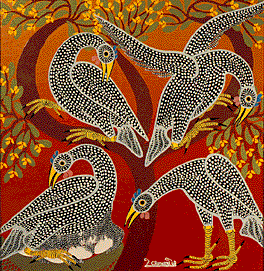
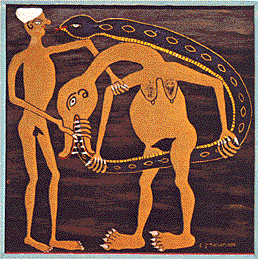
The heart of Tingatinga art is 中心d on 沿岸の east African design, where the decorative vines and patterns of the Swahili culture cover delineated spaces that are never 許すd to remain 完全に empty. It is reminiscent of the beautiful, archetypal 中世 木造の doors, 設立する in the 貿易(する)ing cities along the east African coast, 同様に as the many modern printed cotton fabrics in the form of kitenges and kangas. The flat, lush surface decorations can even be 設立する in 革命の illustrations from 早期に 1970s political 小冊子s, which were produced in Tanzania by the 追放するd Mozambican freedom 闘士,戦闘機s.
A 信奉者, Chimwanda, is の中で those who know how to fill the masonite surface with decorative forms. Copyright © Jesper Kirknæs, P.O. Box 128, DK-Frederiksberg, Denmark.
The designs are also used by many of today's younger artists and handicraftspeople, in 試みる/企てるs to identify their own 国内の artistic paths in 絵, sculpture, carpentry, embroidery etc. Makonde sculptors from Mozambique and Tanzania often show this 願望(する). Horror vacui (恐れる of emptiness) is also 設立する の中で several of southern and eastern Africa's 設立するd artists: Malangatana from Mozambique, Helen Sebidi from South Africa, painter Mankeu and sketcher and painter Idassé from Mozambique.
José Craverinha should also be について言及するd の中で the modern artists who have adapted the decorative designs of Swahili culture, but with strong and meaningful motifs. Linoleum 削減(する)s designed during the 60s, 70s and 80s at the missionary and art schools in South Africa and Tanzania (those of the now 死んだ and 独立した・無所属-minded John Muafangejo, for example) are 関係のある to the designs in form, but do not 明確に trace 支援する to an East African pattern tradition. If such links could be proven, they were no 疑問 created with the 激励 of Nordic missionaries, artists active in Africa and 開発 援助 労働者s, all of whom were looking for viable 概念s for the "true African image".
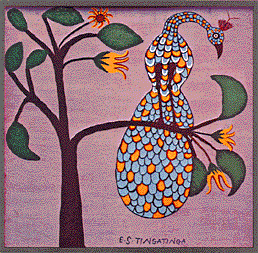
Peacock by Tingatinga.
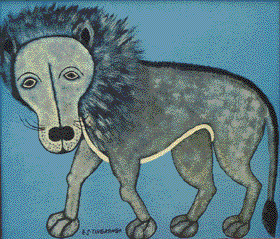
But there is a 衝突 in Tingatinga art, 特に when one looks at how it has been developed by the 信奉者s of the artist who gave it his 指名する. There is a 衝突/不一致 or an 遭遇(する) of two or three of the world's 主要な art idioms. It was Tingatinga's 後継者s who developed the decorative vein of Tingatinga 絵, while the artist himself painted "the big five" and other motifs that were not at all based on the decorative art idiom. "The big five" was a central 主題 of art and handicrafts from southern and eastern Africa, symbolizing the typical, large animals on the continent: elephant, lion, giraffe, hippopotamus and antelope (or ox). It is closer to 存在 a 選び出す/独身-motif art form, a narrative image with a main 支配する and 与える/捧げるing せいにするs and symbols. This sort of imagery is 設立する both in the three-dimensional art (sculpture, masks) of other African cultures, 同様に as in the 創立/基礎s of Western European art idioms.
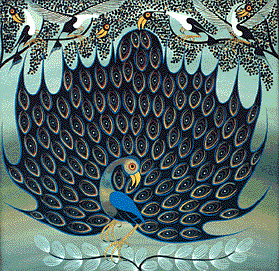
Peacock by Bushiri. Copyright © Jesper Kirknæs, P.O. Box 128, DK-Frederiksberg, Denmark.
By filling surfaces as 完全に as possible, with one or more of these animals, Tingatinga artists often use the motifs as if they were a part of the Swahili tradition anyway. Animal 人物/姿/数字s are drawn so that they in their entirety fit into the でっちあげる,人を罪に陥れる of masonite, or two animals are decoratively placed next to each other, as if they were intertwined calligraphy letters from an old Nordic 織物 design - or, rather, a 選択 out of an artistically (判決などを)下すd, beautiful Arabic Koran 詩(を作る). Many Tingatinga 絵s illustrate both the origins of and the 会合 between east and west in eastern Africa.
Bicycle paint in vibrant colors
Bicycle paint is a good medium to work in when making (疑いを)晴らす, vibrant colored 絵s that 含む/封じ込める sharp contrasts, and still it 許すs for the ability to work with surfaces of 調和させるing shades. Since the paint does not 乾燥した,日照りの very 急速な/放蕩な, it 要求するs that the artist first paints the background, letting the paint 乾燥した,日照りの before working on the actual motif. This technique of letting the background 乾燥した,日照りの, 同様に as the 厚い consistency of bicycle paint, are what make Tingatinga 絵s so 平易な to 解釈する/通訳する, since they 陳列する,発揮する contours and 明確に separated color surfaces.
The 開発 援助 政策s of the Scandinavian countries have, 一般に speaking, both 招待するd and 供給するd the 経済的な 必要条件s for cultural 努力するs, to a larger degree than 援助(する) to Africa from other countries. Tanzania and Mozambique are countries that have been of special 利益/興味 to the Nordic countries, while the U.S. and the U.K. have remained somewhat outside of the independence movements of these nations, 同様に as their later socialistic 開発.
Tingatinga artists have been supported by the 購入(する) of individual 作品 and whole collections, 同様に as through the printing and sales of postcards. There have also been several 展示s arranged in Scandinavia. During the 1980s the history of modern African art was written in English, e.g. the language that today is the 必要条件 for any international spread of knowledge. Familiarity with art movements such as Tingatinga, Ujamaa sculptures (which, like Tingatinga 絵, is also based in Dar-es-Salaam with roots in Mozambique), Rorke's Drift in South Africa, the Poto-poto school in West Africa, and many other modern artistic 開発s, has been spread successively through the interaction between active artists and cultural 労働者s from Europe and Africa. The Anglo-Saxon academic world has not shown any 広大な/多数の/重要な 利益/興味 in them, nor are they written about very often in English-language cultural 出版(物)s. The explanation is simple. There is not enough of a 関係 to British 植民地の history. Historical writers have 焦点(を合わせる)d their 利益/興味s either on movements where the 率先 was either British or British-植民地の, or on "非,不,無-植民地の" Africa - the "inner" worlds of "foreign" cultures such as fetishism and shamanism.
経済的な and 観念的な 調査s
Art and handicrafts need to be salable, more or いっそう少なく on their own strengths. Entrepreneurial African artists have, together with Scandinavian artists and cultural 労働者s from 開発 援助 organizations, tried to find those sorts of 製品s which the market will 受託する. The myth that neither 植民地の culture nor 地位,任命する-植民地の 開発 援助 操作/手術s can 影響(力) "解放する/自由な" Africans, is a philosophical problem which cannot be 反駁するd enough. This very supposition has 押し進めるd 今後 the 会合 between African culture and the West by more than a thousand years, to a period that is 完全に distant from the truth. A 願望(する) to identify a unique African culture, 特に in 合同 with さまざまな independence movements, has unfortunately frequently made a 事例/患者 based on differences between Africa and the West, rather than 見解(をとる)ing history from a longer and broader 視野.
The most reasonable 結論 one can reach about Tingatinga art, is to 述べる the 会合 between Scandinavians and Tingatinga and his 同僚s as historic and as having 影響(力)s on both Western and African cultures. It is an historic 会合 between 率先 rich, creative people in Dar-es-Salaam who earn their 暮らしs by selling handmade artistic 製品s, and Scandinavian cultural 援助. Through their sale, however, the 絵s have spread far beyond that 二国間の/相互の 接触する.
Tingatinga and his circle
In the spring of 1996, Mia Terént wrote an art history paper する権利を与えるd Eduardo S. Tingatinga and his art. によれば Mia Terénts excellent introductory text, Eduardo S. Tingatinga grew up in a farm family in Mozambique and made his way to Dar-Es-Salaam in Tanzania as a 16 year old in 1955. He made his first 絵s in 1965 or 1967. His 発見 that he could derive an income from this, led to several of his 親族s to also begin 絵 on masonite, an easily 利用できる 構成要素, with bicycle paint.
The 絵s were sold outside of a convenience 蓄える/店 in Oysterbay, a white 居住の area in Dar-Es-Salaam. 協調 amongst the artists meant that some of them began to 専攻する in backgrounds while others 焦点(を合わせる)d on the main motifs. This also led to some of them becoming 主要な 指名するs within the 設立するd Tingatinga art form. によれば Meret Teisen, one of Mia Terént's sources, it was through a Scandinavian 率先 that Tingatinga was able to put his work on 陳列する,発揮する at the 国家の museum in the 資本/首都, and which is considered to have been the first 国内の 展示 at the museum, 同様に as the first one to 会社にする/組み込む autodidacts (self-taught artists).
Shetani love scene.
の中で Eduardo Tingatinga's 後継者s, his half brother Seymond Mpata should be について言及するd. In the beginning of his career, he painted tourist-friendly landscape motifs such as "Kilimanjaro" with its snow-capped 頂点(に達する), landscapes with exotic animals, etc. (His stylistic 傾向s に向かって surface embellishment were developed later.) A cousin to Eduardo's wife, January Linda, was instrumental to his 設立 in the market at an 早期に 行う/開催する/段階, and she was also a painter herself. Cousins Alcis Amonde and Kasper Henrik Tedo joined the 操作/手術 as did 甥 Abdallah Ajaba. Eduardo Tingatinga lost his life in 1972 when he entered a 制限するd area 近づく a harbor and chose to run when ordered to stop. He was 発射 to death.
But Tingatinga art lives on. Masonite boards painted with bicycle paint can still be 設立する in 井戸/弁護士席-在庫/株d "curio shops", shopping 中心s and tourist shops in eastern and southern Africa, 同様に as in 団結 shops 位置を示すd throughout Western Europe. 輸出(する) of Tingatinga 絵s from Tanzania to Kenya's 資本/首都, Nairobi, and other tourist 中心s, seems to be lively.
The 称する,呼ぶ/期間/用語 Tingatinga has been broadened and is now used to 述べる many different types of colorful 絵s. The 称する,呼ぶ/期間/用語 is used to 供給する artistic legitimacy, even if the origins of the artwork are something other than from Tingatinga and his 即座の circle.
Meret Teisen: Tingatinga. Cykellak på masonit. 展示 catalog, 国家の museum of Art, Copenhagen, 1974.
Tingatinga. Peintures de Tanzanie, 20 mai - 31 août 1992. 展示 catalog (展示 commissioners: Lucette Albaret and Henri Marchal, Adeiao) Paris, 1992.
Mia Terént: Eduardo S. Tingatinga och hans konst. (Department of Art History, Uppsala University, 助言者: B. Sahlström, M. Granath.) Swedish missionary and former Tanzanian 議会の member Barbro Johansson, 同様に as Bibbi Smide, were interviewed by Mia Terént in in 合同 with her 研究 paper.
Karl-Ferdinand Schaedler: Die Tingatinga-Schule. München, 1998 (covers おもに Tingatinga's 信奉者s).
For general (警察などへの)密告,告訴(状) about modern art forms in eastern and southern Africa, see Berit Sahlström's "East and southern African 同時代の arts and (手先の)技術s" in Islamic Art and culture in Sub-Saharan Africa, Karin Adahl and Berit Sahlström, editors, Uppsala, 1995.
|
About the author
Translated from Swedish by Henrik Nordström