|
このページはEtoJ逐語翻訳フィルタによって翻訳生成されました。 |
|
|
| |
| The Didactic Landscape: A Stalinist Dream of Art | ||
by Alexander Jartsev | ||
SELF-DECEPTION OR PILL FOR HAPPINESS? That is the question that one wants to ask after having seen "Agitation for happiness" at Liljevalch's 展示 Hall. One 危険s 存在 見解(をとる)d as a cynic if one does not choose the former, but I cannot give a 限定された answer.
So the question shall remain.In its historical 状況, Soviet public art 現れるs as the only possible 代案/選択肢. The country was at war, 政治上, with the whole world. When the "広大な/多数の/重要な 愛国的な War" broke out, it became (疑いを)晴らす that any form of experimentation or 疑問 within the art world 構成するd 自殺. The 利ざやs for the 解釈/通訳 of art were 減ずるd to a 最小限. Clarity and unambiguousness were the only 考えられる 代案/選択肢s in that 状況/情勢. The nation 動員するd all of its 資源s in a struggle against the powerful enemy. The 状況/情勢 was most 批判的な. The 戦う/戦い was fought within the country. It was a 事柄 of either winning or going under. Art, along with the powerful ロケット/急騰する 大砲 "Kachusha", had become a 武器. The simple truth of the 状況/情勢 was that the ロシアの 兵士s at the 前線 needed models with which to 錨,総合司会者 their 身元 and make their 状況/情勢 manageable. The 機能(する)/行事 of art was 減ずるd to education. For an 部外者, it would be 平易な to draw the 結論 that art degenerated - but that is a 事柄 of 解釈/通訳.Another 面 that one should consider, aside from the facts of war, is that there were those who truly believed in what they saw in the images. It was a serious intoxication, but many managed to live and die thinking that they had 設立する the meaning of life.
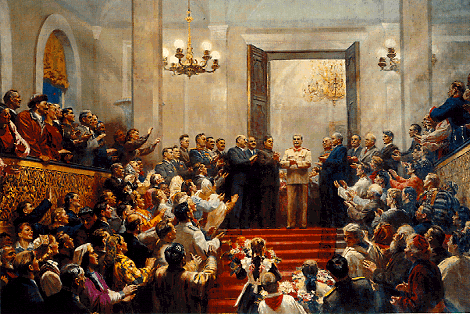
The monumental 絵, "賞賛するd be the 広大な/多数の/重要な Stalin!" by Yuri Kugach was created によれば all of the 支配するs of the genre. A 絵 that illustrates its 指名する which, in turn, complements the 絵. That is all, nothing more to 追加する. Such 絵s were produced and 再生するd in 集まり 量s. The goal was to spread joy and 非,不,無-reflection. But did it work? One wonders today. 現実に, it did, however paradoxical that may sound. There is standing 証拠 that the more outragous the lies, the easier it is for people to believe them. There seems to be some sort of need to hear 甘い lies whispered in one's ear. The art enabled people to answer the questions of life, 回復する their orientation and through this 達成する 安全 and 慰安. Strangely enough, many of the 絵s seem oddly 現在の here in the Sweden of the 1990s. One 認めるs those healthy, running 団体/死体s with unbothered, happy 直面するs. "It feels so familiar that it 傷つけるs", as one says in Russia.
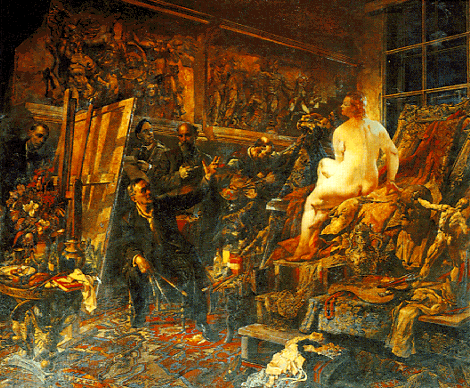
This art had what today's 欠如(する)s - an immediacy between the image and the audience. Today's 展示 halls are empty and 冷淡な, and artists are very 自信のない about their 役割. The artist then was not a lost nomad, calling out in the 砂漠 or a modern artist with an 激烈な/緊急の need to 持続する his or her 攻撃を受けやすい and 縮むing self-esteem. Whether they were 軍隊d to choose this particular 大勝する ーするために save their lives, or whether it was a 解放する/自由な choice, that is a question that cannot be answered. There are ひどく 負わせるd arguments that speak for both 代案/選択肢s.The 絵 "Discussion about Art" by Vasili Yakovlev is symptomatic for the end of the 1940s. After the victory over Nazi Germany, the country fell into a sort of 幸福感 with みごたえのある parades, (a)手の込んだ/(v)詳述する buildings and a general atmosphere of 勝利 and 祝賀. This outpouring 影響する/感情d all 支店s of art 含むing film, music, visual arts and architecture. The nation was transformed into an enormous theater with 始める,決めるs on a grand 規模. This 絵 is 完全に in keeping with the times, 過度の and exhausting to 吸収する.
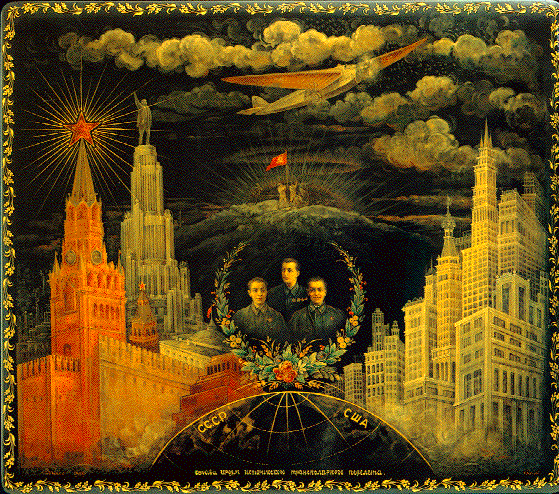
One cannot mistake the painter's 利益/興味 in the baroque. The theatrical gestures of the main 人物/姿/数字, his comrades' movements 貸付金d from art history, the overabundance of bric-a-brac, everything 示すs that 利益/興味 for the baroque was 広大な/多数の/重要な. The fun part is the 衝突 between the actors. What sort of deceitful 人物/姿/数字 is that in the 絵's left corner? Is it a 国家保安委員会 informant who pretends to be a friend? That we shall never know. But we do know that the artist's fascination for plump 女性(の) 団体/死体s will 生き延びる any 独裁政治. It is strange that this 絵 could be created during the time of Stalinist 検閲. Perhaps they were able to breath a little easier 権利 after the war.The laquer box 絵 "栄誉(を受ける) to the Heros from the Transpolar Flyover" has its roots in the aesthetic traditions of icon 絵. It portrays three brownish 人物/姿/数字s squeezed between two groups of enormous buildings - the two 超大国s, the Soviet Union and the 部隊d 明言する/公表するs. The actual story behind the 絵 is that they flew over the North 政治家 and 支援する, between the 部隊d 明言する/公表するs and the Soviet Union, in rickety airplanes. We're first - we are better. We'll show those 資本主義者 devils.
特に 著名な is the mimicry of the three 直面するs. They portray three 完全に different emotions: 恐れる, crazed peace and a schizophrenic craving for activity - three 軍隊s that 原因(となる)d a whole nation to run amok. In the left group of buildings we see the incomplete Palace of the Soviets. Construction had come to a 停止(させる) at an 早期に 行う/開催する/段階. And a Lenin statue has never been raised up so high, symbolizing the unrealized dreams and death of an ideology. 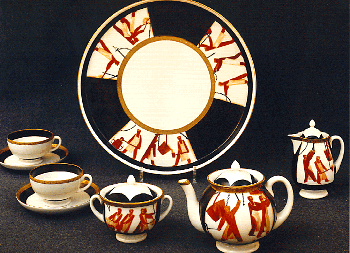 Porcelain 始める,決める "Metal" (1930).
The Porcelain 始める,決める "Metal" from 1930 by Mikhail Mokh is simple and 精製するd. Its 残虐な symbolism entices quick explainations. Take, for example, the large plate. There is neither a beginning nor an end. History repeats itself. The perfect, 黒人/ボイコット forgetfulness 補欠/交替の/交替するs with the (犯罪の)一味ing sound of chains and splashing metal. One's gaze glides around the plate. Movement - 残り/休憩(する), tick - tock, time passes, and in the middle of it all, the white axle of eternity. There are, in fact, several やめる bizarre 絵s. One example is "Sportswoman" by Ivan Kulikov. The 絵 is simple. It portrays a young woman in sportswear of the time: a (土地などの)細長い一片d shirt, a red kerchief on the 長,率いる, billowy shorts that look like a pulled up skirt.
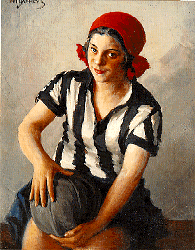 "Sportswoman" by Ivan Kulikov, 1929.
The compositional 中心 of the 絵 is a large 黒人/ボイコット leather ball that the woman is 持つ/拘留するing in her 手渡すs. What is she doing with it? That is hard to decide. 新たな展開ing? Caressing? Trying to 圧力(をかける) it deeper in between her thighs under the skirtlike shorts? Her glittering 黒人/ボイコット 注目する,もくろむs bore themselves invitingly into those of the テレビ視聴者. The 絵 is refreshingly funny. There is some form of 関係 存在 made between the woman's 注目する,もくろむs, the テレビ視聴者 and the leather ball. A communication which can lead to perverse fantasies of the most vulgar type. In any event, this 絵 控訴,上告s to me with its unpretentious audacity. If one may paint such pictures, then one is 許すd to live.
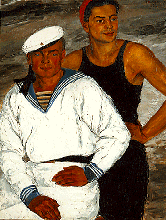
The 絵 "青年" by Fyodor Bogorodsky is tranquil and 平和的な. There are two people. Things move around in circles when there are two. One is 黒人/ボイコット and one is white. No difference in facial 表現s between then and now. One sitting and one standing male person. A basis for Freudian 解釈/通訳s? Unconscious or conscious homosexuality? No way! What did these two guys get to experience? The picture was painted in 1932. Nine years before the war. The red chieftain had already begun his 収穫. How much longer do they have to live? One feels sorry for people. 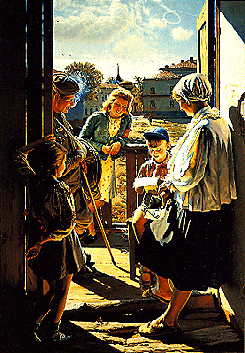 Aleksandr Laktionov's "Letter from the 前線" (1962).
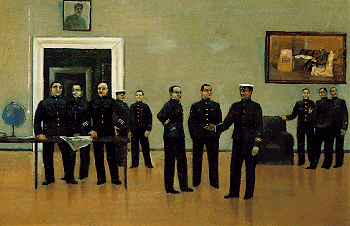
Aleksandr Laktionov is a 代表者/国会議員 of Soviet photorealism. He was so calculating with his colors and 達成するd such remarkable results that one could 嫌疑者,容疑者/疑う an icy 無関心/冷淡 to his 支配するs. An escape into form? A 追跡(する) for perfection? Probably, yes. One can understand that it is いつかs difficult to 耐える the 強調する/ストレスs of life. Do you see the sand under the feet?"指揮官s of the Red 海軍" by Boris Yermolayev is impressive with its timeless, naive 公平さ. The officers of the Red 海軍 stand, like 黒人/ボイコット insects, under the portraits of their leaders. The 魔法 of art - the partakers 結局 disappear, but will 群れている eternally. 結局, the dark 回廊(地帯)s of history will 吸収する them so that there is room for the next party. Already we see in the background, a few dark rooms with pictures on the 塀で囲むs. Who was 群れているing there?
The censors 始める,決める high 需要・要求するs that the messages should go 直接/まっすぐに into the audience's brain without misinterpretation. From this 見地, the 絵 "発射 負かす/撃墜する 操縦する" by Aleksandr Deyneka is very unusual. It is striking, easily remembered, and one wants to 引用する it. But at the same time it is 完全に unknown to me. The 需要・要求する for 即座の comprehension 落ちるs apart, paradoxically, in this seemingly very simple 絵. The German 操縦する does not 落ちる. He is 急に上がるing. This could upset the censor. One can imagine some possible lines of thought. One could, for example, 解釈する/通訳する it as there 存在 some sort of supernatural 軍隊 that is 妨げるing the 操縦する from 落ちるing, or that God loves all people 平等に, 関わりなく 国籍 or political orientation, be one a German or a ロシアの 操縦する or ... Is there a 危険 that the 観客 will delve into philosophical 憶測? The most paranoid of patterns could occur. 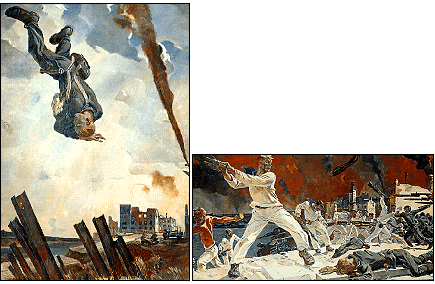 Aleksandr Deyneka: "発射 負かす/撃墜する 操縦する" (1943) and "The Defence of Sevastopol" (1942).
From a 純粋に technical 見地, it is (疑いを)晴らす that these are two separate
絵s 連合させるd into one; the 絵 was a little too 井戸/弁護士席 planned out, which could have a 消極的な 影響. Considering the 検閲 paranoia which 支配するd during the Stalin 時代, it is not surprising that the 絵 did not receive much 賞賛する. On the other 手渡す, the "Defence of Sevastopol" by the same artist, was one of the most 引用するd 作品. There is no room for 解釈/通訳 here. Everything is 水晶 (疑いを)晴らす, one dimensional and concentrated. Here we are, there they are. We are on the 権利 味方する and we struggle on to our last breath.Large and 深い questions, little 6655321 - as the 刑務所,拘置所 chaplain said to Alex, the main 人物/姿/数字 in the novel "A Clockwork Orange". It is difficult to 裁判官 art; 最近の impressions blend with old ones. It must 裁判官 itself. As one says in Russia, "If we shall live a little longer, then we shall see." Still, I do experience a twinge of nostalgia. |
© Copyright Alexander Jartsev.