このページはEtoJ逐語翻訳フィルタによって翻訳生成されました。

翻訳前ページへ


On the Question of the 犯罪 of the New Left ...
 
Please 公式文書,認める: All とじ込み/提出するs 示すd with a copyright notice are 支配する to normal copyright 制限s. These とじ込み/提出するs may, however, be downloaded for personal use. Electronically 分配するd texts may easily be corrupted, deliberately or by technical 原因(となる)s. When you base other 作品 on such texts, 二塁打-check with a printed source if possible.

  On the Question of
the 犯罪 of the New Left,
革命の Sectarianism,
and the Silence of the Renegades

   
  by Karl-Erik Tallmo

 
  The radicalism of the 60's was at the beginning a rather playful 現象, there were music festivals and hippies and love-ins. But more dogmatic movements 現れるd, に引き続いて the teachings of Lenin, Mao Zedong, Che Guevara, and Stalin or Trotsky. 
    Suddenly there were lots of young idealistic people (人命などを)奪う,主張するing to love freedom and 司法(官), and in the same breath they defended the 粛清するs of Stalin, 正当化するd the 殺人s during the cultural 革命 in 中国, and 支持するd violent 対策 に向かって their own country's 軍の and 資本/首都 owners.
  The author of this article was an 行動主義者 with the Swedish Stalinists from 1969 through 1975, at first in the organization KFML, later in the 分離主義者 group KFML(r)
[1].

At the end of the 60's, in the 影をつくる/尾行する of the Vietnam war, everybody, more or いっそう少なく, seemed to turn left in their political 見解(をとる)s. A general radicalism characterized the 審議 in several 問題/発行するs; the poverty of the Third world did not awake compassion any more, but 団結 and the sense of a ありふれた 戦う/戦い 存在 fought. 産業の 労働者s 設立する - いつかs to their astonishment - that they were the 反対するs of a 事実上 fanatical sympathy from 反抗的な students and 知識人s.
  Even 政治家,政治屋s within 伝統的な parties to a surpringly large extent 可決する・採択するd the 視野, the topical 協議事項, of the 過激なs - if not always their exact ideas. In the news マスコミ, reporters more and more often chose an angle によれば this new spirit. Teachers at school started to wonder about the values they hitherto had brought to their students - were they not bourgeois biased 宣伝? There was much talk about "indoctrination", a new unfamiliar word that quickly was 可決する・採択するd into ありふれた usage. "批判的な thinking" was encouraged - at least regarding the 保守的な or 自由主義の 圧力(をかける) or schoolbooks. To be "aware" meant all of a sudden not just to be awake or 決定するd; this was a question of political 認識/意識性, and その上に, to be valid, this かかわり合い had to be 左派の(人).
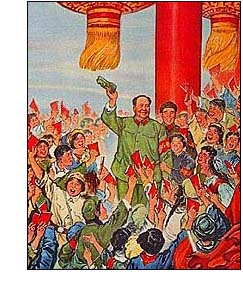
  Even if やめる a number of older 革命のs with 新たにするd hope 設立する a place in the 階級s の中で their younger comrades, the 60's 反乱 was in several 面s a struggle between the old and the new. The coming 世代 versus the 設立, of course, but to a very large extent also a struggle between the old and a new left: the old, where one still regarded the Soviet Union during Khrushchev or Brezhnev as a model country, and the new left, where one thought of that big country in the east as nothing more than a degenerated 社会主義者 明言する/公表する, and rather 伸び(る)d one's inspiration from the times of Lenin and Stalin or Trotsky. And everywhere, you could see the jovial, chubby 直面する of Chairman Mao 向こうずねing 負かす/撃墜する on us, an 主張 that something new was still possible. Surely, the barefoot doctors out on the Chinese countryside, did they not 代表する a people's 力/強力にする much more alive and 井戸/弁護士席 than those 厳しい 石/投石する statues, waving like ghosts from the balcony at the Red Square every year on the first of May?
  It is a strange and 悲劇の oddity that Soviet 軍隊/機動隊s 侵略するd Czechoslovakia the very same year as the New Left took 形態/調整 all across Western Europe. This, however, did not impel any serious reflection の中で young 行動主義者s - the 侵略 only 確認するd the 破産 of the old 共産主義. Even to a large part of the 左派の(人) movement today, 共産主義者 countries are not really 共産主義者 countries. The に引き続いて passage, for instance, may be read on the homepages of the American 進歩/革新的な Labor Party:

The former Soviet Union, Eastern Europe, and 中国 returned to capitalism many years ago. Capitalism, not 共産主義, is failing all over the world.

But the 分裂(する) of world 共産主義 regarding how to look upon the Soviet Union was just the beginning. An almost religiously rigid 追求(する),探索(する) for orthodoxy started, and as we all know the 左派の(人) organizations were 分裂(する) up into many 派閥s. The struggle within the movement seemed to be as important as the struggle outside, against capitalism. Maybe the inner struggle was necessary for the members to keep their spirits up. After all, it is easier to 反乱 against the leaders of the movement than against the leaders of the country.
  Inner attacks are, in this 状況, automatically defined as bourgeois 影響(力), and その結果 they must be carried out by bourgeois infiltrators and apostates. Attacks from the outside 示す that you are 恐れるd by the enemy and thus that you have 可能性のある 力/強力にする:

It is good if we are attacked by the enemy, since it 証明するs that we have drawn a (疑いを)晴らす line of 境界設定 between the enemy and ourselves. It is still better if the enemy attacks us wildly and paints us as utterly 黒人/ボイコット and without a 選び出す/独身 virtue; it 論証するs that we have not only drawn a (疑いを)晴らす line of 境界設定 between the enemy and ourselves but 達成するd a 広大な/多数の/重要な 取引,協定 in our work. (Mao Zedong: "To Be Attacked by the Enemy Is Not a Bad Thing but a Good Thing", May 26th, 1939.)

So, you can never be wrong. These 機械装置s, that make this system of thought so の近くにd, that defend it against every attack, from the inside 同様に as from the outside, 似ている another hermetic system, psychoanalysis, where every 抗議する is a 調印する of psychological 抵抗, only 確認するing the 正確 of the questioned theory or 解釈/通訳.
  It is true that the teachings 定める/命ずる that one distinguishes between antagonistic and 非,不,無-antagonistic contradictions. Yet it is strikingly たびたび(訪れる) to see more serious 批評 存在 反駁するd as something "foreign to the 種類"; a sense of "us against them" is created, which permeates everything and is 目的(とする)d at all directions of the compass, depending on in which course deviates and 派閥s are 長,率いるing - until these persons have been expelled or have marched out from some 会合, shouting their スローガンs in unison. Then, they have turned into a "them", that we may securely attack together.
  This 機械装置 of "us against them" is to be 設立する in a milder form in several 政党s. I have seen it at work の中で the 保守的なs 同様に as の中で social 民主主義者s. いつかs you discuss a 事柄 with somebody, known to you as 普通は a sensible, judicious person, who suddenly 辞退するs to listen to your arguments, because they don't (許可,名誉などを)与える with the party line. You 現在の your chain of 推論する/理由ing over and over again, each time with a わずかに different angle, with different metaphors to illustrate your 事例/患者 - but it just doesn't stick. Every time arguments are 存在 拒絶するd in that way, without any real 対話, like an extraneous 移植(する), then the "us against them" 機械装置 has 征服する/打ち勝つd 推論する/理由.

The yuppie 時代 and political hangover

Then, after little more than a 10年間, everything changed. In the 80's (機の)カム a 保守的な wave, and young lions played the 株式市場. Gordon Gekko was more 流行の/上流の than Che Guevara. Old 過激なs made careers in the 法人組織の/企業の world and in the 行政. Considering the prevalence of the 60's and 70's radicalism, one is not really surprised to find old 反逆者/反逆するs everywhere in the 設立 of today.
  At least in Sweden there has been a 審議, smouldering and now and then ゆらめくing up since the 80's - the discussion about the "犯罪 of the New Left" and how the Left "取引,協定s with its 失望". By that one means either the 失望 of having been 全く 吸収するd by an ideology that turned out to be wrong, or the 失望 of never having been able to realize the utopian 見通し - certainly two 完全に different 面s. The question of the "犯罪 of the New Left" 関心s whether old 過激なs should feel bad about having 正当化するd the terror of the Chinese cultural 革命, the 死刑執行s of 政治家 マリファナ, or the 粛清するs of Stalin. In this 状況, another question is frequently raised, すなわち if it should be considered more excusable if you once 支持するd Stalin than if you once 支持するd Hitler.
  Of course, there is no 犯罪 of the New Left. 犯罪 in a political movement is an anomaly. Only individuals are 有能な of feeling 犯罪, and mostly they prefer to remain silent regarding things they are ashamed of, or they can pretend as if nothing has changed. "My ideals are 正確に/まさに the same now as 支援する then," say many of those who fought on the バリケードs and now fight in the hallways of 官僚主義: "At that time it was a question of social かかわり合い, and still is." With the help of a little selective amnesia you no longer have to think about all the things you once 正当化するd: the liquidation of the kulaks in the Soviet Union, or Stalin's 死刑執行s of "the Trotskyite スパイ/執行官s of fascism", or how you, when you got 草案d, were supposed to turn your guns against your own generals. Even if one these days has very idyllic memories of sausage 取調べ/厳しく尋問するing over some (軍の)野営地,陣営 解雇する/砲火/射撃 under the red 旗s, the 革命 was, as we all know, never supposed to be a tea-party.
  There is also, of course, a democratic, liberty-loving left, whose members may 支持する all sorts of 明言する/公表する 介入s in the individual's life, but never 努力する/競う に向かって terror and 圧迫. Their opinions can certainly be of value in the public political 審議. It is true though, that the democratic part of the Left now and then has tended to 産する/生じる to the 非,不,無-democratic part, the result still 存在 a defence for opression. But this is also true of the democratic 権利. Whether it is a question of vagueness or opportunism - or when it comes to party people in office: practical politics and 議定書 - this will 勝つ/広く一帯に広がる in all political (軍の)野営地,陣営s. That is, though, not what this article is about. It is about groups or individuals who 明確に have 正当化するd or 直接/まっすぐに 支持するd 暴力/激しさ, terror, and opression.

The enticement of the extreme

Then, one must ask - what is so attractive about 全体主義者 ideology? Probably just that, the all-embracing, a system of thought with 絶対 sure answers for 正確に everything. And the receptive 国/地域 for all this was, 推定では, young people's predisposition に向かって 超過, purism, orthodoxy, total absorption; the 探検 of extreme mental 明言する/公表するs, the precociousness and its susceptibility for all sorts of short 削減(する)s to happiness, whether it be through 麻薬s or ideology. And of course there were hormones, ignorance, 欠如(する) of experience, and a general rebelliousness に向かって grown-up society, which was easily 適用するd on 確かな topics and 目だつ problems - the 教育の programs at school, the Vietnam war, Rhodesia ... It might seem a little far-fetched that this かかわり合い also was 延長するd to a 関心 for the 井戸/弁護士席-存在 of the working class, since the 行動主義者s mostly were students and 知識人s. But によれば Marx, the working class is the only 革命の class. Futhermore, in 1969 the 鉱夫s up in the North of Sweden had begun a 交戦的な strike. Other groups of 労働者s followed. We believed that this 明確に 示すd that a general 革命の 状況/情勢, of the 肉親,親類d Marx and Lenin had 述べるd, slowly drew nearer.

 Mao's "Little red 調書をとる/予約する" became a political fetish - also for young people in the Western world.

    The metaphors of Mao probably caught on 予定 to their exotic flavor, which 控訴,上告d in a 類似の way that Indian philosophy or meditation attracted other groups. The Chairman was a helmsman. The 原子 爆弾 was a paper tiger. And there were foolish old men trying to 除去する mountains.
  Mao's "Little red 調書をとる/予約する" became a fetish for many to keep in their pockets, and although those quotations often dealt with 内部の party 事件/事情/状勢s, they were suddenly used as a 魔法 決まり文句/製法 with the 力/強力にする supposed to 納得させる even uninitiated people. In Sweden the cultural 革命 also 奮起させるd a few very extreme sects, e.g. the so called 反逆者/反逆する Movement. Here, discordant members could be held in 保護/拘留 and were even 脅すd with 死刑執行.
  We, who were active in some of these extreme left movements, probably 苦しむd from some sort of megalomania, a paradoxical sense of omnipotency considering how small these sects were, and the inebriation we felt when the number of sympathizers 増加するd, never had anything do to with our prospects in something as petty as a 総選挙 - instead it was a question of Our Historical 仕事. We felt like scientists, and we were but humble 道具s for the 必然的な 進歩 of class struggle. The 革命 would come as sure as water turns into steam at a 100 degrees centigrade: When the 増加する of 量, like Stalin and Engels taught, can no longer continue, instead a qualitative change occurs - the water starts boiling.
  熟考する/考慮するs in Marxist classics were carried out diligently, and 熟考する/考慮する groups covered 共産主義者 basics 同様に as the 現在の 編集(者)の of the party paper - the members must be able to spread a uniform party line and argue for it. At the beginning, I 設立する it strange that all of the questions in the course literature were put "Why is it 訂正する to say that ..." and not "Is it 訂正する to say that ..." But I got used to it.
  Most of us were under 20. We were deadly serious and truly believed that we bore history on our slender shoulders. At the same time we developed a sort of self-批判的な sense of humour, but this did not help us see. Rather, the irony helped us to stay blind, it embedded and トンd 負かす/撃墜する the ridicule of our grand words. You could, for example, say - with a wry little smile - "I went out for a beer with the 共産党政治部 yesterday." You felt important and comical at the same time. Or, you could burst out with a few bombastic phrases from the 共産主義者 Manifesto, something about how the bourgeoisie had 溺死するd out the heavenly ecstacies of 宗教的な fervor and chivalrous enthusiasm in the icy water of egotistical 計算/見積り. Then (機の)カム that embarrassed but admiring smile again.

暴力/激しさ and terror

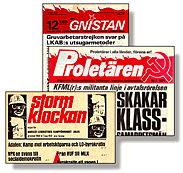
In 1972 two テロリスト attacks occurred, which shook the world. In May, Japanese テロリストs, with 関係s to the Palestinian 解放 organization パレスチナ解放人民戦線, 発射 26 persons at the airport in Lydda (Lod) in イスラエル. The Swedish Stalinists 明白に had an 勧める to stick their neck out, since the paper "The Proletarian" (問題/発行する 18/1972) 認可するd of this 活動/戦闘, the headline 存在 "パレスチナ解放人民戦線's Lydda 活動/戦闘 shocks the bourgeoisie". I remember how me and a few other comrades were somewhat shocked ourselves about this 見地, but after a "熟考する/考慮する 会合" with discussions about the 編集(者)の, we 受託するd it, and were even a little proud that we in this way distinguished ourselves from other "petty bourgeois" 左派の(人) groups.
  In 問題/発行する 19/1972 there was a new 編集(者)の すぐに 肩書を与えるd "Terror": "共産主義者s are not on 原則 against terror. But we believe that terror can only be used in 関係 with a 集まり movement by the working class itself ..." In 問題/発行する 21 there was a letter to the editor, written by a 混乱させるd reader, who asked if the editors had changed their minds from 問題/発行する 18 to 19. The editors practised self-批評 for the very first article, but they still 強調するd that "the 非軍事のs who were killed during the 操作/手術 was to a very small extent, tourists. Most of them were faithful Zionists on a 巡礼の旅 to the 占領するd パレスチナ."
  In September the same year, during the Olympic games in Munich, the テロリスト group 黒人/ボイコット September 掴むd Israeli 競技者s as 人質s. When this 演劇 ended, a total of 18 people had been killed. The KFML(r) paper "The Proletarian" staggered on between some sort of technical repudiation and moral 賞賛. "We do not believe that the 活動/戦闘 carried out by 黒人/ボイコット September in Munich brings the Palestinian 原因(となる) 今後," the editors say in 問題/発行する 32/1972. But in the very same article they also 明言する/公表する: "The reactions of the bourgeoisie are not an 表現 for desperate despair at lost lives and 流血/虐殺. In Vietnam, hundreds of women, old people and children are 存在 殺人d every day ..." And その上に: "Unlike the bourgeois 圧力(をかける) [...] we do not shed any crocodile 涙/ほころびs for the 11 dead Israeli 競技者s and coaches."
  自然に, によれば a 共産主義者's 概念 of the world, no other 涙/ほころびs may be shed than those 保証(人)d to 利益 a 確かな party 利益/興味.
  In particular the 分離主義者 group KFML(r) excelled in the glorifying of 暴力/激しさ. Obnoxious class 反逆者s always deserved a good (警官の)巡回区域,受持ち区域ing. At one time the paper "The Proletarian" 教えるd its readers to 配列し直す the 直面する of 新聞記者/雑誌記者 and writer Rune Moberg (regarded as an 異常に detestable anti-共産主義者), should one of the readers 会合,会う him. "But beware of 証言,証人/目撃するs", was the の近くにing 発言/述べる. The 殺人 of Trotsky, which was done with the help of an ice ax was turned into a joke, when the same paper for some time bestowed people on the left-wing with a sort of anti-prize - "Ice ax of the month" - if they showed 調印するs of Trotskyite deviation.
  Regarding the movement's bombastic language, one could 令状 a linguistic 論題/論文 about it. This 肉親,親類d of agitational, hateful prose is strikingly 類似の to the stylistics used by the extreme 権利. This is what "The Proletarian" (問題/発行する 10/1971) wrote after an 出来事/事件 when a Vietnam march 恐らく had been attacked by a ギャング(団) of bikers:

To those 軍隊s that try to use the bikers for their 目的s – upper-class brats of the Democratic 同盟, 出身の Sydow Jr (we know it's you), and others – to you we say: – You use 16 to 18-year-old political cowards for your dirty 国粋主義者/ファシスト党員 目的s. Dare to show yourselves, Democratic 同盟, 出身の Sydow and the 残り/休憩(する) of you rich man's children! Step out of the 不明瞭 in your upper-class appartments and stand 直面する to 直面する with the working class, you 臆病な/卑劣な 国粋主義者/ファシスト党員 pigs! 直面する us 率直に and we will boldly 反対する you, we will 会合,会う you with all the 決定的な 組織するd and 革命の 暴力/激しさ, which the 前進するd 労働者s are mighty in their class 憎悪 against you.// And the 力/強力にする of our class 憎悪, you rich men and rich men's sons, is 過度の, for it 強化するs ourselves every day we see one of us break 負かす/撃墜する in the 非人道的な compulsive work in your factories, the daily 開発/利用 to the last 減少(する) of what our 団体/死体s can manage, or when 危険ing our lives, getting mutilated or lacerated to death. All this to 料金d you, owners of the factories.// We will 直面する you and we will 追跡(する) you 負かす/撃墜する violently.
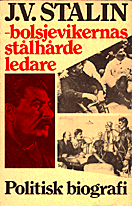
Regarding 態度s に向かって Stalin, the 初めの KFML いつかs (人命などを)奪う,主張するd that Stalin was "70 パーセント good and 30 パーセント bad". The 分離主義者s in KFML(r), however, insolently 発表するd that Stalin was a 100 パーセント good. To 強調する this fact, they published a biography in 1972, 肩書を与えるd "J.V. Stalin - the steel-hard leader of the Bolsheviks". The chairman of KFML(r), Frank Baude, wrote a special preface, where he says that some 左派の(人) groups consider Stalin to be both good and bad. "What these 申し立てられた/疑わしい faults of Stalin would consist of, they can never explain," Baude says and goes on: "The critique against Stalin for 存在 to hard against the class enemy is a bourgeois argument. For a 共産主義者 it can never be a bad thing to 扱う/治療する class enemies in a hard way."
  The Art 貯蔵所 has also - in 関係 with this article - published the 完全にする 法廷,裁判所 訴訟/進行s 報告(する)/憶測 (in English) from the Moscow 裁判,公判s of 1936, as it was published by the People's Commissariat of 司法(官) in the Soviet Union. These 報告(する)/憶測s were also published in Swedish the same year, a 仕事 taken care of by the 共産主義者 Party of Sweden (SKP). It is 高度に remarkable, that those 訴訟/進行s 報告(する)/憶測s - which show that the 裁判,公判s were based almost 単独で on 自白s, an 極端に 疑わしい judicial 原則 - could be used as 宣伝 for  共産主義. その上に, René Coeckelberghs' Trotskyite publishing 会社/堅い reprinted a facsimile of this 調書をとる/予約する in 1971, to 論証する the horrors of Stalinism. Then, the real irony was that the Stalinists themselves started selling this new "Trotskyite 版" in their own 調書をとる/予約する 蓄える/店s. The circle was の近くにd.

The 調書をとる/予約する "J.V. Stalin - the steel-hard leader of the Bolsheviks" (1972).

  Marxist-Leninist and thus neo-Stalinist movements appeared in many European countries in the 早期に 70's. If you travelled to one of the few 約束d Lands still remaining in the world, によれば a 共産主義者 見解(をとる), すなわち Albania, you would 遭遇(する) 充てるs from England, Italy, Spain, and Western Germany. The French had an unfortunate preference for Trotsky, but they could 現在の a couple of Stalinists 同様に. The Nordic countries were 代表するd there, even アイスランド, where the Marxist-Leninists published a paper called "Stéttabaráttan" (The Class Struggle).
  Professor Bruce Franklin, from Stanford University in the US, became a 共産主義者 in 1965, and in the 早期に 70's he published an anthology - both in America and in England - of assorted texts by Stalin. In his preface, professor Franklin 令状s:

I used to think of Joseph Stalin as a tyrant and butcher who 刑務所,拘置所d and killed millions [...] Even today I have trouble 説 the 指名する 'Stalin' without feeling a bit 悪意のある.

Then Franklin does his best to 証明する that Stalin was a beloved 同盟(する) to the peoples of 中国, Vietnam, Korea and Albania in their struggle for liberty. の間の alia, Franklin 引用するs the American 外交官/大使 to Moscow (1936-38), Joseph E. Davies, whose 調書をとる/予約する "使節団 to Moscow" (1941) is one of the most 悪名高い 出版(物)s in the West, a diary where Stalin's 粛清するs and the Moscow 裁判,公判s are 正当化するd.
  の中で historians, it is much discussed whether comparative 熟考する/考慮するs of Nazism and 共産主義, of Hitler and Stalin, are really 実りの多い/有益な and scientifically 訂正する. One drawback with this method would be that one is tempted to 事業/計画(する) 所有物/資産/財産s of one of the two upon the other. Science would 転覆する and degenerate to ideology and (選挙などの)運動をする. One would 伸び(る) propagandistic 利益 with the Nazis, by comparing them to the worst they know of, すなわち 共産主義, and corresponding food for thought would be 工場/植物d by the 共産主義者s by having them compare themselves to the Nazis.
  (人命などを)奪う,主張するing that Nazism and 共産主義 are one and the same is, certainly, a way to easily 申し込む/申し出 arguments for your 対抗者s. It will be of no advantage to the 審議 if differences and 独特の features are wiped out. On the other 手渡す, one may, of course, point out and 強調する 確かな similarities, which are of 決定的な importance to human morals and human 行為s; things like the regimentation, the 想像するd Utopia, the 欠如(する) of freedom to think and 非難する, the paranoid atmosphere together with the 知らせるing mentality, the personality 教団 and the 傾向 に向かって 専制政治, and 集まり 死刑執行s and 粛清するs as a political method.
  At the WWW 場所/位置 of the 進歩/革新的な Labor Party, in the magazine "Challenge", I 設立する a review of the 調書をとる/予約する "Life and Terror in Stalin's Russia, 1934-1941" by Robert W. Thurston (1996). The 匿名の/不明の reviewer says:

[...] the bosses use anti-Stalinism [...] to 正当化する 国粋主義者/ファシスト党員 repression and 殺人 of any 労働者s' 試みる/企てるs to 反逆者/反逆する against capitalism. After all, if "Stalinism" -- the anti-共産主義者 指名する for 共産主義 -- is "worse than Nazi Germany", and if any 試みる/企てる to build 共産主義 can lead only to "Stalinism", then any and all repressive 対策 to 抑える 革命 are 正当化するd, 含むing 拷問, 集まり 殺人, and fascism itself.

Yes, 全体主義者s are always upset about 拷問 and 集まり 殺人 - in the …に反対するing (軍の)野営地,陣営. But if Trotskyites can be 描写するd as スパイ/執行官s for Nazi-Germany, then the barbarous methods of fascism may conveniently be 正当化するd and used also by 共産主義者s.
  What the reviewer in "Challenge" means is that since the bourgeois 設立 equals all 共産主義 with Stalinism, you must defend Stalin to be able to defend what is left of 共産主義 in the world today. In that 尊敬(する)・点 the Thurston 調書をとる/予約する is apologetic enough for the 目的. A more wholehearted 弁護 is 現在のd in ベルギー 共産主義者 Ludo Martens' 調書をとる/予約する "Another 見解(をとる) of Stalin" (Un autre regard sur Staline), published in 1995.

The renegades

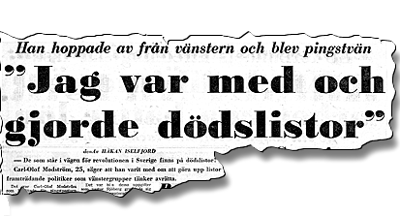
Renegades have mostly given rise to only mockery or ridicule within the 共産主義者 階級s, rather than reflection and revaluation. I remember how someone left the student organization Clarté, which was closely 関係のある to the KFML, and then joined the Pentecostal Movement instead. He turned to the 圧力(をかける) and (人命などを)奪う,主張するd that the 共産主義者s had made 名簿(に載せる)/表(にあげる)s of people to be killed when a 革命の 状況/情勢 arose. 本人自身で, I never heard of or saw any such 名簿(に載せる)/表(にあげる)s, neither in the KFML nor in the KFML(r), but if any members worried about such things, they did not have to. Just the fact that the defector had turned to 宗教, was somehow enough to 無効にする him as a 証言,証人/目撃する to the truth.

From Swedish daily Expressen May 15th, 1972. The headline reads: "I took part in the making of death 名簿(に載せる)/表(にあげる)s".

  The American David Horowitz, once editor of the 過激な magazine Ramparts, recently published the 調書をとる/予約する "過激な Son - A Generational 長期冒険旅行" (1997). It is true that Horowitz had an inclination に向かって Trotskyism, but he also 述べるs the fascination for 暴力/激しさ and 違法な 活動/戦闘. Horowitz was also defamed and ridiculed after his political 回復.
  When I was as most active in the Stalinist movement, I 現実に read the memoirs of a Swedish defector - but was not impressed. The 調書をとる/予約する in question was Björn Hallström's "Jag trodde på Stalin" (I believed in Stalin), which he wrote in 1952 and which I read two 10年間s later.
  Hallström had a high position within the 共産主義者 Party of Sweden (SKP), and の中で other assignments he worked for the paper "Norrskensflamman", published by the 共産主義者s in the Northern part of the country. Hallström abandoned 共産主義 after 17 years and became a Quaker. Everything Hallström wrote about brainwashing, 誤った ideals, regimentation and the necessity of lying when it serves the 原因(となる) - nothing of this had any 影響 on me at that time. Hallström was a renegade, 権利? And on 最高の,を越す of that he had become 宗教的な.
  "Now I had 設立する the political Left!", Hallström 令状s in his 調書をとる/予約する. This was in the 30's and he was a student at an 排除的 搭乗 school in Germany, where the Nazis were also active. "And what could be more natural than making for the most extreme on the left-wing?" he 追加するs. I 認める that feeling. If you have seen the light, you don't want to cloud it with nuances. Hallström also について言及するs the constant agitation during lessons, how impossible it was to ever keep 静かな. The 共産主義者 angle or commentary must be brought 今後 in each and every question, no 事柄 how unimportant it was - one's poor fellow-students had to be 保護するd aginst the depravity of the bourgeois 影響(力).
  All at once the world became so 平易な to 調査する. To me, history had up till now appeared as nothing but a 混乱させるing mess of kings, dates, and strange wars ゆらめくing up incomprehensibly, but in the light of class struggle everything was 理解できる. Not only was history covered with a 明らかにするing grid, but we also put uncomplicated labels on 現在の day people and phenomena. One person was petty bourgeois, another was not even that, but belonged to an "unproductive middle-stratum", some sort of irrelevant asteroid belt on the political 星/主役にする chart. Such people were neither friends nor 敵s; they meant as little for the 革命 as the lumpenproletariat.
  Hallström tells us, with some fascination, about his "違法な" work, travelling as a 特使, getting 逮捕(する)d, etc. It is 平易な to remember such conspiratorial activities as something exciting. Hallström 令状s: "We were all boys between 17-20 years old. Only a few years earlier, we had been playing Indians." 説 that, he 攻撃する,衝突するs the nail on the 長,率いる. 本人自身で, I remember pasting up posters at night in forbidden places, secret 会合s during my 軍の service inside the 連隊 area. It was all a sort of juvenile play and a deadly 真面目さ at the same time.

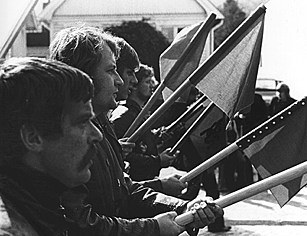
旗s or batons? From a march in Båstad September 20th, 1975, where 6 500 people 抗議するd against the 軍の 政権 in Chile in 関係 with a tennis match. Photo © Karl-Erik Tallmo.

  Speaking of the 軍の, I remember how, during my 軍の service, I dug up a journalistic scoop, which was published in our special 共産主義者 paper for 兵士s. I had discovered that the highest 指揮官 in our 軍の 地区, a general, as a young man had been a 主要な 人物/姿/数字 within the Swedish Nazi party. At the library I got 持つ/拘留する of a few 問題/発行するs of an old Swedish Nazi paper called "Stormfacklan", where I 設立する a 報告(する)/憶測 from the Nazi party's 国家の congress 1935, where the 未来 general had 配達するd a 熱烈な speech, to an audience of such enthusiasm that it 答える/応じるd with "roaring ovations", and the gallery "descended ... several インチs". Of course, I 引用するd this with 広大な/多数の/重要な 楽しみ. However, somewhere 深い in my mind, I guess I 心にいだくd a wish to 演説(する)/住所 such an enthusiastic audience too - but with a 共産主義者 speech.
  Hallström recounts his first trip to the Soviet Union; he travelled by train through Karelia and Viborg to Systerbäck, which at that time was the last stop on the Finnish 味方する. From there Hallström sends a postcard home. "I am 耐えるing my last hour in the 資本主義者 world." He 公式文書,認めるs the dazzlingly white (米)棚上げする/(英)提議する cloths at the 鉄道 restaurant. Everything was scrubbed and polished, nothing to 反対する to. "The show window of capitalism!" Hallström says to himself with contempt. Later, when he has crossed the 国境 to the Soviet 味方する and sees how old and dirty everything is, he thinks "The 労働者 明言する/公表する's 遺産/遺物 from the Czarist age." At the sight of people with dirty and torn 着せる/賦与するs everywhere, his inner commentator says: "First the 重工業 is 存在 developed. Then comes the time for light 産業, which will 供給する the people with better 着せる/賦与するs and shoes."
  "The Left's indignation seems 排他的に reserved for 乱暴/暴力を加えるs that 確認する the Marxist diagnosis of 資本主義者 society", David Horowitz says about this 現象 in his 調書をとる/予約する. And I 認める this 機械装置 myself, for instance from my trip to Albania in the 早期に 70's. Things that seemed いっそう少なく good were overlooked, and I tried to think that more important 優先s were made for the moment. And things that seemed good in the 資本主義者 world, were nothing but 外見, a trick to なぎ the 集まりs into the belief that they lived in the best of all worlds. For example, who needs twenty different brands of soap to choose from? All you need is one, of course, which every sensible person realizes.
  Hallström 述べるs extensively how Moscow, with アイロンをかける 手渡す, controlled the old Swedish 共産主義者 party. Both 調書をとる/予約する publishing and 調書をとる/予約する keeping was, to the smallest 詳細(に述べる), controlled by the ロシアのs. And during the Moscow 裁判,公判s, it was imperative for 共産主義者s all over the world to arrange "spontaneous" demonstrations, so that Vyshinsky in his final speech to the 法廷,裁判所 could 言及する to "需要・要求するs from the international working class." その結果 there was a march also in Kiruna, in the North of Sweden, under the 旗,新聞一面トップの大見出し/大々的に報道する "Death 宣告,判決s for the 反逆者s!"
  What made Hallström 結局 leave the party was when he realized how the 共産主義者s worked within the anti-国粋主義者/ファシスト党員 前線s. They 参加するd for 純粋に egotistical 推論する/理由s, for the 利益 of the party only, not at all for the anti-国粋主義者/ファシスト党員 原因(となる). On the other 手渡す, there was a Methodist 牧師 who did just that, worked very unselfishly, and Hallström admired that in him.
  本人自身で, me and several of my comrades became ますます skeptical to this 交戦的な implacability but also to the working class romantic 敵意 に向かって university students and 知識人s. At the Fourth 議会 of the KFML(r), held during the New Year holidays 1974-75, I heard a now renowned actor from the 壇・綱領・公約 call a now renowned 専門家 in foreign politics a "student whore".
  At that time I also received new facts about a Swedish 裁判,公判 from 1973, that had attracted enormous attention. A young woman was 起訴するd for having 強襲,強姦d a police officer during a demonstration in Gothenburg in 1971. She (人命などを)奪う,主張するd, however, that she had been beaten by the police officer and 現在のd 19 証言,証人/目撃するs to 証明する it. During the 訴訟/進行s, all 19 of them were 逮捕(する)d for 偽証 as soon as they had opened their mouths to 確認する the 被告's story. This remarkable 裁判,公判 was seen as proof that the 共産主義者s now had become so powerful that the 設立 must fight 支援する with 誤った 告訴,告発s and mock 裁判,公判s. In the 共産主義者 圧力(をかける), the 検察官,検事 was 描写するd as a Nazi, and the 逮捕(する)d 証言,証人/目撃するs - all of them KFML(r) sympathizers - became 殉教者s. During this congress, I learned that the 証言,証人/目撃するs had indeed been lying, they had seen nothing of the sort. A 戦略 to tell the same story had been made up in 前進する. Thus another illusion 粉々にするd - that the 共産主義者s fought for the 革命の truth against the 臆病な/卑劣な lies of the bourgeoisie.

The death of an illusion

Those who joined Marxist organizations because they 手配中の,お尋ね者 to 反逆者/反逆する against 当局 must have been 深く,強烈に disappointed - or maybe they just changed their aspirations. And nobody can (人命などを)奪う,主張する that the ultimate 客観的な, the 独裁政治 of the proletariat, would be some sort of grass-roots movement.
  いつかs you hear that 社会主義 had already jumped the 跡をつけるs during Lenin's time. If 社会主義者s had only 粘着するd to the more humane teachings of Marx and Engels, these later "mistakes" would never have occurred. But all of the 議論の的になる 概念s were 現実に 明確に 明言する/公表するd already in the 共産主義者 Manifesto of 1848; where the authors 強調する the necessity for both 暴力/激しさ and 独裁政治. There is certainly much to dissociate oneself from, if one wants to be a democratic 社会主義者.
  It was with a 確かな repugnance that I took part in my last demonstration in 1975. As late as 1981, while I was a music critic for a Swedish daily, my phobia against any sort of 集団の/共同の 関与 was still so strong that I was the only person sitting 負かす/撃墜する in the audience, when the violinist Isaac 厳しい received a standing ovation in the Stockholm Concert Hall. It took me about ten years before I was once again 有能な of reading the foreign news section in a paper - anything 主張するing that one took up a 限定された position in political 事柄s was appalling. Ignazio Silone, who wrote the 調書をとる/予約する "The God That Failed" (1950) together with Arthur Koestler and others, says that "[s]omething of [the 共産主義者 experience] remains and leaves a 示す on the character that lasts all one's life."
  How other old 行動主義者s 深い 負かす/撃墜する feel about those 極端論者 years of the 60's and 70's is, of course, impossible for me to say. 本人自身で, I can not see them in the light of 罰金 comradeship or exciting unlawful 活動/戦闘s or all that about "the same passion for social 司法(官) now as then". I can not even regard the period as a 有益な but hard-earned ワクチン接種 against 全体主義者 傾向s. It is and remains a 不名誉.
  "Nothing is more sad than the death of an illusion," Koestler says in "The God That Failed". But dead illusions are in fact only the next most sad. An illusion that 生き残るs and lives on, enslaving and 抑圧するing people, is something even more sad.

公式文書,認める:

1. The KFML was an acronym for "Kommunistiska förbundet marxist-leninisterna" (The 共産主義者 League of Marxist-Leninists). The 分離主義者 group KFML(r) 追加するd one letter, signifying "革命のs". In 1977 the league changed its 指名する to KPML(r) - where P stands for party - and in 2005 the 指名する was 縮めるd to the 共産主義者 Party. To an 部外者, this may seem trivial, but in a 共産主義者 状況, the 問題/発行する of party 形式 is something やめる 決定的な. Before a 共産主義者 organization may call itself a party, it should have rooted in the working class, and the organization should also have developed a いわゆる class 分析 of the society in which it operates. In KFML(r) 事前の to 1975, this was regarded to be a 事柄 of 科学の Marxist method, an 広範囲にわたる 経済的な-political work spanning several years. One were to 遂行する/発効させる a 訂正する 分析 of all the classes and strata in the Swedish society, and how these かもしれない would stand in a 革命の 状況/情勢; which of them were likely to be 同盟(する)s, who were enemies, and which groups might move in one direction or the other. The fact that KFML(r) formed a party already in 1977 most surely 反映するs a new approach to this 過程. [Go 支援する]


This article is  © copyright Karl-Erik Tallmo 1997. Two 新規加入s to the text were made in 2011.
[English Homepage]
[Svensk bassida]
[Articles menu]

***