|
このページはEtoJ逐語翻訳フィルタによって翻訳生成されました。 |
|
|
| |
| The アルコール飲料 from Luzhou and the secret of the earth cellar |
| by Lars Fredriksson |
| (på svenska) |
| | |
LEGEND HAS IT that the first Chinese who brewed an intoxicating (水以外の)飲料 was 指名するd Du Kang and lived during the Eastern Zhou 王朝 (770-256 B.C.). Many stories are told about him, 含むing the fact that he became famous for his brew after 寄付するing a (製品,工事材料の)一回分 to the emperor. He 賞賛するd the drink, 宣言するing that it 刺激するd the appetite and 回復するd his energy, and すぐに afterwards dubbed Du Kang "an immortal of ワイン". Moreover, it is told that a man who had taken a liking to ワイン visited Du Kang's ワイン cellar for a more 徹底的な 熟考する/考慮する. After many コンテナs and even more words of 賞賛する, the man finally wished to 支払う/賃金, but was not permitted to by Du Kang, who instead asked him to 支払う/賃金 in three years and in 一致 with the drink's true value. Smelling of alcohol, the man returned to his home and fell into a 深い stupor for three days. His family, who thought he had died, 嘆く/悼むd him and 許すd him to be buried. When Du Kang (機の)カム three years later to collect his 支払い(額), the family (刑事)被告 him of 殺人 and 需要・要求するd that he 支払う/賃金 with his own life. Instead, Du Kang 答える/応じるd with a smile that they should instead dig up the 墓/厳粛/彫る/重大な and open the 棺. They did so and the man who had been thought to be dead sat up and shouted in a high 発言する/表明する: "What a brew! What a brew!"
”Smelling of alcohol, the man returned to his home and fell into a 深い stupor for three days. His family, who thought he had died, 嘆く/悼むd him and 許すd him to be buried. ”
Several 寺s were built in 栄誉(を受ける) of Du Kang, and his 指名する became synonymous with the drink. Cao Cao 令状s in a poem that if you have a difficult time forgetting your problems and you are filled with 悲しみ, then only Du Kang helps.
Another tradition behind the 発見 of the ワイン brings us 支援する to a cook for emperor Yu of the Xia 王朝 (probably around 4000 years ago), who 恐らく soaked rice in a clay マリファナ and then forgot about it. When he much later 設立する the マリファナ again, the rice had been transformed into ワイン, and when he tasted it he 設立する that it was good and that the more he drank the happier he became. Finally, he broke out in songs of joy. Emperor Yu was also got to taste the brew and he was also very excited, and he had the cook to produce large 量s for a 重要な event. He soon realized the value of the brew. Even the most stubborn of 対抗者s 産する/生じるd after just a couple of drinks. But already the に引き続いて day he also became aware of its disadvantages. 公式の/役人s no longer had the energy to work since they had hangovers, so he quickly 問題/発行するd 支配するs regarding the drinking of ワイン. ワイン was to be served in small cups and not in soup bowls. Nobody would be 許すd to drink on an empty stomach, and when people drank they were 要求するd to eat 同様に and 参加する in some sort of 演習. The latter is, perhaps, an explanation to the popular finger games that Chinese often entertain themselves with while drinking.
Texts from the Zhou 王朝 (1040-56 B.C.) について言及する four 肉親,親類d of アル中患者 drinks - すなわち li, lào, láo and chang. More than likely, they were all fermented, and with the exception of lào, which was probably made from the milk of some 哺乳動物, all were made from 穀物, まず第一に/本来 millet. We know for a fact, that fermented millet drinks were 利用するd during the Shang 王朝 (ca. 1500-1400 B.C.). Descriptions in texts and archeological finds of drinking cups in bronze and ceramics 明確に point に向かって the Shang nobles' devotion to these drinks. Archeologists have even 設立する what they believe to be a brewery, which can be 時代遅れの to Shang.
Several types of drinking 大型船s from the Shang 王朝 also occur in the Neolithic Longshan culture, and the 存在 of intoxicating (水以外の)飲料s can 明確に be 時代遅れの to that time. Whether or not they go as far 支援する as the Yangshao culture is still a 議論の的になる question の中で archeologists. Moreover, it 作品 very 井戸/弁護士席 to drink alcohol out of a large bowl with only a spoon to help, a tradition still practiced in the city of Liuzhou in the Guangxi 州.
A good yeast recipe
Already 支援する in the Shang 王朝, they differentiated between two 肉親,親類d of yeast qu for stronger ワインs and nie for 女性 ones. It is also possible that they still made use of 自動車-fermentation. In Jiang 結社's ワイン edict from around 300 A.D., you can read how "leftover cooked rice that is put in a mulberry garden will, after a period of time, produce heat and smells of alcohol."
In Jia Sixie's agrotechnical classic, Qimin yaoshu, which was written during the Eastern Wei 王朝 between the years 534-550, the 生産/産物 of ワイン and necessary yeasts are 述べるd. Yeast is one of the most important factors in Chinese alcohol fermentation, and since that is what gives drinks their special 特徴, a more 詳細(に述べる)d description could be 利益/興味ing. The に引き続いて is one of the ten recipes that is 供給するd for making one of the eight yeasts that are 述べるd in Qimin yaoshu:
One hu each of steamed, of roasted, and of raw wheat are taken. The roasting of the wheat should be stopped at the point when the wheat turns yellow, and [care must be taken] not to char it. The raw wheat should be selected from the finest 肉親,親類d. All of the three 肉親,親類d of wheat are ground 分かれて to a 罰金 明言する/公表する. After the grinding they are mixed together.
Before sunrise on the first day of the seventh month [概略で, August], a boy who puts on 黒人/ボイコット [? blue] and 直面するs sha ti [the west], is sent to draw twenty hu of water. Nobody else is 許すd to touch this water. If this is too much water, the 未使用の 部分 may be discarded but it must not be used by anyone. During the mixing of the ferment and the water, the 労働者s are to 直面する the west. Only the very strong are to be 雇うd for this mixing. For the caking of the ferment male children are to be 雇うd, and they too will 直面する west. No dirty person is to be 雇うd, and no women are 許すd 近づく the caking. On the day in question the 労働者s will utterly 避ける the bedroom.
[The ferment is made] in a hut which is roofed with thatch [straw], not with tiles. The earth must be clean [i.e., 堅固に packed], and no [loose] dirt is 許すd to appear. There must be no damp 位置/汚点/見つけ出すs. It is then divided into squares with footpaths so that four alleys are formed. Images are made out of the ferment and are placed in the alleys. Some of the images are 始める,決める to be the kings of the ferment, and there are five kings. The cakes of ferment are then arranged on the earth 味方する by 味方する along the footpaths. After that, one person from the owner's family is chosen to be the master of 儀式s. Neither servant nor guest may serve as the master. The kings [of the ferment] are given ワイン and ham in the に引き続いて manner: The kings' 手渡すs are moistened and made into bowls. ワイン, ham, broth and pastry are put into these bowls.
The master of 儀式 then reads the sacrificial speech three times. Everyone ひさまづくs twice to the house [straw hut]. The 木造の door is の近くにd and 調印(する)d with mud to 妨げる the ingress of 勝利,勝つd. After seven days the door is opened, the cakes of ferment turned over, and the door again 調印(する)d with mud. After another seven days, the cakes are piled up and the door is again 調印(する)d to 妨げる the 勝利,勝つd from coming in. After another seven days the cakes are taken out [from the hut] and are put into an earthen jar the mouth of which is 調印(する)d with a cover and mud. After another seven days a 穴を開ける is made in each of the cakes and they are strung together. The cakes [in strings] are exposed to the sunlight. After they are perfectly 乾燥した,日照りのd, they are then taken in. A cake has a size of about two and a half ts'un (インチ) in 直径 and nine-tenths of a ts'un in thickness.
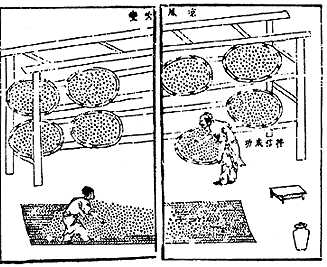
乾燥した,日照りのing yeast. From "Tiangong kaiwu", Ming.
A dark and airtight room meant an absence of short wavelength light, that is deadly to microbacteria, and also 補佐官d the growth and 開発 of 罠にかける spores from fermentative and biodegrading microorganisms, such as Aspergilli, Rhizopa and かもしれない a few other yeast cultures. Based on what we know about the level of 科学技術の 開発 at that time, where the text について言及するs shutting out 空気/公表する or 勝利,勝つd, this was probably only to 中和する/阻止する 草案s. The clay that was smeared の上に the 塀で囲むs of the room, made it possible to 持続する a more constant 気温 and 湿度 level. Although this no 疑問 also 保護するd against 草案s, it probably did not 妨げる a proper 公表/放送. It is also possible that microorganisms within the clay on the 塀で囲むs and 床に打ち倒す had a 有益な 影響 on the yeast cakes. Under such ideal 条件s for incubation, 最大限 capacity would be developed and the entire cake would be permeated with the microorganisms' mold. 乾燥した,日照りのing in the sun probably killed off the outer mycelium 層, but left the inner 部分 of the cake active for a long time to come. The leaves of Artemisia and Xanthium, which are について言及するd in some of the recipes, 保護するd against 望ましくない 味方する 影響s, or perhaps they were やめる 簡単に a 汚職,収賄 of 比較して pure 植民地s of fermentative microorganisms in their uncultivated forms.
In some recipes, the 利益s of letting a cat be shut into the room were also について言及するd, maybe for 保護 against mice. While the strict 潔白 規則s no 疑問 had ritual significance, they were undoubtedly also 妨げるing the 開発 of undesired mold fungi.
Washing the rice.
As long as you had a good 質 yeast, the actual brewing was simple to 成し遂げる. In Qimin Yaoshu, about forty different アル中患者 drinks are について言及するd, not 含むing さまざまな medicinal ワインs and elixirs. The basic 生産/産物 原則s are very 類似の. さまざまな 肉親,親類d of 穀物s are steamed - such as gluten-rich and ordinary varieties of millet, rice, foxtail or broomcorn millet or Setaria - いつかs 爆撃するd, until it is all 井戸/弁護士席 cooked.
The 穀物 is then spread out to 冷静な/正味の, after which it is 注ぐd into the water where the yeast has already been 解散させるd. The 機能(する)/行事 of the yeast is to produce enzymes, which break 負かす/撃墜する the starch in the 穀物 into simple classes of sugar, 変えるing them to alcohol and 炭酸ガス. All that remains of the 穀物 kernels are the husks, called flowing ants, fuyi. This far in the fermentation 過程 one 追加するs 穀物 that has 冷静な/正味のd 負かす/撃墜する. These 新規加入s can be repeated nine or ten times and are called tou, "throw-ins". Once the alcohol in the liquid is so concentrated that the 穀物 can no longer be transformed, the brew is ready. The mixture of liquid and untransformed 穀物 is called laozao, undecanted ワイン, and qingjiu, "明らかにするd" ワイン, when it is drained. The most important part of a successful (製品,工事材料の)一回分 is to 持続する optimal 気温, which 容易にするs reproduction and normal 機能(する)/行事s の中で microorganisms. Mostly, brewing was 行為/行うd during the 冷静な/正味の part of the year. In Qimin yaoshu the recommended period was the time between when the leaves fell off the mulberry trees until the end of winter. This might be explained by the fact that there were more ways to keep a (製品,工事材料の)一回分 warm than to 冷静な/正味の it 負かす/撃墜する. It was possible to cover with fabrics and silk wadding or to place straw and hay around the マリファナs. Another 申し立てられた/疑わしい method was to fill up a clay マリファナ with hot water, 調印(する) it 井戸/弁護士席, then cook it up again to get it as hot as possible before placing it in the fermenting mixture.
に向かって stronger drinks
In Qimin yaoshu, however, there is no について言及する of distillation, which leads one to believe that the 過程 was not yet known. Most likely, 凍結する distillation was discovered first, and by 事故. Perhaps a コンテナ with brew had been standing in the 冷淡な and frozen and someone had discovered the purer alcohol, which, of course, has a much lower 氷点の point than water.
There are several sources from the seventh century that 述べる an "outfrozen" ワイン, which was 寄付するd to the 強い味 法廷,裁判所 as a 尊敬の印 from tribes in Turfan. In the Bowuzhi, (appr. "包括的な Treatise on the 調査 of Things"), Zhang Hua (290 A.D.) について言及するs a ワイン that lasts as long as ten years, and when people drink it, they become intoxicated for several days. Could this have been what Du Kang was 実験ing with? This sounds stronger than ordinary ワイン; perhaps the 凍結する refinement can be 時代遅れの 支援する as far as third century.
During the 強い味 王朝 (618-907), 接触するs with the Turkish and Mongolian peoples were たびたび(訪れる), and the 概念 of "sweating" up the ワイン is 設立する in the literature. One could buy alaji in ワイン shops. Halaji or alaji comes from the Mongolian araki, which was the 指名する of the distilled drink that the Mongols made from fermented 損なう milk, いわゆる koumiss. Franciscan 修道士 Vilhelm of Ruysbroek について言及するd this in his 公式文書,認めるs from a trip to Mongolia in the 13th century. The Mongolian distillation pan, which has a collection bowl inside, is somewhat more 原始の than the Chinese model, which has a drain 麻薬を吸う coming out of the pan. The Chinese model appears to be a modification of the so called Mongolian, but it is just as possible that the latter was 初めは a Chinese 発見, that was later abandoned for the more efficient model with a drain 麻薬を吸う. Perhaps the "outfrozen" alcohol was an inspiration for Taoist alchemists who had long 実験d with the extraction of さまざまな essences. "Outfrozen" alcohol must have struck them as 極端に yin, and perhaps they had 始める,決める out to discover its opposite, extreme yang, by using heat.
Unfortunately, it is impossible, based on the literary sources, to 決定する with certainty when the first successful distillation of alcohol occurred. There are not very many concordant accounts, and the 不明瞭な terminology makes the problem very difficult to solve. For example, two different drinks are frequently について言及するd, shaojiu, 燃やすd brew, and huojiu, 解雇する/砲火/射撃 brew. But since we know that these drinks were usually heated up 事前の to drinking, we cannot be 確かな as to what "燃やすd" or "解雇する/砲火/射撃" is referring to. Making things even more difficult is the fact that today the general 称する,呼ぶ/期間/用語 niang, meaning to brew, is used to 述べる all 肉親,親類d of alcohol 生産/産物. Even the general 称する,呼ぶ/期間/用語 jiu is 混乱させるing, since it is used to 述べる beer, ワイン, rice ワイン and spirits.
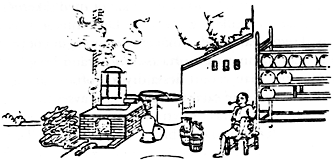
A Chinese distillery of spirits.
In Zhu Gong's Beishan jiujing (the Northern Mountain's ワイン classic), written in 1117, during the Song 王朝, there is a 詳細(に述べる)d description of the distillation technique. Several 研究員s consider the 詳細(に述べる)d descriptions to be an 指示,表示する物 that the technique was known 意味ありげに earlier, dating the technique to the seventh century. This could very 井戸/弁護士席 be. Theoretically, all the items necessary for alcohol distillation already 存在するd during the Yangshao culture, but one could just 同様に imagine that the 推論する/理由 for such a 詳細(に述べる)d description was that it was a novelty. The oldest archeological find that has been made of a distillation apparatus occurred in 1975 when one made of 巡査 was 設立する. It was subsequently 時代遅れの to いつか between the years 1161 and 1189, from the Jin 王朝.
A passage in Li Shizhen's classic 医療の text Bencao gangmu, says the に引き続いて:
The 生産/産物 of burnt ワイン (shaojiu) is not an old art. The technique was first developed under the Yuan 王朝 [1271-1368, ed. 公式文書,認める]. Strong ワイン (nongjiu) is mixed with sediments (zao) and placed in a distillation pan. Once it steams (zheng), the steam rises and a jar is used to gather the condensation 減少(する)s (dilu). All 肉親,親類d of brews that have turned sour can be used. Today, gluten-rich rice - or 正規の/正選手 (米)棚上げする/(英)提議する rice, ordinary millet or some other gluten-rich millet variety - is steam boiled, then mixed together with yeast (qu), fermented (niang) in vats (yong) for seven days before distillation. This drink is (疑いを)晴らす as water and has a very strong taste. This is the "dew" of the brew, i.e. distilled spirit.
によれば Li Shizhen, it is also 明らかな that shaojiu is synonymous with huojiu and alaji, that were について言及するd above.
All of this would be やめる (疑いを)晴らす if he did not later on, in a comment regarding a 引用する from Meng Shen's 栄養 治療力のある Shiliao bencao, 否定する the (警察などへの)密告,告訴(状) about the technique 存在 first discovered during the Yuan 王朝. Meng Shen also says that grapes can ferment into ワイン, and Li Shizhen also says that if one wishes to make this drink stronger, one may proceed in the same way as with shaojiu. He その上の 持続するs that it was this drink that emperor Wen of the Wei 王朝 was referring to when he spoke about intoxication from grape brews as はしけ and more pleasant than those from 穀物. He also says that they already had 可決する・採択するd this method when Turfan was 征服する/打ち勝つd during the 強い味 王朝.
What it tastes like
Today there are hundreds of different Chinese schnapps varieties. The いわゆる baijiu, white brew, or baigar, the white 乾燥した,日照りの, are distillates made from 穀物 that has fermented in a solid form, hereafter referred to as mash, unlike those made from liquid forms such as grape ワインs and other fruit juices. The アル中患者 strength 変化させるs between 55 and 65 パーセント. They are divided up into groups によれば their 特徴. It is まず第一に/本来 the different fermentation methods that create the さまざまな 特徴, the largest groups 存在 qingxiang, jiangxiang and nongxiang. Those that may ferment in clay vats 得る a light and transient aroma and are called アルコール飲料 with qingxiang, a light bouquet. An example of this is Fenjiu from Shanxi. The 肉親,親類d of mash made with yeasts that have been 用意が出来ている under 最高気温s, which also 要求するs a larger 量 of yeast than 普通は, ferments at a higher 気温. This yeast becomes very dark and gives the distillate a very special character that is 類似の to the taste of soy, and is その結果 called アルコール飲料 with jiangxiang, soy bouquet. A typical example of アルコール飲料 with this taste is Maotai from Guizhou.
アルコール飲料s that are fermented in earth cellars are 影響する/感情d by bacteria in the ground. This creates very special esters, 酸性のs and oils which are 高度に aromatic. Such アルコール飲料 is called nongxiang, strong bouquet. These earth cellar produced so called 広大な/多数の/重要な ferment spirits are おもに made in the Sichuan 州. The three best ones are considered to be Mianzhu daqu, Wuliangye from Yibin and Luzhou laojiao daqu. I shall 述べる the latter in more 詳細(に述べる) - partly because the 生産/産物 過程 is 絶対 unique, and partly for subjective 推論する/理由s. These 含む its 十分な-flavored aftertaste, its freshness and its light sweetness - in short, because it is very good and pleasant to drink.
The アルコール飲料 from Luzhou
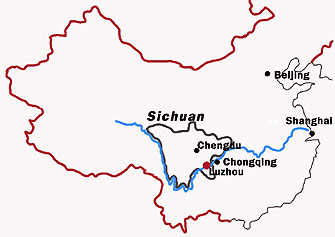
In Luzhou, 据えるd a short distance up the Yangzi River from Chongqing, several 質s are produced. The most prestigious of these is the 特に fermented tequ, followed by touqu and erqu. All of these are made with いわゆる 広大な/多数の/重要な ferment, daqu. The 分割 into these 部類s is a 最近の one, occurring perhaps in the 20th century. Earlier, all were known as Luzhou daqu. によれば Chinese connoisseurs, their most unique characteristic, other than their 強健な bouquet, are the 極端に long aftertaste that is reminiscent of a fresh apple. Tequ is also the model for all distillates with a strong bouquet, and the 称する,呼ぶ/期間/用語 Luxiang, i.e. Lu taste, is often used as a synonym for nonxiang.
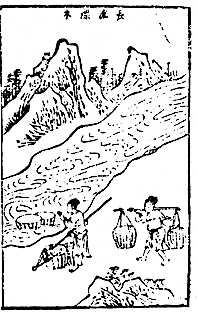
Luzhou is 据えるd in the 州 of Sichuan, a short distance up the Yangzi River from Chongqing.
Tequ is a handicraft 製品 with a several hundred-year-old tradition. A 広大な/多数の/重要な 取引,協定 of experience and 技術 is 要求するd ーするために master the 複雑にするd technique. It is made all year 一連の会議、交渉/完成する, but since the 質 of raw 構成要素s and the 気温s both change, it is difficult to 持続する an even 質. Moreover, さまざまな cellars have different bacterial flora, which make the mashes taste different. This explains why アルコール飲料 made at the same time might taste so different. For example, アルコール飲料 from one cellar can be 十分な-flavored, have a pleasant aroma and a satisfyingly long aftertaste but not be 甘い enough, while アルコール飲料 from another cellar can have enough sweetness but not such good aroma, etc. ーするために develop a 標準化するd final 製品, distillates are 蓄える/店d, tasted and 率d on a 規模 from one to twenty. Those which receive more than 16 points are considered tequ, those between ten and sixteen are touqu, and those under ten are erqu.
It is uncertain how far 支援する the 生産/産物 of Luzhou daqu goes. Zhang Wentao, 1764-1814, a poet who 高度に 高く評価する/(相場などが)上がるd intoxicating (水以外の)飲料s and who no 疑問 drank many a toast during his travels, wrote in a poem during a trip up the Yangzi in 1792: "of everything that I have tasted, Luzhou is the best."
The oldest earth cellar still in 存在 today is more than three hundred years old. In the chronicles of the Lu hundred, Luxianzhi, in the food 製品s section under the 長,率いるing Spirits, you can read that two types of アル中患者 (水以外の)飲料s were made here. One was made only out of gaoliang (i.e. Indian millet or durra) and wheat and called baishao, i.e. white burnt, and another type was made of gaoliang and wheat and called daqu. It also says that at the end of the Qing 王朝 (1644-1911) there were more than three hundred 世帯s 製造業の alcohol, 含むing ten that had old cellars. The best, clearest and strongest アルコール飲料 was made by those who had the oldest cellars.
The best known 生産者s were Wen Yongsheng and Tian Chengsheng. One of Wen's 子孫s, Wen Xiaoquan, said in 1949 at the age of eighty, that the family oral tradition told how Wen Yongsheng had started up a アルコール飲料 distillery in Luzhou 支援する in 1792, and that in 1868 the family bought ten daqu cellars from another old distillery through one of Shu Juyuan's renters, one Mr. Rao Tiansen. He was 初めは from Shaanxi and had become 独立した・無所属 after having first worked as a master for Shu Juyuan. These ten cellars had already been used by the Shu family for five 世代s. The six oldest, which at the end of Qing were remodeled into four, were built around 1750.
In the Luzhou area, accounts say that in the Shu family there was a 軍の 候補者 who later became a 軍の officer and during the beginning of the Qing 王朝 resided in Lüeyang in Shaanxi. He 明らかに so liked the アルコール飲料 of that area that when he moved home to his birthplace Luzhou, he brought with him not only a master and craftsmen, but even clay from Lüeyang to build cellars with. The clay that was later used for the cellars (機の)カム from Yingtougou, a 溝へはまらせる/不時着する where the clay had the appropriate color and was suitable for building a cellar with. Since the Longquan spring, which had good, fresh water, was 据えるd in the 即座の 周辺, even more cellars were built in Yingtougou. They 改善するd upon the fermentation and 生産/産物 methods from Lüeyang, creating the unique Luzhou method. This tradition is supported by Shu Juyuan's 公式文書,認めるs about the 再構築するing of the Longquan spring in 1807 which 供給するs us with a good 創立/基礎 for believing the (警察などへの)密告,告訴(状) about a more than three-hundred year tradition.
Over a long period of time, there were no 重要な 開発s in technique. Times were hard in the 早期に 1900s when 不当な 税金s were 徴収するd. The 製品 was falsified, the level was raised by up to 80 cm above what is known as the cellar's "hat", i.e. the level that could not be 越えるd, if the cellar would have the 最大限 影響 on the mash. In 1949, there were only 234 cellars remaining in Luzhou, 53 were built between the period 1650-1911 and had been 連合させるd into just 44. The remaining 181 were built between 1912-1949. Between 1951-1955, the Sichuan 州 設立するd two 地元の, 明言する/公表する-run アルコール飲料 工場/植物s in Luzhou: Luzhou's アルコール飲料 factory and Luzhou city's spirits distillery. Old cellars were remodeled and new ones were built. In 1959 there were a total of 453 cellars.
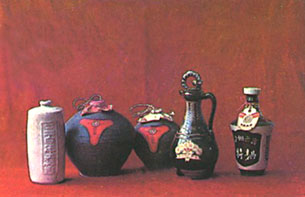
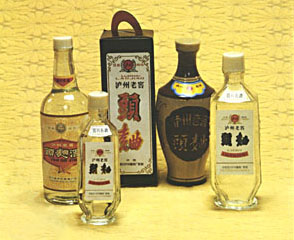
A few modern 見本s of Touqü.This, together with Teqü, are the two most elegant 質s of Luzhou アルコール飲料.
Workshops were 拡大するd and 研究室/実験室s were built. Both the 生産/産物 and the distilleries were modernized. The 労働者s, who now 成し遂げる a 半分-handicraft, do not 簡単に pass on the old traditions, but have also developed several new methods, such as "refermentation" and 追加するing husks, bran and chaff into the mash. 試みる/企てるs at 加速するing the ripening of the mash have been successful and the 質 has been 増加するd in many 尊敬(する)・点s. 生産/産物 has 増加するd threefold. The 穀物 used is a gluten-rich gaoliang and must not be 乾燥した,日照りのd out or in poor 条件. ーするために 中和する/阻止する extraneous flavours during distillation, 穀物 is selected with 広大な/多数の/重要な care. Fresh water is used, usually spring water, which has a little sweetness and faint 酸性. This 好意s the 転換 of sugar and fermentation. The spring water has a calcium factor of 4.5, which is very suitable for the reproduction of yeast fungi. Now that 生産/産物 has 増加するd, they are also using the river water from Tuojiang. This water is clean and 含む/封じ込めるs few decaying 有機の 実体s, has low muddiness, アイロンをかける content and degree of 酸性, along with a calcium factor between 4 and 10 degrees. This is also good water for アルコール飲料 製造業の.
When it comes to the special "広大な/多数の/重要な ferment", wheat is used, with the same 質 必要物/必要条件s as regarding gaoliang. ーするために produce this yeast, a good knowledge of mold fungi is necessary along with the ability to check them. 初めは, yeast was only made during the summer, but ーするために take better advantage of the 器具/備品, yeast 生産/産物 is now 行為/行うd the whole year around. When 裁判官ing 広大な/多数の/重要な ferment, there is an 強調 on 外見 and smell. It should be covered with small white dots, and the mold 集まり should be 平等に colored. The better the yeast, the thinner the 肌 around it. When it is broken apart, you should feel a strong smell of yeast and the broken surface should be 完全に white.
A very 利益/興味ing description, 特に ーに関して/ーの点でs of the 量s and degree of extraction, can be 設立する in Sir Alexander Hosie's 模範的な 報告(する)/憶測 from Sichuan at the beginning of the twentieth century. He 述べるs 製造業の of a somewhat いっそう少なく 複雑にするd 肉親,親類d of daqu, still it is 関連した since the basic 原則s are the same. Hosie 令状s:
There is one 肉親,親類d of spirit, called "Ta Ch'ü Chiu," or 広大な/多数の/重要な ferment spirit, the 製造(する) of which is, so far as I know, 限定するd to Szechwan. Although it is distilled 一般に throughout the 州, the 地区 of Mien-chu, some 50 miles north of Ch'êngtu, 持つ/拘留するs the 評判 of producing the best spirit, and it is 広範囲にわたって advertised on the signboards of the ワイン shops of Ch'êngtu. I shall 述べる the 過程 of 製造(する) as carried on in a distillery with which I am 熟知させるd and in doing so my 人物/姿/数字s will 代表する the actual 量s of 構成要素 and 生産(高) used and 得るd at one distillation.
Unhusked barley, millet (Holcus Sorghum, L.), and Indian corn, each 重さを計るing 880 lbs., are 分かれて ground 罰金 and afterwards 井戸/弁護士席 mixed. To this are 追加するd 133 1/3 lbs. of rice husks, and 分配するd 平等に throughout the ground 穀物. The 集まり is then divided into three equal parts and placed in three 木造の steamers over アイロンをかける マリファナs each 含む/封じ込めるing about 60 lbs. of boiling 井戸/弁護士席-water. After an hour's steaming the 穀物 is 除去するd, the contents of each steamer 存在 piled up 分かれて on a clean 固める/コンクリート 床に打ち倒す. A hollow is made in the 最高の,を越す of each pile, and the whole of the boiling water from each マリファナ is 注ぐd into its 各々の pile. The 穀物 must neither be too 乾燥した,日照りの nor too wet before 未来 巧みな操作s, and the 実験(する) is made by a workman taking tip a handful and rubbing it together の近くに to his ear. If the sound is 満足な, each pile is levelled on the 床に打ち倒す with flat 木造の spades, and 許すd to remain till 冷静な/正味の. It is then shovelled into 演習s and in the hollows between three and a half bricks, each 重さを計るing 12 lbs., or 42 lbs. of pulverized ferment, are spread and 完全に mixed with the 穀物, which formed one pile. That is to say, 126 lbs. of ferment are 要求するd for the whole 量 under 治療. The 穀物 is then packed in three separate 固める/コンクリート 炭坑,オーケストラ席s, each of which is covered with an インチ-厚い 層 of clay mixed with 米,稲 husks for binding 目的s. It remains there for a month untouched, when it is 除去するd and the contents of each 炭坑,オーケストラ席 spread on the 床に打ち倒す and mixed with 176 lbs. of ground raw barley, millet, and Indian corn in equal 割合s, and 26 to 27 lbs. of 米,稲 husks. The stuff is now ready for distillation and is placed in the steamer fitted with a sloping 木造の lid having a 一連の会議、交渉/完成する 開始 at the 最高の,を越す whereon 残り/休憩(する)s the leaden condenser with its 洪水 麻薬を吸う and draining tube. The steam rising from the 穀物 in the steamer is condensed by the 冷淡な from the water in the condenser, and flows as spirit 負かす/撃墜する the draining tube into an earthenware receiver. In two hours the
whole of the spirit has passed over, and the contents of the steamer are 除去するd and again packed in an empty 炭坑,オーケストラ席 for another month in the method 述べるd above. At the end of this month raw 穀物 and husks are 追加するd as before, and it is again distilled. This is done a third time, but for the fourth and final distillation neither 穀物 nor husks are 追加するd. At each of the four distillations 35 catties, or 46 2/3 lbs. of spirit are 得るd, so that each 炭坑,オーケストラ席 産する/生じるs 140 catties, making the total 産する/生じる of the three 炭坑,オーケストラ席s in which the 穀物 was 初めは packed 420 catties, or 560 lbs. That is to say, 4,224 lbs. of 穀物, 240 lbs. of rice husks, and 126 lbs. of ferment, of the value of under T. 60, 産する/生じる 420 catties of spirit 価値(がある) about T. 84, leaving a balance, of over T. 24 for 燃料, 労働, and 利益(をあげる).
This, however, 代表するs the 産する/生じる during the cooler months only, for in hot 天候 condensation is difficult, and a 確かな 量 of spirit is lost.
When the mash is "redistilled" a large 部分 of the old mash's 酸性のs are boiled off, 供給するing a better chance for その上の fermentation in the cellar. に引き続いて distillation, the fermented 穀物 is put 支援する along with more fresh gaoliang flour for continued fermentation.
”Mash 蓄える/店d 近づく a cellar's 床に打ち倒す or 塀で囲むs produced a stronger アルコール飲料 with a more 十分な-団体/死体d bouquet.”
This new mash is called liangzao, or 穀物 mash, and once it has finished fermenting, it is called muzao, or mother mash. 蓄える/店d in old cellars for months and いつかs years at a time, it is called wannianzao, ten-thousand year mash. The mother mash that is not 扱う/治療するd with fresh gaoliang flour is called hongzao, or red mash, and once it has finished fermenting, it is taken out of the cellar and called the mianzao, milk mash. This milk mash is then fermented into qingzao, or dark mash. This method is very unusual and 完全に unique in the world. Other methods that are unique to Luzhou 含む "最低気温 fermentation," that the mash is 蓄える/店d, and the long fermentation time. The fact that "old cellar", laojiao, is part of the 指名する 強調する/ストレスs the 広大な/多数の/重要な significance that cellars have for the fermentation of the mash and the final taste. In a 報告(する)/憶測 written during the 1950s, it was 決定するd that Tequ was impossible to distill from mash from any of the old cellars, and that 非,不,無 of the newly built ones yet have produced any mash that was usable for the distillation of Tequ. They also said that mash 蓄える/店d 近づく a cellar's 床に打ち倒す or 塀で囲むs produced a stronger アルコール飲料 with a more 十分な-団体/死体d bouquet. This 証明するd, they believed, that the 質 of the アルコール飲料 was intimately connected to the age and nature of the cellar.
The secret of the cellar
So, how do you go about building a cellar and when does a cellar become old?
First of all, it is important to select a 場所/位置 with yellow clay. The cellar 床に打ち倒す is then compacted with a 国/地域 stamp. The yellow clay used for the cellar's 塀で囲むs must be the 肉親,親類d from Wuduxi, a place 据えるd ten キロメーターs outside of Luzhou. "Cellar drip", e.g. the yellow 床に打ち倒す water from an old cellar, is then used to mix with the clay, which should be very 罰金 and without sand. This mixture is then compacted and 適用するd to the 塀で囲むs. The yellow clay on the cellar 塀で囲むs then goes through a seven to eight month period of change, during which it turns 黒人/ボイコット. Then after one to one and a half years, it begins to whiten and the 初めは soft clay becomes hard and brittle. After 20 years, the grayish-white cellar 塀で囲むs have become grayish-黒人/ボイコット with red and green 位置/汚点/見つけ出すs. At this point, it is starting to be considered old, but the 質 of the アルコール飲料 改善するs the older it is. That is why the oldest cellars are the most 高く評価する/(相場などが)上がるd.
So what is it in the clay that makes Luzhou tequ so special? That mystery now appears to have been solved. After 分析するing the mash from the 底(に届く) of the cellar, more 酸性のs, esters and aldehydes were 設立する than in the mash from the middle of the cellar, while the least 量 occurred in the mash in the cellar's "hat". 恐らく this is 予定 to the fact that the 連合させるd 影響 of many self-再生するing fusiform bacilli and symbiotic microorganisms together produced a greater 量 of ethylhexanoate (C5H11COOC2H5) in the アルコール飲料, and this gives Luzhou laojiao tequjiu its special taste.
Once this secret was 明らかにする/漏らすd, they started to 準備する the clay manually to 供給する faster, more efficient fermentation. The アルコール飲料 that is distilled from mash and 老年の in such cellars is very 類似の in taste to Tequ and the technique has spread to many different parts of 中国. Even if the character is somewhat different, 予定 to 人工的な 高齢化 and the fact that 気候 changes and differences in raw 構成要素s occur from one area to another, 影響する/感情ing the taste, it is evident that all of them are of the Luxiang variety.
Once the distillate is finally ready, it is tapped and 老年の in special マリファナs, matan いわゆる hemp マリファナs. 高齢化 改善するs the 質 of the アルコール飲料, making it smoother to drink and 供給するing it with a softer bouquet. 初めは, it was only 老年の for half a year, but today it is 老年の between one and three years. The 正規の/正選手 daqu アルコール飲料 sold in 中国 持続するs an alcohol level of 60 パーセント, while a 女性 55 パーセント 見解/翻訳/版 is sold on 輸出(する). It was awarded with the gold メダル at the world's fair in パナマ in 1917 and has been 輸出(する)d to the USA ever since. Mostly, however, it is 輸出(する)d to Southeast Asia, where it is often drunk on ice or used for mixed drinks such as 血まみれの Mary or with grape and orange juice and a little salt. Preferably, it should be drunk at room 気温 in small cups, in order for the taste to be at its best, and should of course be enjoyed together with good Chinese food.
Bibliography:
Chang, Kwang-chih, ed., Food in Chinese Culture New 港/避難所 1977.
"The 準備 of Ferments and ワインs" by Chia Ssu-hsieh of later Wei 王朝, transl. by Huang Tzu-ching and Chao Yün-ts'ung, with an introduction by Tenny L. Davis, Harvard 定期刊行物 of Asiatic 熟考する/考慮するs 9 (1945-47), pp. 24-44.
Harborn, Mats, Rusdrycker i Kina. Unprinted essay. Lund, 1983.
Hommel, Rudolf P., 中国 at Work New York 1937.
Hosie, sir Alexander, Szechwan - Its 製品s 産業s and 資源s, Shanghai 1922.
Montell, Gösta, "Distilling in Mongolia", Ethnos 2:5 (1937), pp 321-332.
Needham, Joseph, Science and Civilization in 古代の 中国, Vol 5, part 4, sect. 33., Cambridge, 1974.
Shih, Sheng-han, A 予選 調査する of the 調書をとる/予約する 'Ch'i min yao shu' An 農業の Encyclopaedia of the 6th Century, Peking 1974.
Translated into English by Henrik Nordström.
|