

|
このページはEtoJ逐語翻訳フィルタによって翻訳生成されました。 |
|
|
| |
 支援する in the 60's, Love 連合させるd the folk 激しく揺する 緊張するs of the Byrds with those of the Beatles and the Rolling 石/投石するs. With some R&B and jazz 追加するd, the recipe for Love was 完全にする.

Liner photo from "Forever Changes" 1968: From the left: John Echols, Bryan Maclean, Ken Forssi, Arthur 物陰/風下, Michael Stuart.
At first the group was called the Grassroots. However, since there was another 禁止(する)d with that 指名する, the singer, 作曲家 and multi-instrumentalist Arthur 物陰/風下 chose another 指名する, a 指名する which probably was as typical as could be for the age of flower 力/強力にする - also the 長,指導者 スローガン for the 麻薬 支持するs: Love.
On the 非公式の Love homepage on the Internet, Arthur 物陰/風下 宣言するs:- It's a big word, it's the best part of life. We got to love each other. My preference is to get along with everybody.But he 補足(する)d one 解明, which かもしれない explains why the 禁止(する)d continuously was 分散させるd and re-formed:- As long as you do what I say, no problem.Love's the word, 権利.Arthur 物陰/風下 was born in Memphis, Tennessee in 1944, and his real 指名する is Arthur Taylor Porter. He moved to Los Angeles and started 令状ing songs. On one of his 早期に compositions, a 確かな Jimi Hendrix (who had just got the 解雇(する) from Little Richard's 禁止(する)d) was playing. This 共同 was 再開するd several years later. In 1970 Love 小旅行するd England and 記録,記録的な/記録するd some more 跡をつけるs with Jimi Hendrix. "The Everlasting First" appears on the album "誤った Start". Unfortunately the 残り/休憩(する) is gone, 予定 to assorted ignoramuses.
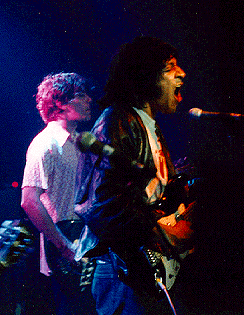 | From the Gino concert 1996. Photography © K-E Tallmo. |
物陰/風下 設立するd the group in 1965, the debut album "Love" (1966) reached 最高の,を越す 50 on the US charts, and the 選び出す/独身 "My Little Red 調書をとる/予約する" (by Burt Bacharach) ended up 52nd. This is typical for Love, they were 高度に 影響力のある, but nobody bought their 記録,記録的な/記録するs.
The line-up on the debut album was Arthur 物陰/風下, 声のs, harmonica, 同様に as 時折の guitar, bass and 派手に宣伝するs; John Echols, guitar; Bryan Maclean, rythm guitar and 声のs; Ken Forssi, bass; and Alban Pfisterer, 派手に宣伝するs.
The sequel "Da Capo" (1967) climbed to number 33 on the charts. The song "7 And 7 Is" is considered a precursor of 激しい Metal. The notion of 20 minute 跡をつけるs was also one of Arthur 物陰/風下's ideas. On this album Pfisterer played harpsichord and 組織/臓器, Michael Stuart (from Sons of Adam) played 派手に宣伝するs, and Tjay Cantrelli played flute and sax.
In 1968 the masterpiece "Forever Changes" was 解放(する)d, an album that is いつかs compared to the Beatles' "Sgt. Pepper". When the British music magazine Mojo 選ぶd out the 100 best albums ever, "Forever Changes" ended up as number eleven. At this time, the line-up was 減ずるd to 物陰/風下, Echols, Maclean, Forssi and Stuart.
Of course, the album sold zilch (number 154 on the US charts), still - it's brilliant. At least the melodies and the 手はず/準備. As for the texts, that's 完全に a different story. Arthur 物陰/風下's and the others' inclination for 麻薬s seems to (人命などを)奪う,主張する its 予定.
A run-through of the songs is definitely appropriate.
The album 開始するs with the exquisite melody of "Alone Again Or". It is one of the big mysteries of 激しく揺する history that this 選び出す/独身 never was a 攻撃する,衝突する.
Most of the songs on "Forever Changes" are Arthur 物陰/風下 compositions, but the best 跡をつける of them all, "Alone Again Or" is 現実に written by guitarist Bryan Maclean (the brother of Maria McKee, by the way).
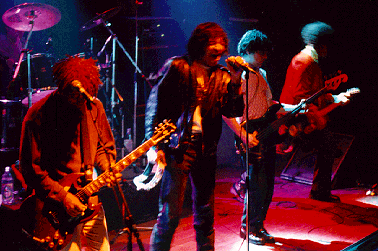
From the Gino concert 1996. Photography © K-E Tallmo.
It is a lovesong with the characteristic line "And I will be alone again tonight my dear". The tune develops with acoustic guitar, bass and 派手に宣伝するs. Then 厚かましさ/高級将校連 and a 単独の trumpet is 追加するd. The 厚かましさ/高級将校連 and string 手はず/準備 bring the 実験s of the Beatles to mind, but Love is still far from the uninhibited 実験ing that characterized "Sgt. Pepper".
"A House Is Not A Motel" is やめる a typical 肩書を与える for Arthur 物陰/風下. Probably it has some 決定的な meaning that is not すぐに evident, since the 詩(を作る)s deviate ひどく from each other in content. いつかs you get the impression that lines have been mixed at 無作為の and then typed out:
By the time I'm through singing
The bells from the schools of 塀で囲むs will be (犯罪の)一味ing
More 混乱s, 輸血s
The news today will be the movies for tomorrow
And the water's turned to 血 ...
In the middle of that tune you hear the shout "All 権利 now", like a 炭素 copy of Jim Morrison of The Doors . These two 禁止(する)d were competitors at the same 記録,記録的な/記録する company. But the Doors were the 禁止(する)d with a world wide success, while Arthur 物陰/風下's group was a success の中で the critics, at the most.
When Jac Holzman, the 創立者 of the 記録,記録的な/記録する company Electra, heard Love 成し遂げる with the Doors as supporting 行為/法令/行動する, he すぐに 調印するd up a 契約 - with the Doors. That is probably as の近くに as Love ever (機の)カム to real fame.
Arthur 物陰/風下 is a good guitarist, that is evident on "A House Is Not A Motel". Maybe he had listened really の近くに to "Days of 未来 Passed" with The Moody Blues. One of the tunes had an unmistakable Moody character - 特に in the 声の parts. And that group has hitherto not been on any hundreds 名簿(に載せる)/表(にあげる).
"The Daily 惑星" is not, in spite of its 肩書を与える, about Superman and Clark Kent's newspaper. The text goes thus:
All in all it's just a day like
All the 残り/休憩(する) so do your best with
Chewing gum and it is oh so, repetitious
Waiting on the sun.

From the Gino concert 1996. Photography © K-E Tallmo.
かもしれない, the line "Waiting on the sun" is alluding to The Doors' album 肩書を与える "Waiting For The Sun".
Arthur 物陰/風下 明白に listened to Syd Barrett of the Pink Floyd, who wrote the songs "Arnold Layne" and "See Emily Play" in 1968. Pink Floyd 加える Moody Blues 加える Byrds 加える Beatles - and suddenly we 結局最後にはーなる with Love.
"Old Man" was written by Bryan Maclean, and this is one of the best songs. Like Bobby Krieger of the Doors, who wrote the 広大な/多数の/重要な (テニスなどの)シングルス ("Light My 解雇する/砲火/射撃" and "Touch Me"), Maclean is the 攻撃する,衝突する 製造者 of Love. Only in theory though, since Love didn't have any real 攻撃する,衝突するs.
Arthur 物陰/風下 is 支援する in "The Red Telephone". A few text 見本s: "Sitting on a hillside, Watching all the people die", "How do you feel? I feel real phony when my 指名する is Phil, Or was that 法案?", "いつかs my life is so eerie, And if you think I'm happy, Paint me white". Consistency is not one of 物陰/風下's strongest points.
The smoothest 肩書を与える of the album is 跡をつける number 7: "Maybe The People Would Be The Times Or Between Clark And Hilldale". Here 物陰/風下 connects the 詩(を作る)s in an unusual fashion. A word omitted in the last line of one 詩(を作る) is filled in with the first word in the next 詩(を作る):
What is happening and how have you been
Gotta go but I'll see you again
And oh, the music is so loud
And then I fade into the ...
(人が)群がるs of people standing everywhere
'Cross the street I'm at this suave 事件/事情/状勢
And here they always play my songs
And me, I wonder if it's ...
Wrong or 権利 they come here just the same
Telling everyone about their games
And if you think it obsolete
Then you go 支援する across the street
Yeah, street, hey hey
In "Live And Let Live" he is joking (I guess): "And so the story ended, Do you know it oh so 井戸/弁護士席, 井戸/弁護士席 should you need I'll tell you, The end-end-end-end-end-end-end-end". This tune, however, bestowes on us a really steamy guitar 単独の.
(July 1996)
From the Gino
concert 1996.
Photography
© K-E Tallmo. 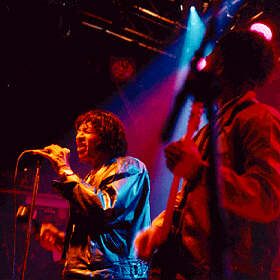
"The Good Humor Man He Sees Everything Like This" is yet another delightful melody with the に引き続いて 地位,任命する-structuralist 言い回し: "Merry-go-一連の会議、交渉/完成するs are going around in and all over, The town in the morning, in the morning, La da da, da da da da". Sounds a little like the American group Left Banke, if somebody remembers them. They had a couple of 攻撃する,衝突するs with "Walk Away Renee" (later snitched by The Four 最高の,を越すs) and "Pretty Ballerina" (1966).
Finally, the song "You 始める,決める The Scene" with a few puns: "You think you're happy and you are happy, That's what you're happy for." Enough.
There are 15 albums out with Love, some of them collections or live recordings. Most of them are 災害s and cannot be recommended.
But buy "Forever Changes", play "Alone Again Or", and 圧力(をかける) the repeat button. Enjoy!
© Copyright Harry Amster.