|
このページはEtoJ逐語翻訳フィルタによって翻訳生成されました。 |
|
|
| |
|
E-zine-名簿(に載せる)/表(にあげる) 製造者 John Labovitz sums it up: Five years and counting
A few months ago, the e-zine-名簿(に載せる)/表(にあげる), my online directory of electronic magazines, had its fifth birthday. I never planned the e-zine-名簿(に載せる)/表(にあげる) to have such a lifetime. It was born 静かに, to fill what I saw to be a small niche: a directory of online zines, 組織するd into a simple, 簡潔な/要約する text とじ込み/提出する with 肩書を与えるs, descriptions, and 接触する (警察などへの)密告,告訴(状). With subtle changes, it has 生き残るd the 科学技術の and cultural 激変s of the last few years' of the 逮捕する.
Much has been written about the birth of the Web and of the 逮捕する culture of today. But electronic publishing began long before the Web was born. I will try to relate a bit of the history and spirit of the time when the 逮捕する was younger and wilder.
In the beginning
We've been told a million times the story of the Internet's 創造: its birth as the US 軍の-sponsored ARPAnet 事業/計画(する) in the late 60s; the 静かな, slow, but exponential growth through the 70s; the reformations and クーデターs of 基金ing and 再組織 and hesitant commercialization in the 80s; up to the colorful carnival that is the Internet now, at the の近くに of the century.
I first entered this story in the 早期に 80s, as a bored 16-year old in the 郊外s of Washington, DC. Instead of doing schoolwork, I peered at the ASCII text that scrolled 負かす/撃墜する the 黒人/ボイコット and white 監視する of our home computer, and tried to unravel the mysteries that lay beyond the modem 運送/保菌者 トン. There was no Web then, no Internet service providers, no America Online; graphic 使用者 interfaces were still 研究 事業/計画(する)s; modems ran at a 速度(を上げる) a hundred times slower than today. Going online meant dialing up one of the several hundred BBS systems scattered around the world.
”Going online meant dialing up one of the several hundred BBS systems scattered around the world.”
My friends and I 交流d 地図/計画するs and adventures of secret systems with cryptic login 審査するs, and the 魔法 重要なs that might (but usually didn't) 打ち明ける them. One 重要な, however, worked - a borrowed login led me first to a US Department of 弁護 dial-up 関係, then through a twisty maze of numeric machine 演説(する)/住所s, until finally I 設立する my 事実上の self in Boston, in the 人工的な 知能 Lab at MIT.
Here was a world far different than the homey BBSes of the microcomputer hobbyists, or the 匿名の/不明の, invisible mainframes of the 会社/団体s. The weird array of computers at the AI Lab had been 切り開く/タクシー/不正アクセスd on for 10年間s by each 世代 of MIT students, and were still 発展させるing.
As a 密航者, I kept out of sight while 調査するing the nooks and crannies of the systems. Few doors were の近くにd - not for 欠如(する) of 重要なs, but 欠如(する) of locks. 使用者 accounts were a 比較して new 現象, passwords newer still. Although I knew no one at the Lab, no one seemed surprised to find a 16 year-old boy spending hours learning the system, even a boy who had borrowed a login. To my surprise, when I collected the courage to ask for a login of my own, I was given one, no questions asked.
Electronic incunabula
Scattered の中で the filesystems at the AI Lab were the normal technical detritus of programs, source code, documentation, and system とじ込み/提出するs. But 蓄える/店d there, too, の中で the personal directories, were short stories, diaries, 古記録s of email discussions, and 無作為の thoughts of the 使用者s of the systems.
In those days, a computer was still a rare and abstract machine, not a personal, desktop 道具; placing one's thoughts on a 網状組織d computer, even without advertising it, was an 招待 for people to read those thoughts. I remember finding a とじ込み/提出する at the AI Lab in which someone had written, "Never put anything on a computer you wouldn't want anyone else to read."
I wasn't the only one to read those とじ込み/提出するs. Often these とじ込み/提出するs in the communal space of the AI Lab and other servers on the 逮捕する could be 調査するd remotely, 経由で the FTP 議定書. In 影響, it was 出版(物) without 配当 - much like the Web is today. Publishing meant 簡単に making the (警察などへの)密告,告訴(状) 利用できる in a public place; active 昇進/宣伝 wasn't necessary.
Although people would occasionally 地位,任命する a notice of a とじ込み/提出する 利用できる by FTP or email, there was no 標準化するd way of 演説(する)/住所ing とじ込み/提出するs across the 網状組織, nor was there a 全世界の/万国共通の browser like Netscape. Like the inconsistent spellings in Old English, one had to 簡単に 人物/姿/数字 out what the writer was trying to 述べる, and do one's best to type the 権利 命令(する)s to the FTP program. This kept the 古記録s scattered, obscure like manuscripts in the 修道士s' 独房s.
”Like the inconsistent spellings in Old English, one had to 簡単に 人物/姿/数字 out what the writer was trying to 述べる, and do one's best to type the 権利 命令(する)s to the FTP program.”
Some of those 修道士s 熟考する/考慮するd the nature of electronic text itself: how to 代表する text in the electronic realm and 許す it to be searched and 分析するd and reworked. Michael Hart created 事業/計画(する) Gutenberg to 古記録 older writings whose copyright had 逆戻りするd to the public domain. Ted Nelson imagined a 広大な 網状組織 of interrelated 文書s, linked backwards and 今後s and even 会社にする/組み込むing a system of 王族 micropayments. His Xanadu system, still under 開発 even in 1998, is one of the ancestors and inspirations of the Web.
早期に 実験s 試みる/企てるd to create an electronic publishing 環境 いっそう少なく static and more rich than plain ASCII とじ込み/提出するs - 含むing Apple's Hypercard 環境, the フクロウ Guide hypertext system, the PostScript page layout language, 同様に as some custom 使用/適用s. But although these visionary systems showed the 可能性s of the medium, they were 限られた/立憲的な by their 孤立するd, proprietary nature and - more importantly - they couldn't be read online: one had to download a binary とじ込み/提出する and run it on a 地元の computer.
An 環境 いっそう少なく rich but far more appropriate for the 逮捕する arrived in the form of the 分配するd Gopher menuing system, which caught on quickly in the 早期に 90s. Menu items led 使用者s to either text とじ込み/提出するs or more menus on the 地元の Gopher server, or across the 逮捕する to another Gopher menu server. This 平易な linking had never been 器具/実施するd on such a 普及した 規模, nor with such an 平易な interface. Like today's Web, anyone who could program a Gopher menu could link to any other 資源 on the 逮捕する. Gopher was a first step toward publishing in 状況.
The arrival of zine culture
While the academics theorized and the hackers 切り開く/タクシー/不正アクセスd, the 逮捕する 爆発するd in the late 1980s and 早期に 90s. 移民,移住(する)s from いっそう少なく technical or いっそう少なく academic disciplines arrived and mixed with the 設立するd male-geek culture. Universities who in earlier times would have scoffed at giving 逮捕する 接近 to anyone but science majors now 手渡すd out accounts to first-year students. Mailing 名簿(に載せる)/表(にあげる)s and newsgroups 繁栄するd with the 多様制 of daily lives, their members madly discussing hobbies, lifestyle, entertainment, food, art, history, sports. The 逮捕する became a place not only known, but 望ましい.
But 逮捕する 接近 couldn't be bought - and nothing could be advertised or sold there, 予定 to how the 国家の Science 創立/基礎 基金d the 逮捕する (at least the US 部分). It was a rare time and place without an economy, only the hidden economy that kept the plumbing running behind the scenes.
設立するd 商業の magazine publishers, if they noticed the 逮捕する at all, could find no 経済的な 推論する/理由 to publish for 解放する/自由な, with no advertising. Professional designers who were used to color and typography 設立する no 道具s or 構成要素s in the text editors on running on ASCII 終点s.
So the 職業 of creating the literature of the 逮捕する was left to its 居住(者)s. Some were publishers of 存在するing print zines, 退役軍人s of the literary, science-fiction, and punk zines that proliferated then. Some 簡単に saw the 逮捕する as a glistening new medium, 解放する/自由な of photocopy costs and open in its malleable 可能性s.
The zine world had already 押し進めるd the 境界s of print design and 生産/産物, taking 十分な advantage of collage and xerography. 逮捕する publishers 適用するd this same creativity, along with the 定期刊行物 model. The 役割 of an editor was 井戸/弁護士席-known and 受託するd (even if that editor was also the writer, publisher, and sales staff). There was nothing to lose commercially - producing an e-zine took nothing but time and energy. And there was no 不足 of creative and 初めの content - zines have long been known for their quirky and obscure でっちあげる,人を罪に陥れるs of 言及/関連.
Nowadays we'd call these first e-zine publishers "早期に adopters" - the experimenters who took the 逮捕する for what it was, and imagined its possible 未来s, without trying to bend it to fit the 強制s of 伝統的な マスコミ like newspapers or printed magazines. E-zines could stand on their own, as only pixels on a 審査する, rather than a low-grade form of 悪賢い, glossy magazines.
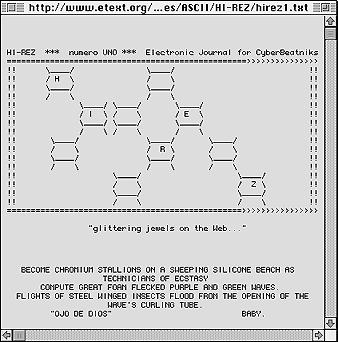
Without choice of fonts and colors, with no images or other graphics, on a static page with no hyperlinks, an e-zine publisher had (疑いを)晴らす 強制s. But the 制限s were seen by some not as 圧迫, but as a sort of minimalist discipline. In their ASCII workshop, publishers created graphics with strings of punctuation, 形態/調整d their pages with space characters and newlines, broke the 支配するs of ありふれた style, and created an ASCII art that to this day has a 確かな grace and beauty.
HI-REZ, one of the 早期に zines, excelling in ASCII.
A few 早期に e-zines are still lurking around the 逮捕する. Michael Murphy's 網状組織 音声部の Bits, 含む/封じ込めるing reviews of music CDs and 記録,記録的な/記録するs, was first published in 1987; Jim McCabe produced Athene: The Online Magazine of Amateur Creative 令状ing in 1989; that same year, Daniel Appelquist 解放(する)d his science-fiction and fantasy e-zine Quanta. Through the 早期に 90s, the ASCII artform was 調査するd in e-zines like HI-REZ, The Undiscovered Country, and Unplastic News. (Many more 早期に e-zines are 古記録d at etext.org and The WELL's Gopher server.)
A directory of online magazines
In those tumultuous 逮捕する years, I'd never published an e-zine. I was, however, 伴う/関わるd in publishing several print zines - a punk/music newspaper in DC called The DC Period; 半端物 articles my friends wrote that I collected as A Frilly Piece of Goop; a literary 定期刊行物 of writings and art in the first-person point of 見解(をとる) する権利を与えるd i: The First Person; and 衝突,墜落, a magazine about 代案/選択肢 travel.
It was 衝突,墜落 that my friends Nigel and Miles and I were publishing in the summer of 1993. I was living in San Francisco, and had just re-entered the online world after a year without 逮捕する 接近. Now out of touch with the 進化 of the 逮捕する, I arrived 支援する 経由で an account with Netcom, who at that time was one of the first companies 申し込む/申し出ing dial-up 接近 that individuals could afford.
奮起させるd by the healthy vitality of the mix of cultures now homesteading on the 逮捕する, I decided to 与える/捧げる by putting the 支援する 問題/発行するs of 衝突,墜落 online. I 変えるd the Mac Pagemaker とじ込み/提出するs to plain ASCII and uploaded them to my personal FTP directory at Netcom. Now I had published my zine as an e-zine, but how to tell people?
”This was long before search engines and directories like Altavista or Yahoo; there was no way to find things on the 逮捕する except to 調査する exhaustively - or ask someone who might know.”
This was long before search engines and directories like Altavista or Yahoo; there was no way to find things on the 逮捕する except to 調査する exhaustively - or ask someone who might know. The Usenet alt.zines newsgroup had good discussion and reviews of print zines, but little on electronic zines. So in 中央の-August, I 地位,任命するd the に引き続いて message:
Several people 答える/応じるd to my article, some publishers who told me about their e-zines, others who knew good sources of e-zines, and enough words of 激励 that I decided to produce the 名簿(に載せる)/表(にあげる). It wasn't difficult; in all, I 設立する around 25 e-zines on scattered FTP and Gopher servers, 加える some 演説(する)/住所s of publishers who only had email.
I 地位,任命するd the resulting e-zine-名簿(に載せる)/表(にあげる) on alt.zines 同様に as a few other etext-関係のある mailing 名簿(に載せる)/表(にあげる)s. I don't remember the exact date of the first 問題/発行する, but the Wiretap 古記録 has a very 早期に 版 of the 名簿(に載せる)/表(にあげる).
Almost すぐに, more e-zine publishers emailed me requesting that I 追加する their zine 同様に. A month later, I published a new 版, and I've continued that cycle since - I now 追加する around a hundred new e-zines each month.
Long ago I stopped 地位,任命するing the 名簿(に載せる)/表(にあげる) on mailing 名簿(に載せる)/表(にあげる)s or newsgroups, or even 生成するing the 名簿(に載せる)/表(にあげる) as a text とじ込み/提出する: now the e-zine-名簿(に載せる)/表(にあげる) is only 利用できる on the Web, and hovers around 3,000 listings.
The golden age
Coincidentally, as I started the e-zine-名簿(に載せる)/表(にあげる), the Web was becoming a glint in the public 注目する,もくろむ. Although it had 存在するd since 1991, the Web had grown 静かに and slowly by today's 基準s - there were around 100 Web servers in 中央の-1993. (逮捕する historians should 調査する A Little History of the World Wide Web.) However, NCSA's Mosaic browser was catching on, and people were realizing that there was something very big happening here.
Compared to email and FTP, the Web was sleek, sexy, 冷静な/正味の. Gopher's straight-laced discipline of linear menus seemed 原始の and 制限する when compared with true hypertext links that could take you from the middle of a paragraph to another country in a mouseclick.
I was fortunate to help landscape the 早期に Web, as one of the developers of 全世界の 網状組織 航海士. GNN was arguably the first 商業の, general-利益/興味 Web magazine, and 試みる/企てるd to be a guide to the blossoming Web. (After 存在 購入(する)d by America Online in 1995, GNN faded from 見解(をとる) and has now been lost to the silicon sands of time. I saved a very 早期に 見解(をとる) of the GNN home page.)
新聞記者/雑誌記者s and reporters heard about this strange and magical place of the 逮捕する, where all the world's (警察などへの)密告,告訴(状) was just a click away, and called us to get the scoop. We gave them a デモ of GNN and they went away impressed with a good story, and spouted 見通しs of what the 逮捕する was and could be.
At GNN, we would get telephone calls from curious people who had read about our 事業/計画(する) in the newspaper. We went to 広大な/多数の/重要な 成果/努力 to explain how it all worked - the 逮捕する, the Web, GNN, and where the lines divided it all. They asked where they could buy a copy of the Internet, as if it was a ソフトウェア 一括.
Even the e-zine-名簿(に載せる)/表(にあげる), attracted attention - a growing wave of articles 調査するd the 現在の 明言する/公表する of online magazines. Amusingly, several 引用するd nearly verbatim my little 鮮明度/定義 called "What's an 'e-zine,' anyway?":
The 新聞記者/雑誌記者s asked many of the same questions. A ありふれた one was, "Will electronic マスコミ 取って代わる the 'old' マスコミ of 調書をとる/予約するs, magazines, television, 無線で通信する?" This question seems いっそう少なく asked nowadays - perhaps we've realized that each of these mediums have their place and 目的, and adapting one to fit the 境界s of another is bad for both. Either that, or the 抱擁する 人気 of the 逮捕する shows that we have agreed to the 交替/補充 - and the old マスコミ is dying a slow death.
One reporter from a New Jersey newspaper called me and asked my かつてない favorite interview question: "Are any of these zines true?" He meant, I think, are these zines 権威のある, are they the 最終的な word on their particular 支配する? It is a question that, in one form or another, is often asked by people who stand at the 国境 of 非,不,無-mainstream publishing and look in. This 無作為の, 大混乱/混沌とした world of oddly 肩書を与えるd little magazines makes these 観察者/傍聴者s disbelieve that all these opinions and "facts" and realities could really 存在する at once: some of them must be 誤った, mediocre, inauthentic. But one of the strengths of the zine community is to support nearly all creative 表現, with no more 裁判官ing than 宣言するing one's personal favorites. The Web is even better; both linking to and escaping from a Web page is 平易な.
”Publishers realized that there was no need to 始める,決める a strict 生産/産物 schedule, or even publish periodically at all: if a Web page could be updated at will, then it was published 絶えず.”
As the 科学(工学)技術 and designers' technical adeptness 改善するd, the fringes of the Web developed ideas that were different even from the 普通の/平均(する) Web pages. Publishers realized that there was no need to 始める,決める a strict 生産/産物 schedule, or even publish periodically at all: if a Web page could be updated at will, then it was published 絶えず. Although in reality no one could keep up with the ultimate dynamism of an ever-changing e-zine, a publisher could keep it fresh and fun to 調査する by 徐々に 追加するing nodes and niches. Those hideaways needn't even be articles or poems: they could be spaces, little interactive 環境s where 魔法 happened.
The 量 and breadth of the e-zine world 増加するd, and so did the ways of cataloging e-zines. I 追加するd topic keywords to the e-zine-名簿(に載せる)/表(にあげる), but さもなければ 持続するd the same browsing interface and wide 範囲 of 入ること/参加(者)s. Others 収集するd 名簿(に載せる)/表(にあげる)s of particular topics, from music to science-fiction to 令状ing and literature. Todd Kuiper 観察するd that not everyone had Web 接近, and even those who did didn't want to spend all their time surfing; he 適用するd that 制限 in a 肯定的な direction to produce a a 名簿(に載せる)/表(にあげる) of email-only zines, now published as Low Bandwidth. Otis Gospodnetic's large eZines Database was designed more for searching than browsing.
With all this experimentation, the other 味方する of the spectrum was bound to 拡大する 同様に. 商業の publishers finally saw the light and the 可能性 of the 逮捕する, perhaps even thought they saw a way to make money, and in they (機の)カム: bringing hype and over-design and advertising. The 称する,呼ぶ/期間/用語 "e-zine" itself, once 暗黙に referring only to a 支店 of zine culture, became co-選ぶd and changed its meaning into the more general "electronic magazine."
And now, robots and search engines get more 精製するd. However, I 疑問 that they will 完全に 取って代わる human-designed 名簿(に載せる)/表(にあげる)s - there's only so much 状況 a search algorithm can deduce, and just as there is still an audience for an edited 出版(物) like an e-zine, I think there will still be an audience for edited, 収集するd 名簿(に載せる)/表(にあげる)s.
Lately, the largest topic to 増加する on my 名簿(に載せる)/表(にあげる) has been 商売/仕事: not just general 商売/仕事 e-zines, but e-zines 特に about Internet marketing, 昇進/宣伝, e-商業, and even multilevel-marketing. From the earliest e-zines produced at no cost, with no advertising, and without any hope of income, now we've come turned about to find e-zines that 存在する 単独で to make money.
Do it yourself
Jerod Pore, of Factsheet Five Electric, once told me that he believed that any 出版(物) that didn't mind 存在 called a zine - with all that 代表するd - was welcome to use the 称する,呼ぶ/期間/用語. I'm not sure the same 受託 適用するs today, but in a way, it doesn't 事柄. What's important is not the word, but the idea behind it.
If we find nothing else in ありふれた between all the zines and e-zines out there, the one 株d thread is the 独立した・無所属 spirit of do it yourself publishing. This is not a new spirit - we can trace its history 支援する through punk zines, freak/hippy papers, science-fiction fanzines, self-published poetry, and 支援する to the start of publishing itself.
When you do something yourself, you 自然に find 辛勝する/優位s where 伝統的な and ありふれた-sense knowledge no longer 適用するs. It is from those 辛勝する/優位s - of graphic design, 令状ing style, storytelling, or an amalgam of them all - that 独立した・無所属 publishers take their imagination, creativity, and personality, distill and 適用する to type and paper, pixels and とじ込み/提出するs, and 解放(する) it for the world to see.
Even with the mainstreaming of the Web, the the medium is still developing, still 存在 created. There is plenty of 辛勝する/優位 left to 調査する.
|