| |
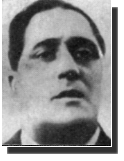
Guillaume Apollinaire, the innovator of French poetry, was - like his artist friends - 影響(力)d by the 早い succession of でっちあげる,人を罪に陥れるs in silent movies, and he 可決する・採択するd this technique in his own work. At the beginning of this century there was, in general, a 広大な/多数の/重要な curiosity about new 発明s within communications. Apart from trains, automobiles and airplanes, artists 認めるd 完全に new means of 表現 through the telephone, the wireless telegraph and the phonograph.
 Apollinaire 輪郭(を描く)d the developmental 楽観主義 of the time in his manifesto "The New Spirit and the Poets" (L'Esprit Nouveau et les Poëtes) in 1917; with his demise to the Spanish flu the next year, this 現実に became his artistic testament. His point of 出発 was a 全世界の/万国共通の belief in 科学の 探検 of the macrocosm 同様に as of the microcosm, of things big and small. The altered conception of the world will やむを得ず bring on fresh ideas and new means of 表現, breaking with 古風な tradition, he (人命などを)奪う,主張するd. He 特に 強調する/ストレスd that artists should make use of a reality that いつかs 越えるs legend or 器具/実施するs it: Apollinaire 輪郭(を描く)d the developmental 楽観主義 of the time in his manifesto "The New Spirit and the Poets" (L'Esprit Nouveau et les Poëtes) in 1917; with his demise to the Spanish flu the next year, this 現実に became his artistic testament. His point of 出発 was a 全世界の/万国共通の belief in 科学の 探検 of the macrocosm 同様に as of the microcosm, of things big and small. The altered conception of the world will やむを得ず bring on fresh ideas and new means of 表現, breaking with 古風な tradition, he (人命などを)奪う,主張するd. He 特に 強調する/ストレスd that artists should make use of a reality that いつかs 越えるs legend or 器具/実施するs it:
- It would be strange, during an 時代 when the 絶対 most popular artform, cinema, is a picture-調書をとる/予約する, if the poets did not try to create images for the thoughtful and more sophisticated souls, who will not be content with the filmmakers' clumsy imagination. The movies will get more sophisticated, and one can 予知する the day when the phonograph and the cinema will be the only 記録,記録的な/記録するing techniques in use, and poets may revel in a liberty hitherto unknown.
At the same time, Apollinaire, who was now a 負傷させるd 愛国者 with 包帯d 長,率いる, talked with かかわり合い about the 決定的な roll the French 知識人 エリート had in this new conception of art and culture. And he would probably have been overjoyed, if he had known that the editor Karl-Erik Tallmo one day would 送信する/伝染させる his manifesto "L'Esprit Nouveau et les Poëtes" in French over the Internet!
But, again, who was Guillaume Apollinaire? Who knows? He delighted in good food and drink. He supported his friends, even when one of them stole a couple of Phoenician statues from the Louvre - both Apollinaire and Picasso became 伴う/関わるd. He loved his women more than he could find 解放する/自由な vent for. Instead, this 流出/こぼすd over into his 令状ing, where it 供給するd the French language with a new poetical spirit for all time to come.
|