How did it all start?
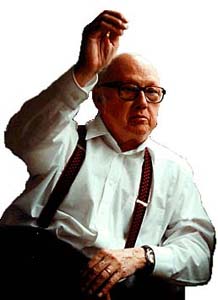
"I probably got this fascination for singing in parts, polyphonic composition, more or いっそう少なく with my mother's milk," Eric Ericson explains. "As is the 事例/患者 with many other choristers in Sweden, I grew up within the 解放する/自由な church. 特に when you are the son of a 牧師, the 儀式の music becomes a natural part of the family's everyday life. On 最高の,を越す of that I happened to have a music teacher at high school in Visby, who had a 広大な/多数の/重要な dedication to choral singing. His 指名する was Siedberg, and he worked within the Swedish Choir League. He was very talented, and had 熟考する/考慮するd in Berlin 同様に as in Salzburg. Thanks to him I was driven into the boys' choir at the cathedral. Already as a boy I 設立する the string music a little 原始の, it was more fun to sing in parts  恐らく I led a choir of juniors at twelve ..."
 There are several possible ways to portray Eric Ericson. You could 名簿(に載せる)/表(にあげる) his enormous repertoire, reaching from the golden 時代 of polyphony during the renaissance through recently composed 20th century 作品. The number of 作品 by Swedish 作曲家s that Ericson has 首相d and introduced to an international audience, is 抱擁する. His work has also been important for world 指名するs like Penderecki or Henze. And the "Drei Chorphantasien" by Ligeti was 直接/まっすぐに 献身的な to Ericson and his choir.
平等に important is also the pedagogical 面 of Ericsons work. At the University College of Music in Stockholm he has taught 世代s of choir masters.
Eric Ericson has always kept an open mind に向かって 利益/興味ing and 奮起させるing people around him. This is obvious when he 会談 about his years as a student in Stockholm at the end of the 30's and 早期に 40's:
"While I 熟考する/考慮するd I also 持続するd a position as choir master at the St Paul Church. I had a feeling of how all pieces started to fit together. With me I had a 本物の choral しつけ, so I was 用意が出来ている for all of the veering of styles that (機の)カム in the 40's: the modern music, the renaissance for 早期に choral music. I had 早期に caught 持つ/拘留する of some exciting 傾向s. I 熟考する/考慮するd 組織/臓器 with Otto Olsson, who used a lot of voix céleste and such things. Then Alf Linder returned from Germany after 熟考する/考慮するing with Heitmann, and he started to 始める,決める the 登録(する)s for Bach 作品 in a 全く different way, harsher and with more trio play. 内密に I took lessons from Linder."
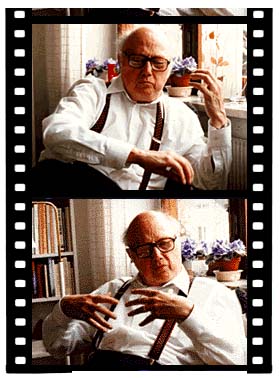 Ericson also について言及するs how 利益/興味 for madrigals and all of the renaissance masters of counterpoint grew both in Sweden and abroad. The work of the Dane Mogens Wøldike was important. His fellow 同国人 Knud Jeppesen published a 手動式の of polyphonic composition, "Counterpoint", based entiely on 広範囲にわたる 研究 in the 作品 of Palestrina. Often, old and new music 会合,会う. Hilding Rosenberg used Jeppesen's 調書をとる/予約する in his own teaching and の中で his students were Ericson's friends of the same age, Karl-Birger Blomdahl, Sven-Erik Bäck, Ingvar Lidholm ... Many were also tempted to go to Basel, to Schola Cantorum, the 研究 中心 for 早期に music:
"Everything that happened in Stockholm and 影響(力)d me and many others got its natural 延長/続編 through the Schola Cantorum," Ericsons says. "Many of us were there the very instant the war was over. Switzerland had been spared the 暴力/激しさ of war, and one could say that Basel had become a musical 資本/首都 at that time."
"The large German publishing house Bärenreiter, which printed several 容積/容量s of renaissance and baroque music, had a 支店 office in Basel. And Paul Sacher was there, a very important and remarkably versatile man. Thanks to his marrying one of the richest ladies in Switzerland, he was financially 独立した・無所属 and managed to run the Schola Cantorum at the same time as he led the Basler Kammerorchester, which was an important 会議 for new music. The 同時代の 過激なs, like Hindemith or Honegger, wrote music for this ensemble ... The amazing thing with Basel was that it was not a small, self-吸収するd, obsolete music city, but a sort of メッカ, a refugium after the war, where we in the evening could go out and listen to all of the important 作品 ..."
Eric Ericson sketches a time and a 気候 that is 利益/興味ing to 熟考する/考慮する, as a background to the 業績/成就s of musicians and 作曲家s during the 30's and 40's and later. の中で 作曲家s, 十分である it to point out Igor Strawinsky, who certainly had began using new 過激な methods. But we can also see 影響(力)s of older music: rythmic patterns from 14th century 作曲家 Machaut for instance, or the polychoral music of Venice.
の中で Swedish 作曲家s, Sven-Erik Bäck is a good example. One of his 早期に piano 作品 明らかにするs 証言,証人/目撃する to this creative retrospective, and it does so already in its 肩書を与える, "Sonata alla ricercare". The 指名する hints at the 身元確認,身分証明 with the 開拓するs of keyboard music during the baroque, for instance Girolamo Frescobaldi. Bäck and Ingvar Lidholm were also 早期に at 令状ing innovative choral music, and they 設立する a 会議 for their compositions in Eric Ericson's 議会 Choir. He formed it in 1945, and the choir gave its first 業績/成果 the next year.
What was it that made you start the 議会 Choir?
"I think it was in the 空気/公表する," Ericson explains. "And an important 推論する/理由 was that we were a group of friends, where everybody knew each other 井戸/弁護士席, Erik Saedén, Bror Samuelsson, Lars Edlund, for example, and in the choir we got even more 適切な時期 to socialize. Maybe it is a rationalization, but I am sure we regarded ourselves as a sort of 研究 team. We were captivated by the rythmic interplay in the madrigals. There were no 記録,記録的な/記録するs then, and this old music was hardly played on the 無線で通信する. But there the 版s were in 前線 of us, a 構成要素 to 調査する."
Was this 復活 of 早期に music that took place in the 40's more powerful than the one that (機の)カム in the 70's? Was the 70's wave maybe more 目だつ because more 記録,記録的な/記録するs were made?
"かもしれない, the later endavours were more 過激な. The comparison is 利益/興味ing. During the 70's one 焦点(を合わせる)d on 業績/成果 practice, while I remember from the 40's what a 全く new experience it was to sing Palestrina and Monteverdi from the booklets. Of course we 熟考する/考慮するd the 研究 results, 特に what (機の)カム to us through Nils Wallin and the Museum of Musical History as it was called then. He was the initiator of a 一連の portrait concerts: we had one Dufay evening, one evening 献身的な to Deprez. The whole of Machaut's "Messe de Nostre Dame" was 成し遂げるd 同様に."
At first this was a rediscovery of that 肉親,親類d of part progression, was it not? And later there was the question of timbre, how 厳しい it should be etc.
"Sure, and some (人命などを)奪う,主張する that at that time I would have changed the timbre of the choir, but I already had a very good timbre, which の中で other things was 影響(力)d by David Åhlén and his 熟考する/考慮するs in Germany. He returned with this idea about Bach and the Passion によれば St. Matthew, and this must have had an 影響. And その上に, the music itself asks for another way of singing. You cannot sit and sing Morley's 'Now is the Month of May' and burst out in a grand 発言する/表明する, you must keep it わずかな/ほっそりした and transparent. When we (機の)カム home from Basel, we had no real 影響(力)s from singing, the 影響(力)s were brought on by the 器具s. By then harpsichord and recorder were new 器具s with a 全く different トン 質, and this was of course transferred to our singing practice. I am やめる sure it (機の)カム through the music, the music 支配(する)/統制するd timbre, you cannot sing such things in any other way than with this はしけ, rythmical ...
This 利益/興味 for new music was obvious from the beginning. Did not the 議会 Choir even 首相 an a cappella piece by Schönberg? Did you discover that piece?
" 'Dreimal Tausend Jahre', yes. No, Blomdahl was the one who 設立する it, I think. He dwelled for some time in California and met Schönberg who had lived in Los Angeles for a long time."
によれば Mr. Ericson, travel and long visits abroad are definitely an important part of the picture of this 時代, characterized by a hunger for knowledge and a curiosity for what was happening beyond Swedish 国境s:
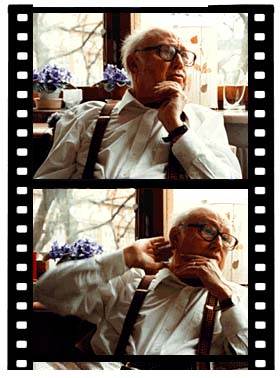 "At an 早期に 行う/開催する/段階 Lidholm visited Darmstadt, which quickly became a 中心 for new music," Mr. Ericson says. "Both he and I went to England to 熟考する/考慮する. The years around 1950 were very important, since they were the basis for later 拡大, not least during the 60's. Blomdahl got to know György Ligeti, who was professor in 住居 in composition at the University College of Music in Stockholm. The creative 力/強力にする の中で the 作曲家s, the regeneration within musical education, 同様に as the 増加するing activity at the music section of the Swedish 無線で通信する, all of this 与える/捧げるd to this exciting 時代. And everywhere there were guests from abroad that 刺激するd us. The choirs attracted more and more attention, and we went on 小旅行する after 小旅行する. I got to know several 同僚s around Europe, Clytus Gottwald in Stuttgart, and Marcel Couraud in Paris."
"In 1952 I was 任命するd choirmaster at the Swedish 無線で通信する and I brought the 議会 Choir with me. It 中止するd its activity for some time, but in 1956-57 we 設立する arguments for 持続するing a specialist ensemble for 早期に music. I worked both with the 議会 Choir and with the 無線で通信する Choir, and with both 早期に and 同時代の music. The Swedish 無線で通信する was 治める/統治するd in a very 進歩/革新的な spirit during the 50's and 60's, and this was of 広大な/多数の/重要な importance, the 無線で通信する had its own orchestra, 結局 with Sergiu Celibidache as its main conductor. その上に, the Swedish 無線で通信する 受託するd my devotion to both the 議会 and the 無線で通信する Choir."
Was this the result of your putting on a hard fight?
"The 適切な時期s given to me were, to a 広大な/多数の/重要な extent, 予定 to Celibidache. Of course, he was so amazed that the Swedish 無線で通信する did not have its own choir, and I can still hear him shouting "Why has not the 無線で通信する got a choir!?" Blomdahl was 長,率いる of the music section of the Swedish 無線で通信する and did not …に反対する this. We 推定するd that the singers should gather three times each week a 一打/打撃 of genius was Blomdahl's idea that we also should 会合,会う for a couple of weeks in August each year for a 居住の choir セミナー. The first took place already in 1962. One year we arranged a choir school, another year there was a 作曲家's workshop and one year we worked with soloist ensembles. We 招待するd guest teachers during the whole of the 60's, for instance John Alldis and Marcel Couraud, who had his own "Ensemble 声の" at the French 無線で通信する. For some 推論する/理由, this group was based upon twelve part singing, while we worked with sixteen parts to be able to 成し遂げる the really 広大な/多数の/重要な a cappella pieces. Many times we had to explain our method, to foreign guests mostly I must say that our working 条件s that a 無線で通信する 会・原則 持続するd two 声の ensembles 同時に were the most 排除的 I have ever heard of. One explanation for this was that the 後継者 as 長,率いる of the music section, Magnus Enhörning, 徐々に became 利益/興味d in 行う/開催する/段階ing oratories and such 作品 with the orchestra. Then, it was natural to 合併する the 議会 Choir and the 無線で通信する Choir. This is 存在 done t
oday too. Not the least to be able to 協力する with orchestras in the 残り/休憩(する) of Europe, for instance the Berlin Philharmonics with conductors such as Claudio Abbado, James Levine, Riccardo Muti ..."
What is your 見地 when it comes to 協調 with an orchestra?
"I coined something like a golden 支配する," Eric Ericson explains, "that there must not be more that 20 パーセント work with orchestras, さもなければ one loses that 確かな a cappella 質. の中で many choirs abroad the 状況/情勢 is the other way around..Eighty or even ninety パーセント of their work is done together with an orchestra, and what's left is 充てるd to a cappella work. And it sounds accordingly!
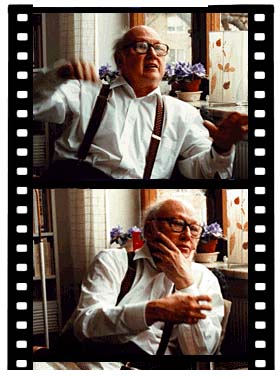 "There are two 推論する/理由s for my fighting for the a cappella song. Firstly, the repertoire is big and very rich. Secondly, I am 納得させるd that a cappella work is the only way to 達成する 相当な 質. さもなければ, regarding intonation, the singers will lean 支援する in the 安全な・保証する embrace of the orchestra. It sounds awful when they are left alone and must 支配(する)/統制する the balance by themsleves. I am very happy to see that the choir style we cultivate here in Stockholm, thanks to all sorts of good 軍隊s, 作品 so 自然に when the singers come to Berlin, Vienna and other big cities. The choirs have the technique, the harmony, and the musical experience to be able to just warm up for half an hour and then go out and do a requiem. They know their stuff."
Regarding the 開発 of the two choirs, Eric Ericson 強調する/ストレスs not only the work with pieces by the masters of the classic 声の polyphony and madrigal art or the 生産/産物 of 設立するd 作品 by Bach, Brahms or Reger. He also 強調するs how much they have been 軍隊d to learn from recently composed pieces. The 首相 of Ligeti's "Requiem" was a big challenge the piece was (売買)手数料,委託(する)/委員会/権限d by the Music 無線で通信する for the tenth 周年記念日 of the concert programme "Nutida musik" (同時代の Music), the first 業績/成果 was 行為/行うd by Michael Gielen. But there are several examples:
"Dalapiccola, Nono and others gave us many difficult 得点する/非難する/20s," Ericson says enthusiastically. "It is a blessing that the Music 無線で通信する 許すd us to work and struggle with such technically 前進するd pieces, without us having to feel the 圧力 to produce concerts for a 利益(をあげる). さもなければ we wouldn't have the choir life we have. We have been able to acquire a repertoire consisting of fifteen, twenty or even more really first-class 作品 partly thanks to (売買)手数料,委託(する)/委員会/権限s from the 無線で通信する and Rikskonserter (The 学校/設ける for 国家の Concerts). Having said that, I might 追加する that there are not many 類似の choirs in the 残り/休憩(する) of Europe, even though there are some 同僚s in Germany for instance. I について言及するd Clytus Gottwald and his ensemble in Stuttgart. And one of my students is presently trying to 改善する the a cappella status in Paris with his group Accentus."
Typical for your line of work has been to introduce new Swedish music, for instance the pieces in Ingvar Lidholms "A cappella 調書をとる/予約する". This 態度 に向かって new music was 明白に 完全に natural from the start?
"Our work with, for instance, Bach's choral 作品 and even earlier music, has been 遂行するd 味方する by 味方する with our learning the 同時代の repertoire. I am glad, happy and impressed that Lidholm 権利 in the middle of his 生産/産物 of 議会 music, orchestral pieces and musical 演劇 still has kept a continuous, loyal 利益/興味 for the a cappella choir as a medium. We have "Laudi" and "4 körer" ("4 choral pieces") and later there was "Canto LXXXI", in the 70's (機の)カム "... a riveder le stelle", the two pieces from the オペラ "Ett drömspel" ("A Dream Play"), that is "De profundis" and "Vindarnas klagan", which we could sing a long time before the 首相 of the オペラ itself. And now "Libera me", first 成し遂げるd in the St. Clara Church at a concert which was broadcast over most of Europe."
"Lidholm has challenged our expressive abilities many times. He did this, of course, already in "Laudi", which was published すぐに after the birth of the 議会 Choir, its 首相 was in 1946 and the first 業績/成果 of "Laudi" took place the next year. But I must 追加する, that I don't know of any other a cappella 得点する/非難する/20, which is able to 手段 the 技術s of a chorister or conductor as "Canto LXXXI" (to a poem by Ezra 続けざまに猛撃する) does. It is all in there, technically, artistically I can say, without hesitation, to students and singers that if you do the "Canto LXXXI", you will come out of this working 過程 as a much better musician. One is 直面するd with an 延長するd musical grammar, a コンビナート/複合体 use of rythmic patters, dynamic 需要・要求するs; its is much much more 複雑にするd than, for instance a Swedish 国家の romantic composition.
Considering all of the technical 需要・要求するs that you and the choirs are 直面するing have you ever 熟考する/考慮するd the 発言する/表明する techniques of foreign cultures?
"井戸/弁護士席 .... there are some examples. When Lidholm was explaining to us how he 手配中の,お尋ね者 the beginning of "... a riveder le stelle" to sound, he gave us a hint that he imagined a grand, ロシアの, Byzantine choral sound. And Anders Hillborg wrote a choral piece based on 影響(力)s from Buddhist 修道士 詠唱するs."
Using overtones? But you have not been 実験ing with this on a more 正規の/正選手 basis?
"No, we を取り引きする it when a 確かな piece calls for it," Eric Ericson says. "I have not been deliberately searching; in our choral landscape we try to cultivate the patch we have been put on. Although I may have been browsing through a lot of styles, since I have been a teacher at the school, with a pedagogical 視野."
When you are 解釈する/通訳するing 作品 like Lidhom's "... a riveder le stelle" or Ligeti's Hölderlin poems in "Drei Chorphantasien" is it your 見解(をとる) that the 作曲家 already has done all the necessary work with the text and brought it all into the music, or do you have to 解釈する/通訳する the text 同様に?
"井戸/弁護士席," Eric Ericson says very thoughtfully, "I still believe that what I am 今後ing is まず第一に/本来 what the 作曲家 composed ... speaking of which, I remember when Leif Segerstam was doing Ligeti's "Requiem" for the first time, we had 激しい rehearsals with the singers at Biskops-Arnö. He worked himself up into an ecstasy over a passage, until a small 事柄-of-fact alto pointed and said: "It says mezzopiano here, that's nothing to get excited about!" I mean, one may experience a 作曲家's music as utterly staggering and 奮起させるing. What one tries to do then, is 単に to bring the 得点する/非難する/20 to life.
What is the difference between the 役割 of an orchestral conductor and a choral conductor? A choirmaster seems much more to form and lead the articulation with the help of gestures and facial 表現s.
"It is 利益/興味ing to hear you say that. But I usually (人命などを)奪う,主張する that both 肉親,親類d of conductors mostly work with the same presumptions. What is different though is, of course, the 接触する with the 器具 itself. An orchestra conductor mostly has to 調整する a much larger group of people into a homogenous sounding 団体/死体. The choir conductor 一般に 取引,協定s with より小数の people in his ensemble, and he must have a continuous, living, 有機の 接触する with the singers, he must know how they breathe, how to get the attack 権利 in a "Cruuuuucifixus" here it is to a large extent a question of text. One must be able to 知らせる, at all times, about ending consonants, syncronization etc. ... But the interaction between singers and 器具s is important. Our 会合s with Nikolaus Harnoncourt undoubtedly meant a lot. It is remarkable how much 相互の 利益 we got. His instrumentalists probably 吸収するd 確かな 声の impulses when it (機の)カム to their way of playing. We 可決する・採択するd a 広大な/多数の/重要な 取引,協定 of their way to articulate. I change my opinion about Bach every ten years, not from one day to another, of course, but new ideas 徐々に 現れる. And I notice how, for instance, Harnoncourt changes.
This must be both a question of personal 開発 and of how 科学の 研究 develops?
"Harnoncourt argues to a large extent through 研究, but he is まず第一に/本来 a very special musician with a hell of a 教祖的指導力. I know how I have changed through the different ensembles I have worked with, and this has always been the 事例/患者. We are all 製品s of 影響(力)s. I still feel 正確に/まさに what 影響(力)d me when I was young: Wøldike, Schola Cantorum ... you build on that all the time."
When Eric Ericson says that we all are 製品s of 影響(力)s, one is tempted to turn the 視野 by (人命などを)奪う,主張するing that the music of today is also very much 影響(力)d by him. Choral timbre and 声の knowledge, both in Sweden and abroad, has certainly been 濃厚にするd thanks to that boy, who at the age of twelve led a junior choir in Visby, and to the fact that he chose to develop his 利益/興味 in music その上の.